Prince William is already home to unions that represent county police, fire and rescue, and school employees.
Voting is underway in a union election in a Northern Virginia locality.
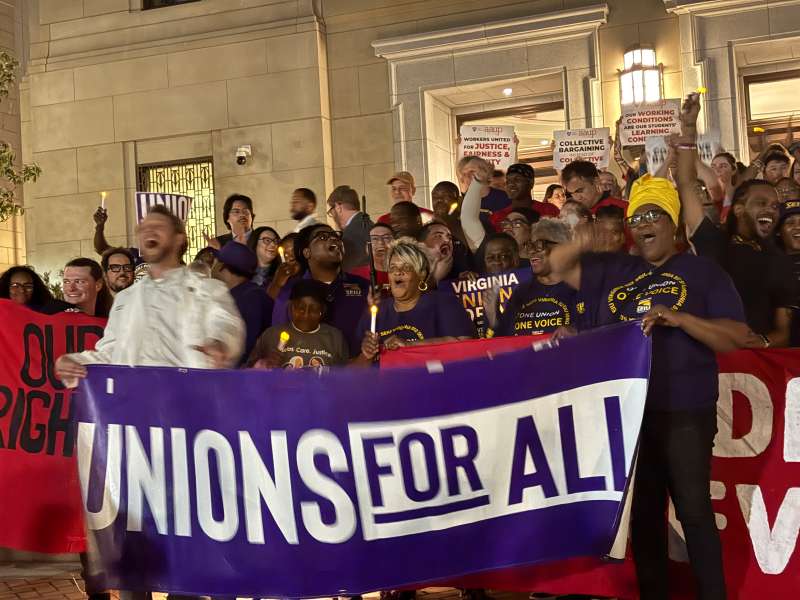
Prince William County employees began voting on Monday on whether the Service Employees International Union (SEIU) Virginia 512 can represent them at the negotiating table. Voting for these workers, which total more than 2,000 and include county librarians, social workers, and IT specialists, ends July 22.
Prince William is one of a handful of Virginia localities that has passed a measure to allow their local government employees to engage in collective bargaining. Virginia bans state employees from collective bargaining. Local government workers can only do so if a locality passes a measure to permit them to do so.
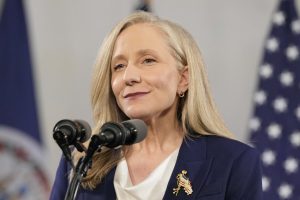
Legislation to allow all local government workers to collectively bargain has been vetoed by former Republican Gov. Glenn Youngkin and current Democratic Gov. Abigail Spanberger, though she says she supports expanding public-sector collective bargaining rights.
Prince William County police officers represented by the Prince William County Police Association, firefighters represented by the International Association of Fire Fighters (IAFF) Local 2598, and school workers represented by the Prince William Education Association have won collective bargaining agreements.
Now, Prince William local government workers want to win a seat at the negotiating table to fight for better pay and more say on the job. Patrice Summers has worked for Prince William County for nearly three decades and has been fighting to unionize since 2022.
“I feel that we need representation because fire and rescue, police—everyone has a seat at the table, and they’re able to bargain for whether it be the grievance process or working towards their cost of living and their merit adjustments,” Summers, who works in the Department of Finance, said in an interview. “And I think we should have the same rights to be able to bargain for those things too.”
Summers said many of her fellow county workers are excited to join a union and begin negotiations over a collective bargaining agreement. She said some workers worry that joining the union means they would go on strike, but she reassured them that in Virginia it is illegal for local government workers to strike. Others are nervous about what it means to be part of a union, a common concern for workers in Virginia where public sector unions are fighting to make inroads and just 5.4% of private-sector workers were part of a union in 2025.
“They still have to learn what the ins and outs of being in the union is about,” Summers said. “And basically we are the union—your coworkers—we are going to be your representation, you are going to be your representation. It’s still a learning curve for a lot of folks who are just getting on board.”
Melinda Vaikasiene grew up in a union household in western New York and has worked for the county for two decades. She said she’s hopeful a union contract will set clear rules for how workers can address their grievances.
“Right now, if somebody gets written up or in trouble, there’s not a real clear process, and people don’t have anybody to be able to go to to teach them that process,” Vaikasiene, who works in the Department of Community Services, said in an interview. “I’ve heard lots of stories around the county where a steward and a standard grievance situation would have been incredibly helpful.”
Vaikasiene also said it isn’t fair that some of her co-workers can’t afford to live in the county they work in. She said some commute from as far as West Virginia, Fredericksburg, Warrenton, or Winchester.
“Workers are being left behind,” Vaikasiene said. “You should be able to live where you’re working.”