
“I believe technology can be a force for good and it can be the solution to a lot of problems we face in society. It can also cause problems. So it’s an important area in policymaking, and I’ve always wanted us to get it right.”
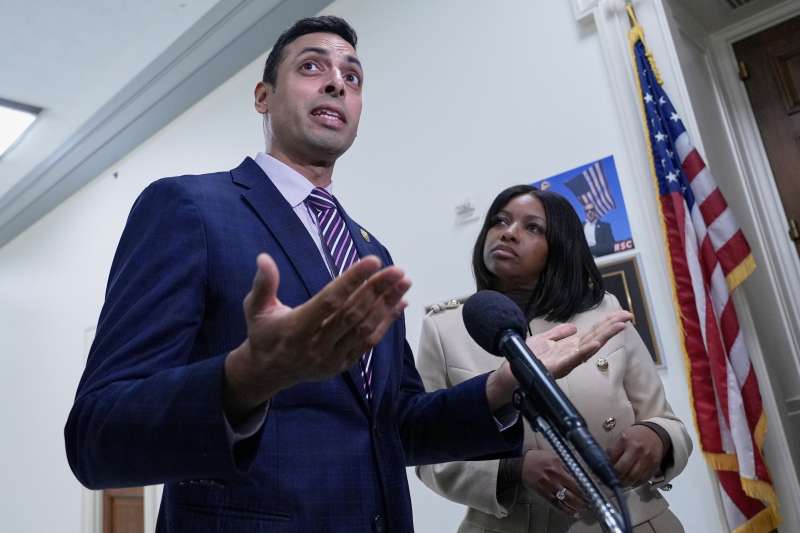
Virginia Congressional Representative Suhas Subramanyam (D-10th District), who is also a resident of the northern Virginia area he represents, balanced a respect for technology’s potential with genuine concern for rapid data center expansion in an interview with the Dogwood.
Technology has always been a major component of Subramanyam’s political career, beginning when he was appointed as a White House technology policy advisor to President Obama in 2015. Back then, the attorney led a task force on regulating emerging technology—so it’s perhaps fitting that today he represents Loudoun County, home to more data centers than anywhere in the world.
More than 200 data centers, in fact—with another 100 or more on the way. AI and data centers have become one of the biggest issues at the town halls Subramanyam regularly attends, and in American politics.
“America has become a technology superpower,” he said. “We were the birthplace of the modern internet, now we’re a leader in AI and other emerging technologies like quantum computing, and we’re going to continue to be later in other areas of science and technology. But the world looks to us when it comes to how we’re going to both promote innovation as well as make sure there are proper guardrails to protect people.
“That’s why we have to get it right.”
The legislation that Subramanyam has sponsored and co-sponsored in the House of Representatives may shape the federal government’s future handling of data centers around the country—and by extension, around the world.
New data center bill would empower the public
Subramanyam’s most recent piece of legislation is the Data Infrastructure Energy Measurement and Standards Act (H.R. 9372).
The gist of it is that the US hasn’t decided on one universally accepted method for measuring the electricity and water that data centers use. H.R. 9372 would direct a federal agency, called the National Institute of Standards and Technology, to establish and implement standards across the board, much like how Congress made “miles per gallon” the standard measurement for vehicle fuel economy.
Once an energy measurement standard is established, the public and the government can more easily understand various proposals by data center companies, and make more informed decisions about them. For example, as of July 7, all of Loudoun County was experiencing moderate to severe drought, according to the US Drought Monitor. With each data center using up to 5 million gallons of water per day to stay cool, keeping the public in-the-know about its water consumption is vital.
“It’s just the difference between building another power line or not sometimes, so we need to get the measurements right and we need to make sure that there’s full transparency to a community in terms of how a data center will impact them,” Subramanyam said. “And they should know that up front. That’s why we’re going to push for standardized, accurate measurements of how data centers are impacting communities and we’re going to implement those so that we at least have the full picture.”
Subramanyam hopes to have H.R. 9372 passed by the end of summer.
As data centers go up, so do Virginians’ electric bills
When data centers are built, they cause your electricity bill to increase. Why?
Data centers use massive amounts of energy. In fact, data center construction causes energy demand to spike faster than supply. This leads wholesale grid operators to turn on more expensive power plants to meet that demand. This leads to higher rates for everyone, including residents.
“We’re raising people’s utility bills and impacting our environment and water supply,” Subramanyam said. “We have latched onto this data center bonanza without thinking through the consequences—not just for the next two years but for the next 20 years.”
Some of the more expensive power plants also run on fossil fuels, like natural gas and even coal, despite the availability and affordability of clean and renewable energy sources. Loudoun County’s Vantage Data Center uses on-site gas turbines for its power and is estimated to cause up to $99 million in health damages from air pollution every year.
And that’s just one data center.
Additionally, utility companies spend billions upgrading infrastructure to serve these massive server farms, including building new transmission lines, power plants, and substations. Government regulators usually allow utility companies to shift some of those infrastructure costs onto regular household customers.
And the more data centers one area has, the worse their electricity bills become.
“Putting them all in Virginia and just plopping them down on every plot of land—even if there’s no power infrastructure—and then looking to regulators to rubber-stamp those power needs and making residents pay for the utility bill, that’s crazy,” Subramanyam said. “That’s irresponsible and that’s going to impact my kids and my grandkids.”
One such infrastructure controversy is the Golden-Mars Transmission Line in the east Loudoun County town of Sterling. Golden-Mars will run from the intersection of Rte. 28 and Waxpool Rd. to the area southeast of the Loudoun Valley Estates subdivision and involves the construction and installation of 200-foot electricity monopoles, including through Loudoun Valley Estates itself.
Residents and local officials pushed for less invasive routes and even “undergrounding” of the project, which would involve building underground power lines instead of above-ground ones. Dominion Energy, backed by Virginia’s State Corporation Commission (SCC), argued that undergrounding was too expensive and would take too long.
“I reject the entire premise and structure of how we’re building power infrastructure for data centers,” Subramanyam said. “It’s not cheap to build power lines to begin with and the data centers aren’t paying their fair share. They should be paying for that power infrastructure that they caused to be built.
“The conversation should be about how the data centers are going to pay for the infrastructure, and if they can’t pay for it, then maybe they shouldn’t come here.”
Subramanyam stressed that undergrounding is also “critically important” to prevent security vulnerabilities.
Bigger data infrastructure makes bigger targets—even in your backyard
The first bill that Subramanyam introduced regarding data centers was the Data Infrastructure Risk Reduction Act (H.R. 8711). If passed, it will require the federal government to develop a strategy defending data centers from external breaches and protecting the communities that surround them.
“There are two problems we’re trying to solve,” Subramanyam said. “One is that we’re seeing these power lines being built above ground, and that makes them easier to sabotage. If you’re building above-ground power lines next to these data centers and the data centers are all concentrated in one area, it’s not hard to attack those data centers—and it would be very effective for an adversary to do that.
“The second problem is that in modern warfare, data centers are a target, so federal agencies need to treat data centers the same way they would treat a national monument or even the White House.”
History backs him up. In March, Iran attacked Amazon Web Services data centers. Looking further back, a summary of successful cyberattacks against the US, published by the Office of the Director of National Intelligence in 2024, showed that pro-Russia groups and affiliates of the Islamic Revolutionary Guard Corps targeted American infrastructure repeatedly.
Subramanyam pointed out that in some instances, infrastructure and data centers are bigger targets than major cities.
“This is the future of warfare,” he said. “The future of warfare is not tanks on a field; it’s attacks on our power lines and energy grid. And we’re seeing that in the Ukraine-Russia war and the Iran war and I think we’re going to continue to see that that is the new battlefield: protecting your critical infrastructure.”
With the most data centers in the country, Loudoun County may now be poised to become America’s biggest battlefield.
Read more: Inside Data Center Alley’s growing impact on Loudoun neighborhoods