In the pandemic, Virginia churches had to adapt. But what will services look like after things return to normal?
FLOYD – Back in December, Pastor Timothy Hale was at the Post Office, preparing to mail the annual Christmas card to members of his church. Suddenly, he heard a man shouting his name in the parking lot. “He was like, ‘I watch you all the time,’” Hale remembered during a recent phone call. “Which is awesome, once you figure out that he’s talking about church,” he joked.
Hale, who leads the United Methodist Church in Floyd, Virginia, had never met the man at the Post Office before. But he had joined Hale’s congregation virtually, by streaming his weekly sermons online. Hale said virtual services, initially necessitated by the pandemic, have expanded the reach of Floyd UMC’s ministry.
We’re approaching the one-year anniversary of COVID-19’s arrival in Virginia. Now, churches across the state are reflecting on which innovations, borne from the pandemic, may endure when the public health crisis ends.
Traditional Congregations Adjust
Prior to the pandemic, all of Floyd UMC’s services happened at the sanctuary. The church had a website and a Facebook page that were seldom used. Hale said outreach efforts were fairly old-school, too.
The church hosted fellowship meals, including a Fourth Sunday Breakfast that was open to the entire community. Its Friday Food and Fun events, held weekly every summer, were quite popular. “Those are our big outreach events. But they’re all food-centric, so that was a problem when the pandemic hit,” Hale said.
Within a week of the shutdown last year, though, Hale had improvised a method for continuing at least part of his services. On March 22, he uploaded a pre-recorded sermon to YouTube. By the summer, Hale had moved services outside, where folks could maintain physical distance, and he was live-streaming them to Facebook.
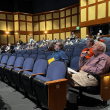
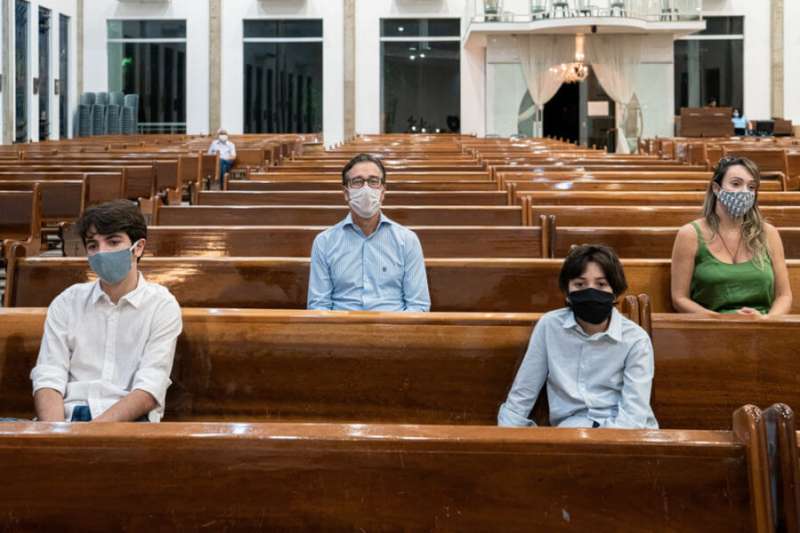
So far, Floyd UMC has invested $12,000 into a sound system and cameras to support high-quality virtual services. The church is now holding in-person services at 30% capacity, but plans to continue online services post-pandemic.
RELATED: A Safe Community: Danville Church Helps Build Homes
Making Churches More Accessible
New virtual services offered an opportunity for churches to reach potential members outside their four walls. It made church more accessible, both by eliminating physical or socioeconomic barriers and by making the process of joining a church less intimidating.
The Rev. Dr. Linda Olson Peebles is the interim lead minister at the Unitarian Universalist Congregation in Charlottesville, Virginia. She said the shift to virtual services “is a great opportunity for us to examine what we can be doing better to be inclusive.” She cited evening meetings for various church groups as one example. “We’re realizing that for evening meetings, a parent who can’t afford a babysitter can now join a committee,” because they can attend via Zoom, she said.
Geographic distance from a house of worship can be another barrier to joining a faith community, Rev. Peebles said. “Some of our new members are people who would not have considered joining us if they would have had to drive 45 minutes,” she explained. Other folks have limited mobility or don’t drive at all and can connect to services virtually. Folks who are hard-of-hearing benefit from Zoom’s free closed captioning.
The Unitarian Universalist Congregation has promised to continue hybrid services—with both live, in-person and pre-recorded components—even after the pandemic ends, Rev. Peebles said. It’s partially out of an obligation to these new congregants. “It just helps us become a beloved community that says, ‘It doesn’t matter what your ability or situation is. We’re going to find a way for you to be a part of this community.’”
Hale described a church’s website and livestreams as its new “front door,” and said folks can sample the services of various congregations to find the best fit. “People don’t have to worry, ‘What’s going to happen when I get there?’ It actually removes some of the barriers from people coming in-person, rather than creating them.”
Churches Weather Isolation Together
For nearly a full year, Pastor Gary McCoy has led drive-in services for Blacksburg Christian Church. The services are also streamed on Facebook Live, he said, and the church’s follower count on Facebook has doubled since the pandemic struck.
McCoy said the drive-in services have offered a respite from the isolation of the pandemic. “It really has been a blessing to us, because (congregants can) see people…they pull in and wave to each other,” McCoy said. Faith communities, he added, can offer support when it’s needed most, such as following the death of a loved one.
Blacksburg Christian Church adapted its drive-in worship method to host a memorial service for someone who died of COVID, he said. It’s a rite that many families have missed out on this year. “We had probably 150 cars,” he said, who gathered in the church parking lot and a school parking
lot across the street. Church members could tune in to this and other services on their car radios.
Elderly Can Access Community
The elderly have been perhaps most isolated over the past year. Hale said virtual services have supported increased pastoral care for that population. “We’re able to include people in our congregation who would normally be home-bound. That’s the folks who are most excited about doing it,” he said.
Rev. Peebles shared the same impression. Charlottesville’s UUC has transitioned its traditional coffee hour following Sunday services to “breakout rooms” on Zoom. “The people that hang around (online)…are the people that tend to need that community,” she said. “Some of our older folks that don’t get out much, or people who really miss each other.”
A New Normal
Rev. Peebles said the pandemic has offered an education in inequity. “The pandemic has made it crystal clear that there is a class of people who are not getting the economic, health and all the benefits of our great society,” she said. “It’s been a painful but important illumination. … Even well-meaning, liberal, UU congregations weren’t always understanding it,” she added.
Churches are still gleaning lessons from virtual ministry, she said. But no matter what, she’s confident things won’t go “back to normal.”
“In fact, the old normal wasn’t that great when you think about it,” Rev. Peebles said. “We’re going to create a new normal. That’s exciting and that’s an opportunity. Hopefully we remember all the good things we learned about being a community while we were separated physically.”