Most people, if they are thinking about politics at all, are probably aware that Virginia will elect a new governor this fall.
Far fewer probably know they will also get to vote on the state’s next lieutenant governor, a job with much less responsibility (read: power) beyond overseeing the state Senate and casting the odd tie-breaking vote.
This year’s match up pits state Sen. Ghazala Hashmi (D-Richmond) against the former conservative radio host John Reid.
For the past few days, I’ve been reporting on Reid for a story about how he’s trying to moderate his public image (to the extent that he has one, given he’s still relatively unknown as a newer statewide candidate). My story does not focus on economic policy but it’s worth noting for the purposes of this newsletter that Reid is a strong critic of unions and supports letting workers opt out of joining them in their workplaces.
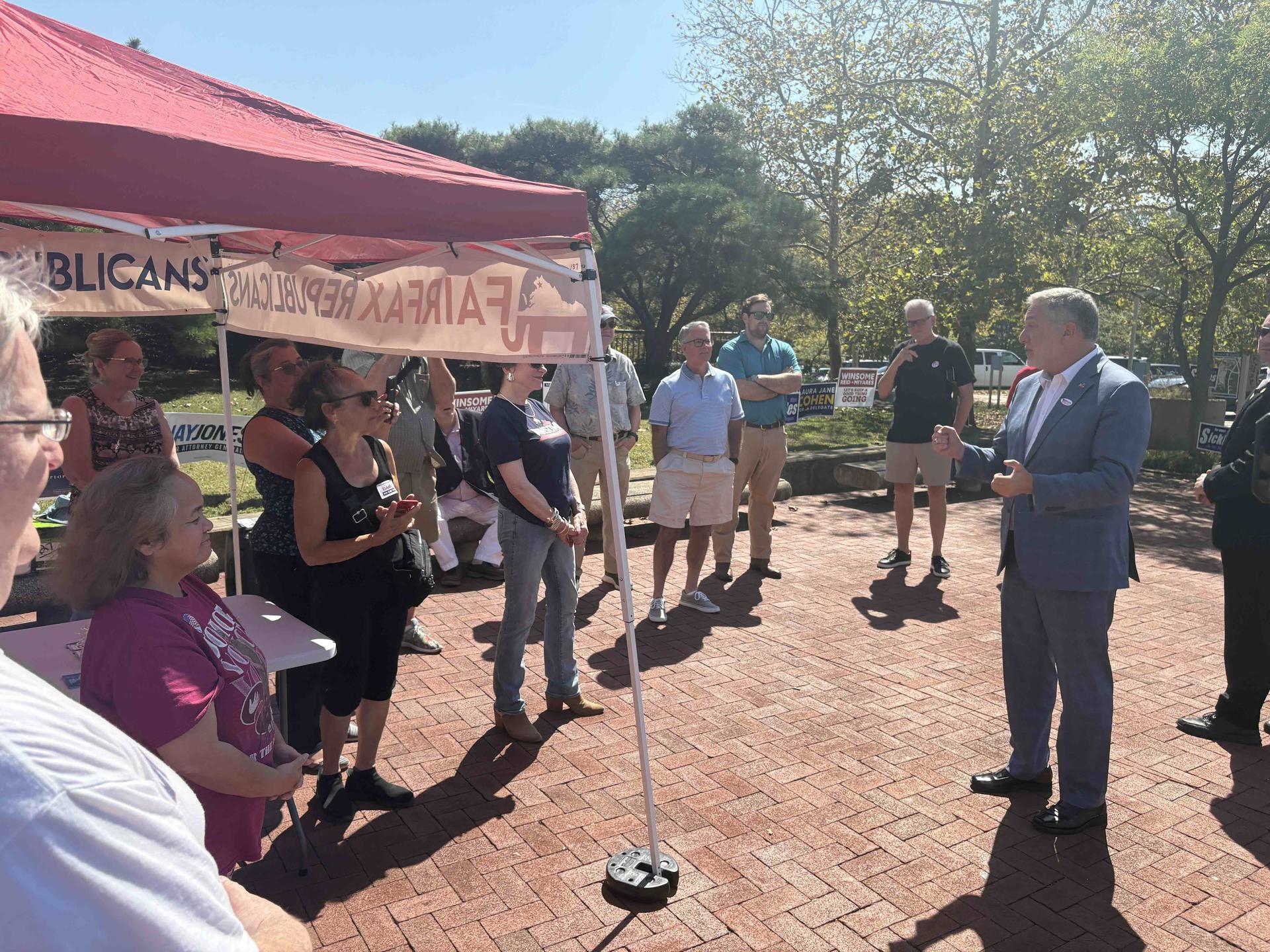
As he told me at a recent campaign stop in Fairfax County, Reid’s issue with unions is that they donate to political causes their members might disagree with. In Reid’s analysis, Republican workers who don’t support abortion should not be required to pay dues to unions that give money to pro-choice Democrats.
Two general thoughts on this.
First, some unions do in fact support Republicans, including Reid himself. The politics of a union are generally a reflection of the politics of that union’s members. If unions are more pro-Democrat, that’s probably because their members are too.
See this headline in Politico: “Teamsters pour money into GOP, shifting away from Dems.” And here in Virginia, the largest union representing police officers endorsed Reid along with Democrat Abigail Spanberger.
My point is that as member-driven organizations, there are ways for workers to shape the electoral actions and endorsements of their unions. They can vote for different union leaders or not donate to their union’s political arm.
My second thought is that I’d venture to say that most unions spend more time and money on winning strong contracts for their members than they do on elections that happen every few years. I’d argue concern about the outward politics of unions is a red herring to distract from the important ways they empower workers.
This all gets to a much larger point about how workers benefit from the better contracts won by forming unions. It makes sense that workers who benefit from these contracts should support the work that goes into winning them.
When unions negotiate contracts with management, workers are literally at the negotiating table or on the negotiating Zoom call. Without unions, workers—conservative or otherwise—have few if any mechanisms by which to defend their rights in the workplace and try to improve their lot.
It’s unfortunate that in Virginia this is somehow a partisan issue and not something that’s more broadly accepted as it is in other states.
Anyway, if you want to read more about who Reid is and what he’s all about, then please check out my story.