Good afternoon,
I’ll be in Richmond next week on Wednesday morning to hear term-limited, outgoing Republican Gov. Glenn Youngkin’s proposals for the state budget. (Did you hear he might be joining the Trump Administration?)
Let me know if you’re in Richmond and want to connect after Youngkin’s remarks. I’m at michaeloconnor@couriernewsroom.com.
Also, Starbucks workers across the country are striking for a union contract and in protest of the coffee giant’s union busting tactics.
You can donate here and here to support Virginia Starbucks workers.
Below, I look into where things stand with the development of Virginia’s retail cannabis market and share what I learned from a possible 2026 congressional candidate.
Plus, an ode to my late community college history professor.
|
|
|
A cannabis plant that is close to harvest grows in a grow room at the Greenleaf Medical Cannabis facility in Richmond, Va., June 17, 2021. (AP Photo/Steve Helber, File)
|
The election of Democrat Abigail Spanberger as governor raised the hopes of many Virginians that legislation stymied by Youngkin year after year would have a much better chance of becoming law.
Youngkin’s veto pen was prolific, and among the many policies he struck down with it was the creation of a retail cannabis market here in Virginia.
Spanberger has said she supports Virginia expanding its cannabis market from being medical only to including recreational sales as well. So the day when adults can pop into a dispensary as they go about their days has a good chance of happening on her watch.
Still, the devil, as they say, is in the details.
State cannabis markets are highly regulated, and each rule creates an opportunity to make the system more or less fair to working people. For today’s story, I looked into how Virginia’s prospective market is approaching labor issues.
I learned that a way to ensure workers’ organizing rights are protected is for Virginia lawmakers to require cannabis licensees to sign onto labor peace agreements. These contracts involve companies agreeing to remain neutral as workers attempt to organize and unions agreeing not to disrupt the company’s operations.
It’s already illegal for companies to infringe on workers’ attempts to organize under the National Labor Relations Act, but the enforcement of federal labor law is weak to nonexistent.
Including this extra layer of protection at the state level would go a long way to developing a workforce in this budding industry where people get dignity and respect on the job.
|
|
|
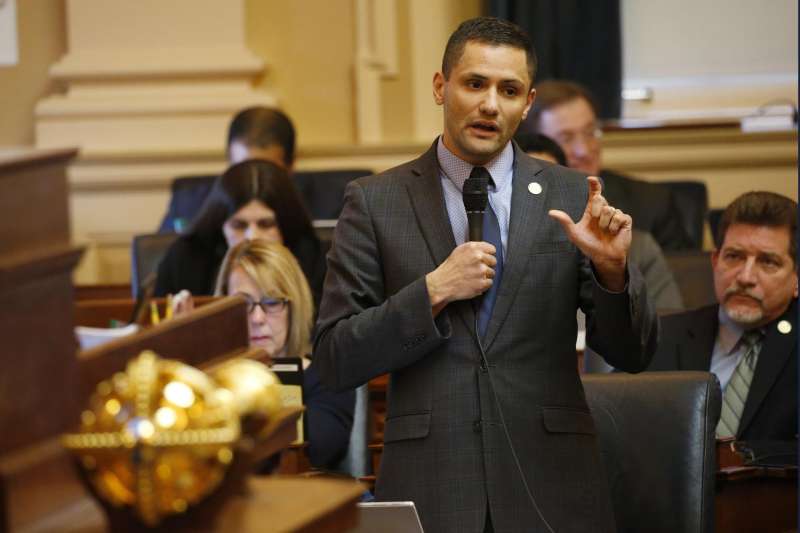
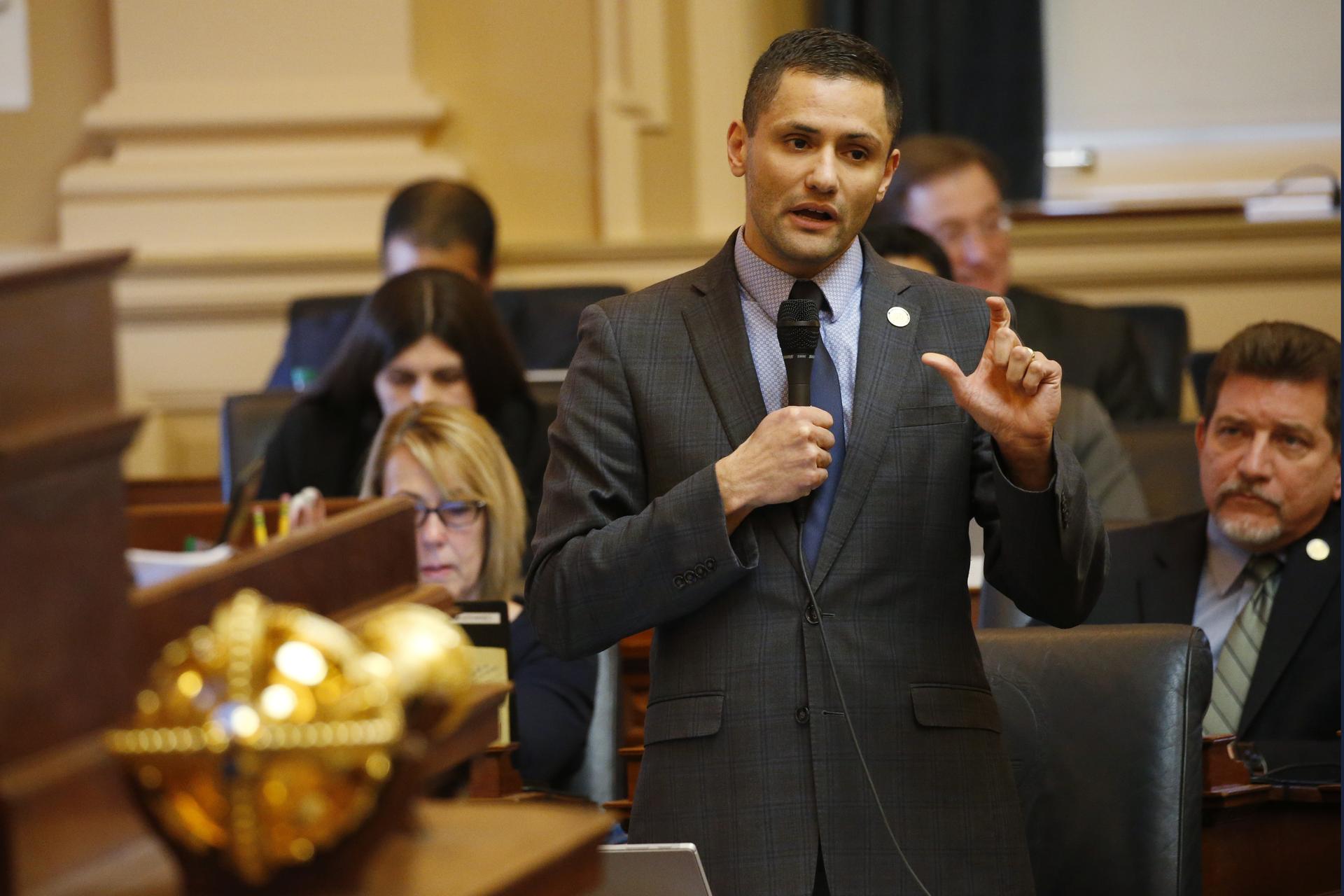
Del. Sam Rasoul, D-Roanoke, gestures during debate on the renewable energy bill on the floor of the House at the Capitol, Thursday, March 5 , 2020, in Richmond, Va.(AP Photo/Steve Helber)
|
Virginia’s midterm races are coming into focus even as state Democrats make moves to be able to redraw the state’s congressional map.
Former Democratic Congressman Tom Perriello jumped into the race for his old seat in the fifth district, setting up a possible primary with Albemarle County supervisor and civil rights lawyer Mike Pruitt, who is also seeking that seat.
And state Del. Sam Rasoul, a Democrat representing House District 38 in Roanoke, is forming an exploratory committee for a congressional bid next year. I caught up with Rasoul by phone earlier this week and turned our interview into a Q&A.
When I asked Rasoul about his positions on labor, he emphasized the need to expand collective bargaining rights over what he called the symbolic repeal of “right to work.”
“I think that collective bargaining is actually a bigger issue for workers than ‘right to work,’” Rasoul told me. “It’s just ‘right to work’ has been kind of symbolically this issue that we’ve gone back and forth on.”
That’s a point I’ve heard more than once from union members and legislators. And it may help explain why Spanberger hasn’t come out in support repealing “right to work.”
|
|
|
(David Tomaseti/unsplash)
|
Yesterday, I bumped into someone I went to Northern Virginia Community College with at the Alexandria campus many years ago.
He told me that a history professor we had together, Dr. Joseph Windham, had passed. Looking online, it appears that Dr. Windham passed over a decade ago now.
Today, I want to use this space to belatedly honor his impact on me and the impact I saw him have on other students.
Dr. Windham had a magnetism and passion for teaching that inspired all manner of students: From the tired working mom I sometimes sat next to in class to the bookish twentysomethings who thought they already knew everything like me.
We were all inspired by his anecdotes about his 60s activism and his bottom-up analysis of history.
I’ll never forget the day he spent an entire class in the persona of Thomas Jefferson, fielding our questions about his beliefs and challenging us to think harder about our Founding Fathers. If you’ve ever seen Robin Williams’ performance in the Dead Poets Society—being in Dr. Windham’s class was kind of like that.
This newsletter wouldn’t be what it is had I not been lucky enough to have been his student.
Dr. Windham, thank you for giving me the permission to be curious, the space to pursue that curiosity, and for making me laugh along the way.
Rest in power.
|
|
|
Would you recommend this newsletter to your friends and family?
|
|
|
Do you or your company want to support Dogwood’s mission and showcase your products or services to an engaged audience of more than 35,000 subscribers at the same time?
Contact advertise@couriernewsroom.com for more information.
|
|
|
This email is written by Michael O’Connor, a reporter at Dogwood.
Have a question or comment? Reply back to this email!
|
|
|
You are receiving this email because you opted in via our website.
Our mailing address is:
Courier Newsroom
611 Pennsylvania Ave SE
Washington, DC 20003-4303
|
|
|
|