Future Economy Collective provides help during an uncertain time.
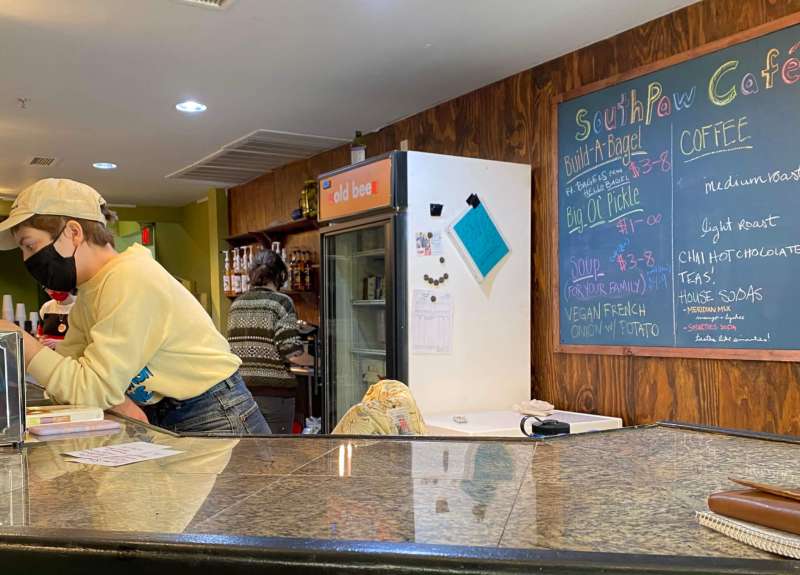
BLACKSBURG – There are multiple balloons and a hand drawn chalkboard sign outside the unassuming Southpaw Cafe and Community Center in downtown Blacksburg. Southpaw is the new physical location for the Future Economy Collective (FEC), a mutual aid group in Blacksburg, which opened Dec. 6.
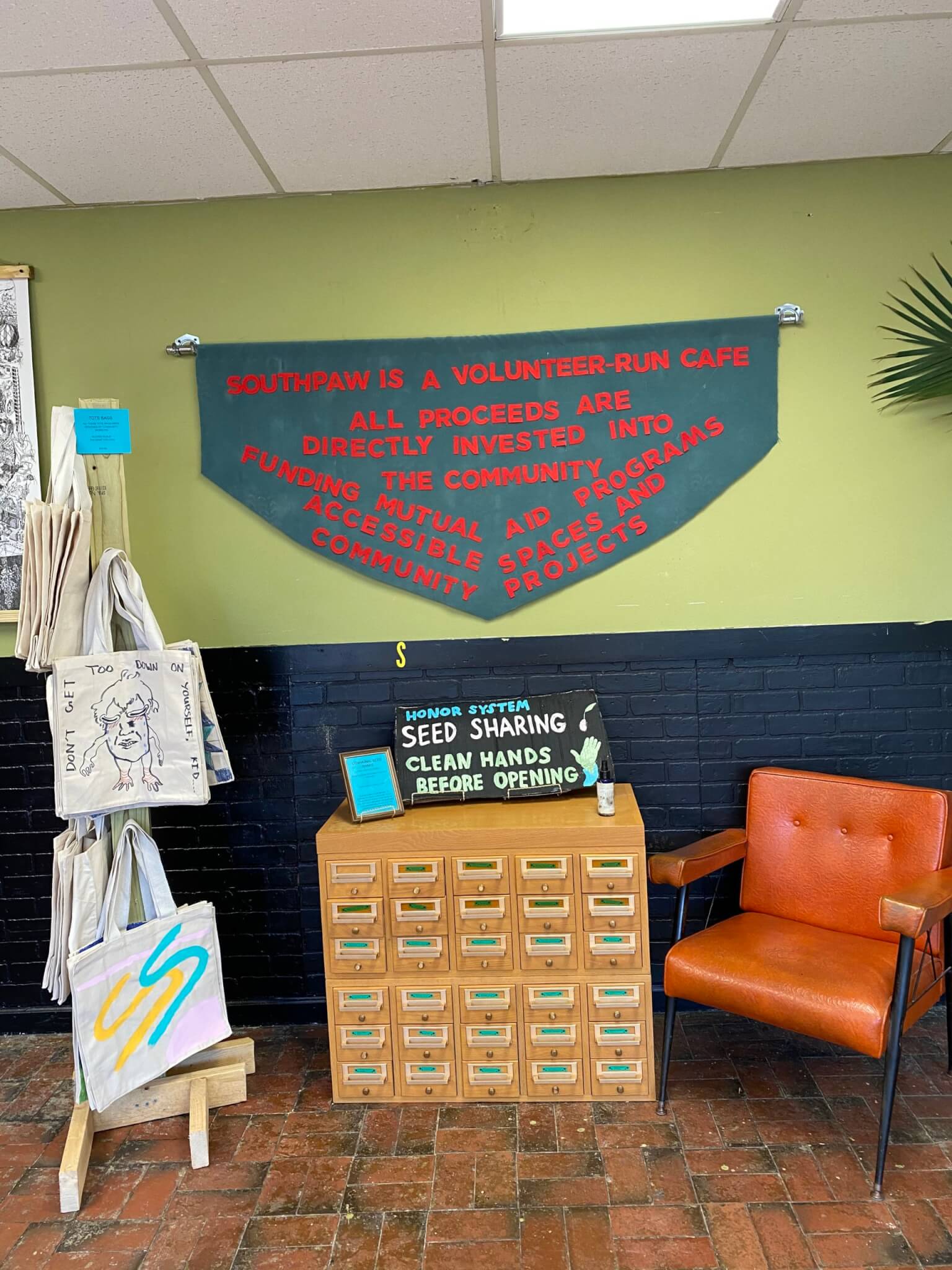
The space itself is below street level—visitors have to descend a ramp or a couple flights of stairs to reach the front door. But as soon as you enter, everything about the flexible-use venue tells you, “You’re welcome here. Everyone is welcome here.”
A banner in the front lobby reads, “All proceeds are directly invested into the community.” Right away, visitors will notice everything up for sale is priced on a sliding scale: pay what you can. There are also plenty of offerings that aren’t for sale at all. The company advertises a seed-sharing program in the front room. Thinking about starting a garden? Take the seeds you need; leave others for someone else.
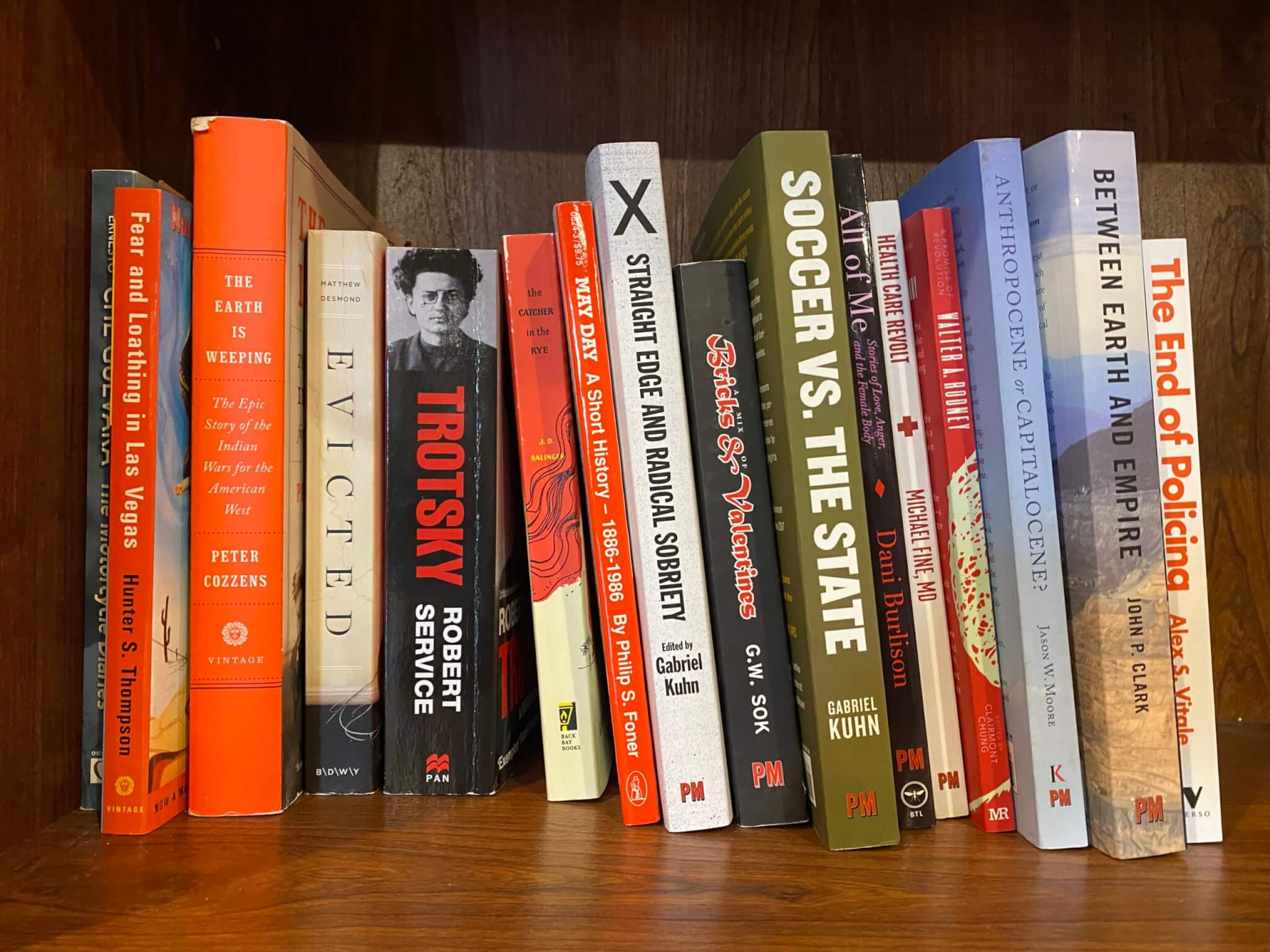
The space’s zine corner houses a read-and-return library, filled with texts on leftist politics, racial justice and climate change. There’s lighter fare shelved alongside popular novels. You find Hunter S. Thompson’s “Fear and Loathing in Las Vegas” near Kurt Vonnegut’s “Cat’s Cradle.” Historical magazine covers that root Southpaw firmly in its specific location and history line the walls. Old editions of “Mountain Life and Work: The Magazine of the Appalachian South” feature textile workers and coal miners who organized for labor protections. In some ways, Southpaw is the modern iteration of a similar political movement. Mutual aid and labor organizing are not the same, but they share an ethic of building community power and watching out for each other.
From Physical Space to Food Distribution
For Molie Graham, and her co-directors Lauren Malhotra and Gretchen Dee, the cafe’s soft opening on Dec. 6 represented a dream realized. The three have been fundraising and organizing around the idea of a physical location since 2017. Molie got the idea after visiting a cafe in Scotland that similarly offered flexible-use space and alternative economics.
The goal was to form a hub for existing mutual aid efforts in the New River Valley. After years of effort raising money and organizing community meetings about the proposed space, the team finally signed a lease in February 2020. They got the keys three weeks before the pandemic shut everything down.
Suddenly, their plans to host mutual aid groups, activists, workshops and musicians were on hold. “Having the world crash down around us was really scary,” said Malhotra. “And at the same time, we were seeing a lot of people in this community” whose worlds were crumbling too, she said.
So the group shifted focus. Other groups, including Looking out for Each Other: New River Valley, joined FEC in answering the call.
FEC only had enough saved for a few months’ rent. There were times that were tough, but the group kept telling themselves, “We’re going to make this work,” recounted Dee. “We clawed our way out with community support,” she said.
FEC started to run twice-weekly food distributions out of the building on Sundays and Wednesdays. They raised money via GoFundMe to buy some food, but local businesses including Our Daily Bread and Riverstone Organic Farm donated food, too.
Upon request, the group also distributed Narcan and condoms as part of a larger harm reduction strategy. They gave away hand sanitizer, PPE and household cleaning supplies. Even now that the cafe is open, food distribution continues, Dee said. She estimated that the collective serves 20-30 families per week.
JOIN THE CONVERSATION: Sign Up For Dogwood’s Daily Newsletter
Hot Meal Here, Guaranteed
The basic idea behind the Future Economy Collective, Malhotra explained, “is that we recognize the problems (in our economy)…are not bugs, but the system itself and the way it’s structured.”
Malhotra studied economics at Virginia Tech and aspires to be a full-time grassroots organizer. She said the project to open Southpaw and protests against the Mountain Valley Pipeline kept her in Blacksburg after graduation.
Malhotra wants Southpaw to be “a place people can be without feeling like they need to spend money,” she said. She hopes the space “encourages a revolutionary imagination.” Blacksburg is home to many successful professionals and enjoys economic abundance in some ways. But a lot of folks are really struggling, especially in the wake of the pandemic. Malhotra said an “ability to invest in community resilience” is something privileged people in the New River Valley want. The community is a whole, she said. Some folks not having enough “undermines the ability of others to live well.” That’s the principle behind mutual aid, which seeks to provide people with the resources they need—whether food, money to pay a bill, winter clothing, baby supplies or anything else—to exist comfortably under a capitalist economy.
Southpaw has opened its cafe, which offers bagels, soups, coffee and soda on a sliding scale. However, it won’t turn people away, Malhotra said, regardless of their ability to pay. Their slogan has become, “Hot meal here, guaranteed,” she said. The group is also working to implement a pay-it-forward program and a community fridge system.
By Us, For Us
Dee is very clear when explaining the role she sees for FEC’s founders and the volunteers who run Southpaw. They’re not benevolent redistributors. FEC is not a top-down project. As Dee pointed out, she and Malhotra are much more “at risk of financially struggling than of being CEOs.” Mutual aid is about participating in a circle of care.
Who gets to hold power in mutual aid efforts is important, Malhotra said. She offered the Virginia Harm Reduction Coalition—which partners with FEC—as a good example. The people making decisions and implementing policies for the group are mostly people who use drugs, too. They know of what they speak. They are serving their own community.
Rachel Poteet, who attended Southpaw’s grand opening, said her family has lived in Appalachia for generations. She sees FEC as an effort to “reclaim the culture and identity of this place,” she said. Appalachia is one of the most marginalized communities in this country, she said, where people are “disintegrated” from each other, especially economically. FEC is one way to take responsibility for the region’s destiny. To donate to the Future Economy Collective, you can visit its Patreon. Those interested in volunteering at the cafe should contact volunteerwithFEC@gmail.com.
Ashley Spinks Dugan is a freelance reporter for Dogwood. You can reach her at info@new.vadogwood.com.