Reporting by Lyra Bordelon, Staunton News Leader
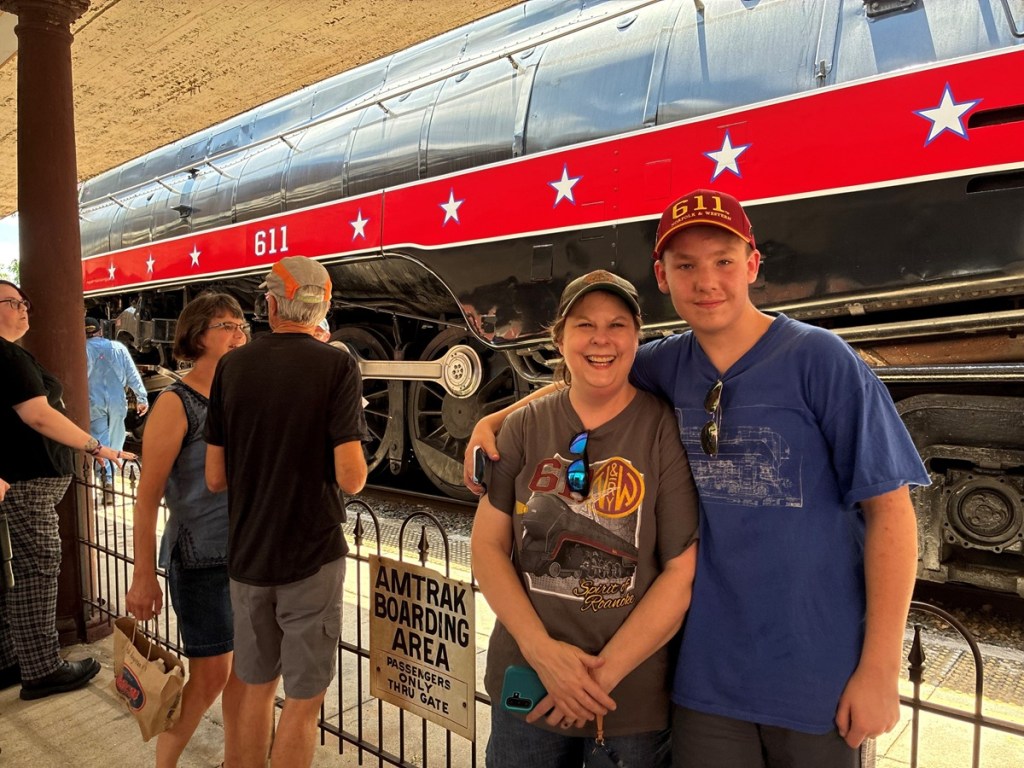
STAUNTON – Karen and Thomas Sions stood on the bridge overlooking the train station downtown.
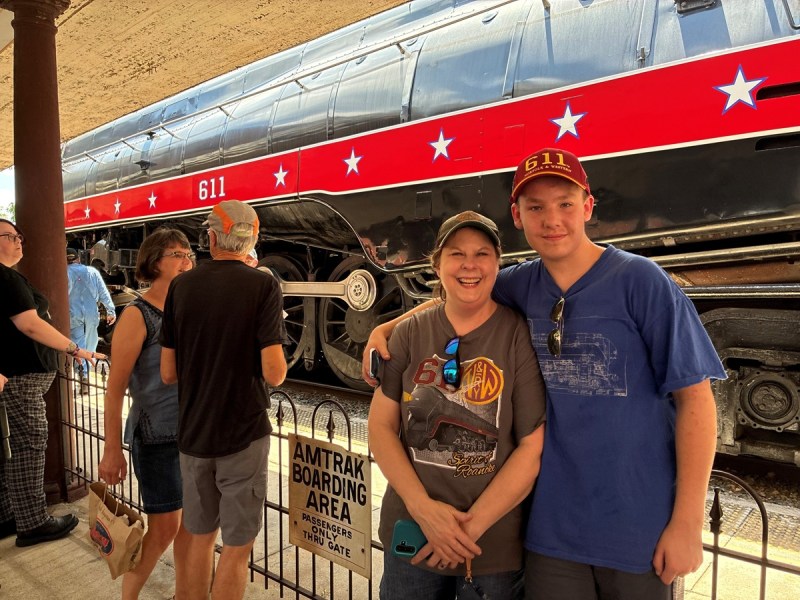
Thomas, 14, was counting down the minutes with his mother until the arrival of a coal-powered steam locomotive, the Norfolk & Western Class J-611.
“So for about six years, I’ve been waiting for this moment,” said Thomas Sions. “Yeah, that’s about right.”
Of the 14 Class J’s built by Norfolk & Western, No. 611 is the only survivor. Its typical home is the Virginia Museum of Transportation in Roanoke, but for the next four weeks it’s returning to public rails as part of the Virginia Scenic Railways’ Summer of Steam.
Both this weekend and next, the 611 will pick up passengers in Staunton before running a 90-minute round trip through the Shenandoah Valley, through the Blue Ridge Tunnel and passing over Afton Mountain. Tickets are still available through the Virginia Scene Railway website and at the station before each of the engine’s three daily trips at 10 a.m., 1 p.m., 4 p.m. The engine will then do two similar weekends in Louisa.
The Sions, who live in Harrisonburg, didn’t have time to ride the train this weekend, but the pair was able to stop in for its arrival. Thomas counted down the minutes, smoke visible in the distance, until the whistle blew. This was the first time the two would be able to see it in its natural habitat.
“We have been to Roanoke, to the transportation museum, seen the 611 up close and personal down there,” said Karen. “He loves trains, and … he’s never been able to see the 611 run on the track. This is a big deal.”
The duo was ready when the 611 rolled in, passed under the bridge, soot filling the air as it pulled into the downtown Staunton station.
“It was awesome, it got cinders all over me,” Thomas said. “I love it.”
Thomas has the experience of getting coated in the soot cinders in common with Zac McGinnis, the 611 steam operations manager. McGinnis referred to it as the “Cadillac of steam” engines.
McGinnis calls himself one of the engine’s fire men and joked that after a weekend of running the engine, “two or three days later, I’m still getting cinders out of my beard.”
“My job is, when I’m firing, is to maintain the boiler pressure, water in the boiler and steam pressure so the engineer can use it to operate the train,” explained McGinnis. “[It] takes two people to operate, an engineer and a fireman … the easiest way [to explain is] the old school movies, the guy shoveling the coal. This is so big, you physically can’t shovel enough on it to keep pressure up. It’s 107 square feet in the firebox, so you can park that car in it, and it’s 300 pounds of boiler pressure. I’ve hand fired it like 8 miles, and I’m done after that. You don’t need to go to the gym for two weeks after that.”
He also estimated that for every hour the engine runs, there’s far more than 150 hours put into working on it. The heavy maintenance needs for this type of engine are part of why the industry shifted to diesel locomotives. Even after the industry moved away from steam engines, they remain popular with many people like Thomas.
“We literally get people [coming from] all over the country, and the world, to see this thing,” McGinnis said. “It’s got the Art Deco streamlining look, it’s big, it’s powerful, and it’s a pretty engine.”
The cost to run the engine is high – for insurance, fuel costs and labor costs, the engine runs at a price tag of about $20,000 a day. This is part of the reason the engine comes out of the museum only around once a year.
The cost hasn’t deterred the Virginia Scenic Railway, the Virginia Museum of Transportation, the Steam Railroading Institute and hundreds of volunteers from keeping the engine running. Steve Powell, president of the Virginia Scenic Railway, was thrilled to get the 611 on the tracks for the 250th anniversary of the United States.
“It’s not just the history of the 611 and the roots that it has in Virginia [but], especially with these runs, it’s kind of the heart of America, you know?” said Powell. “To be able to see what American ingenuity looked like 75 years ago, and then to go back 100 years, 150, railroads have been around for [about] 175 years. … When you just think about the integration of the whole American story and railroads, I mean, they’re intertwined.”
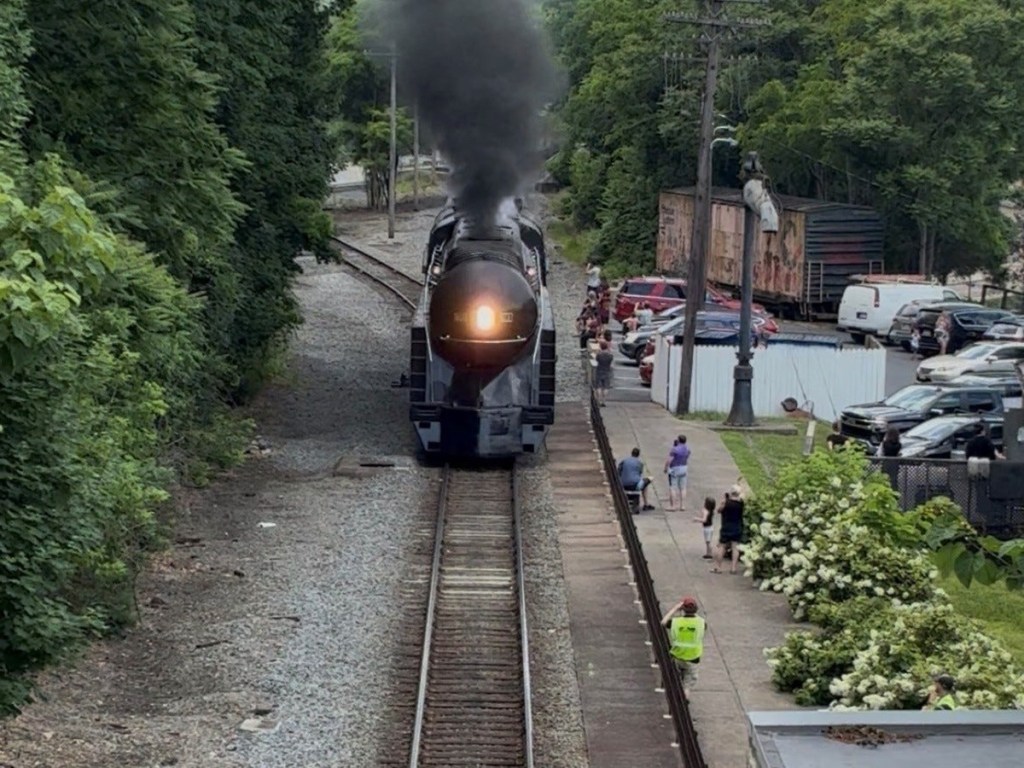
This type of locomotive was first designed and built in Roanoke. The first Norfolk & Western Class J Locomotive rolled out in 1941, while this specific engine was built in 1950. It pulled the Powhatan Arrow, a passenger train, from Norfolk to Cincinnati, and was capable of reaching over 5,000 net horsepower and 110 mph.
It also pulled Dwight Eisenhower’s presidential campaign train from Columbus, Ohio, to Kenova, West Virginia, in 1952. In 1956, it derailed around Cedar, West Virginia, but it returned to service 13 days later. It ultimately ran over two million miles before it was retired in 1959. It was moved to the Virginia Museum of Transportation in Roanoke in 1962.
Samantha Johnson, Staunton’s director of tourism, was also glad to see the engine arrive.
“This is the number one thing that we get asked about in my two years I’ve been here,” said Johnson. “We get asked, at least every other month, when’s the steam [engine] coming back? To see it is so amazing also for the 250th, the celebration … I think it’s such a great opportunity for train lovers.”
This story was updated with additional information.
Lyra Bordelon (she/her) is the public transparency and justice reporter at The News Leader. Do you have a story tip or feedback? It’s welcome through email to lyra@newsleader.com. Subscribe to us at newsleader.com.
This article originally appeared on Staunton News Leader.