We’re one week into the New Year, so let’s take a look back at some history tidbits you might not have known.
Delaware might have us on being the “first state,” but Virginia had the first successful English colony in 1607! Over the past year, we’ve delved more into Virginia’s unique history, and we’ve learned quite a lot about the Old Dominion.
From cats running for senator to the first student to sign up for classes at Virginia Tech, Virginia’s full of fun facts.
The Guy in the Golden Suit
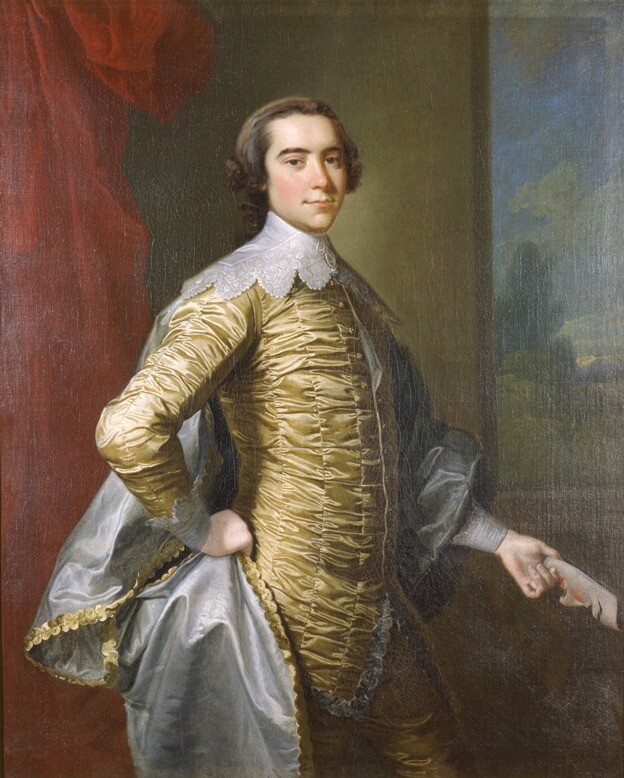
This guy in the golden suit is the Founding Father you’ve probably never heard of. While he rubbed shoulders with the Washingtons, the Lees, the Jeffersons, and the Masons, it’s unlikely that the name Robert Carter III rings a bell. Our bet? It probably should.
Prior to the mid 1860s, slavery ran rampant throughout the southern states. Virginia has a particularly difficult past with the peculiar institution, as Old Point Comfort, now Fort Monroe, was the site where the first captured Africans arrived on American soil in 1619. Given Virginia’s tumultuous past, it might come as a surprise that the commonwealth was also the site of the largest manumission by a single person prior to Abraham Lincoln’s Emancipation Proclamation. That’s where the guy in the golden suit comes in.
According to Andrew Levy’s “The First Emancipator,” published in 2005, Carter’s grandfather gifted him with a slave girl when he was just three months old. At age 21 in 1749, he inherited more than 100 slaves and 65,000 acres. By the start of the Revolutionary War, Carter “owned” more than 450 slaves. And on September 5, 1791, he filed a plan to free more than 500.
Though faced with resistance from neighbors and family, Carter gradually freed the slaves on his multiple Virginia plantations trough a “Deed of Gift,” starting with a group of 29 in 1792. The process took decades, as children could not be freed and had to wait until they reached adulthood. A historical marker in Heathsville states that Carter wrote: “To retain them in slavery is contrary to the true principles of religion and justice.”
📸: Virginia Historical Society
The Tannenbaum Tale
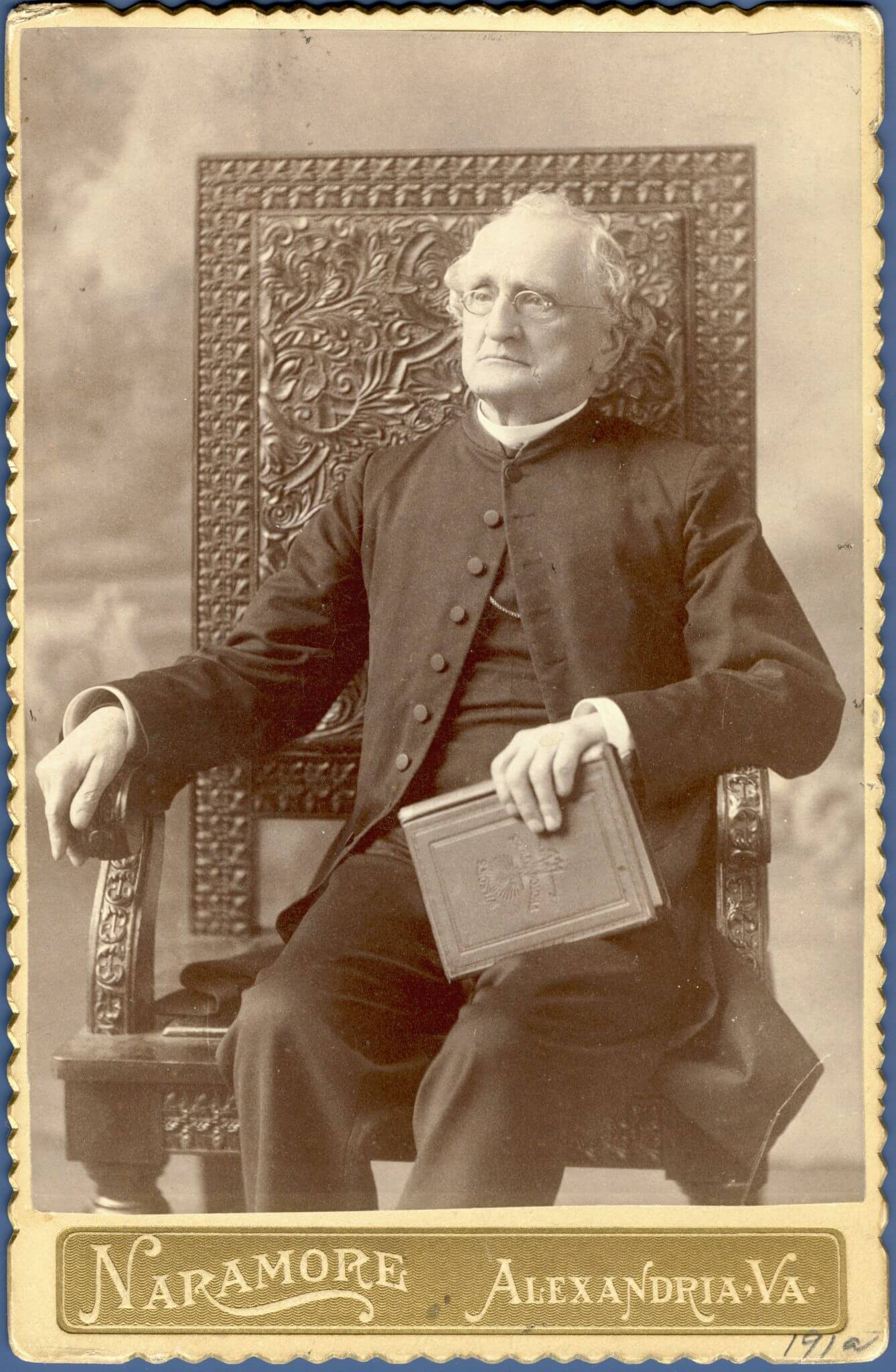
Have you ever wondered why we chop down a tree to bring inside at Christmastime? In Virginia, this holiday cheermeister had a hand in starting the tradition all the way back in 1842.
While at the Williamsburg home of Judge Nathaniel Beverley Tucker, the St. George Tucker House, 28-year-old German political exile Charles Minnigerode brought a little piece of his homeland tradition to the residence on aptly named Nicholas Street. On Dec. 24, 1842, Minnigerode cut down a tree and brought it inside, keeping a German tradition that started with none other than Protestant reformer Martin Luther.
As the story goes, the 16th century reformer noticed the way the stars glistened against evergreen trees on a stroll home one wintry night. Wanting to recreate the moment for his family, Luther cut down an evergreen tree and affixed it with candles.
While Minnigerode brought the tannenbaum tradition to Virginia, prior German settlers brought the festive foyer foliage idea to America about a decade earlier. It wasn’t until 1850 that the idea of a decorated indoor tree to help celebrate the holidays became a widespread idea—and that was all thanks to the influence of Queen Victoria and her husband, German-born Prince Albert.
Every year, the still-standing Tucker house erects an evergreen tree in honor of the first known circumstance of the tradition in Virginia.
📸: Encyclopedia Virginia and Virginia Historical Society
“Tatapatamoi Chepiack”
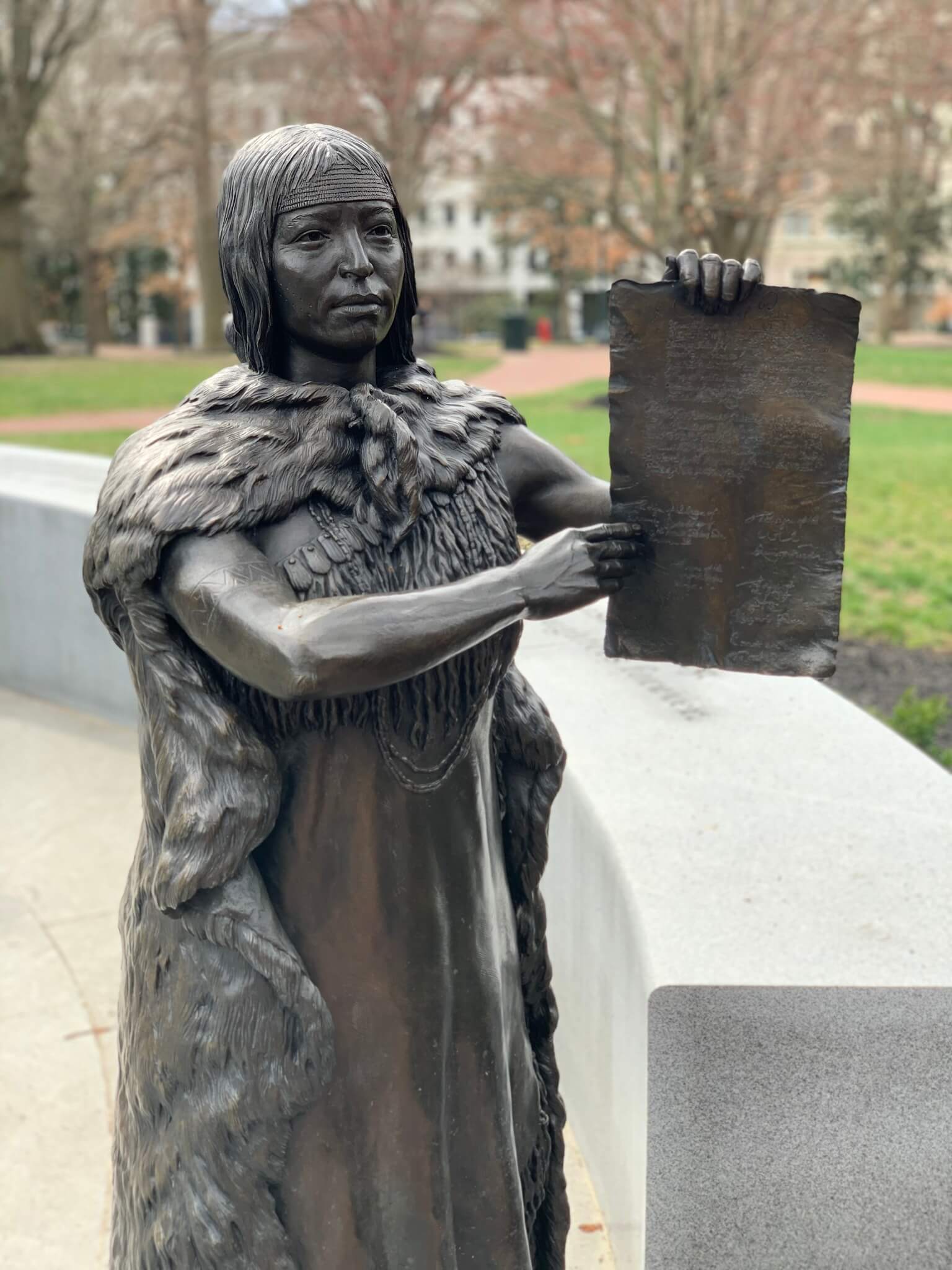
You’ve heard about Chief Powhatan, father of Pocahontas, right? Meet Cockacoeske—a descendant of Opechancanough, Powhatan’s brother.
Cockacoeske became queen of the Pamunkey following the death of her husband, Totopotomoy, when he and other indigenous warriors fought alongside the colonists at the Battle of Bloody Run in 1656. In 1676—the same year as Nathanial Bacon’s Rebellion—a committee of burgesses and Council members met in Jamestown. According to Encyclopedia Virginia, Cockacoeske entered the meeting “crowned with a broad woven band of beaded black and white wampum and peake shells, and she wore a full-length deerskin mantle with edges cut to resemble deep, twisted fringe.” There, the colonists asked her to provide warriors to help defend the colony. That led to an impassioned 15-minute speech by the queen before she agreed to provide 12 warriors, where she said: “Tatapatamoi Chepiack,” meaning, “Totopotomoy is dead,” effectively reminding those in the room of her husband’s untimely death, along with other Pamunkey warriors 20 years prior.
Unfortunately, Bacon’s forces attacked the Pamunkey people, killing some and capturing others. Cockacoeske escaped and barely survived the conditions of the Dragon Swamp, but then appeared in front of the General Assembly. There, she demanded the release of the Pamunkey captives and the return of stolen property, which eventually led to the 1677 Treaty of Middle Plantation. Also signed by several other Native American leaders in Virginia, the treaty provided protection, noted that Virginia tribes would maintain control of their lands, made certain that at least one person from each Nation would be fluent in English, and more in exchange for loyalty to the English crown.
A statue of Cockacoeske stands among other influential Virginia women at the Virginia Women’s Monument in Richmond.
📸: Kss5pj/Wikimedia Commons
He Would Walk 500 Miles (And We Bet He’d Walk 500 More)
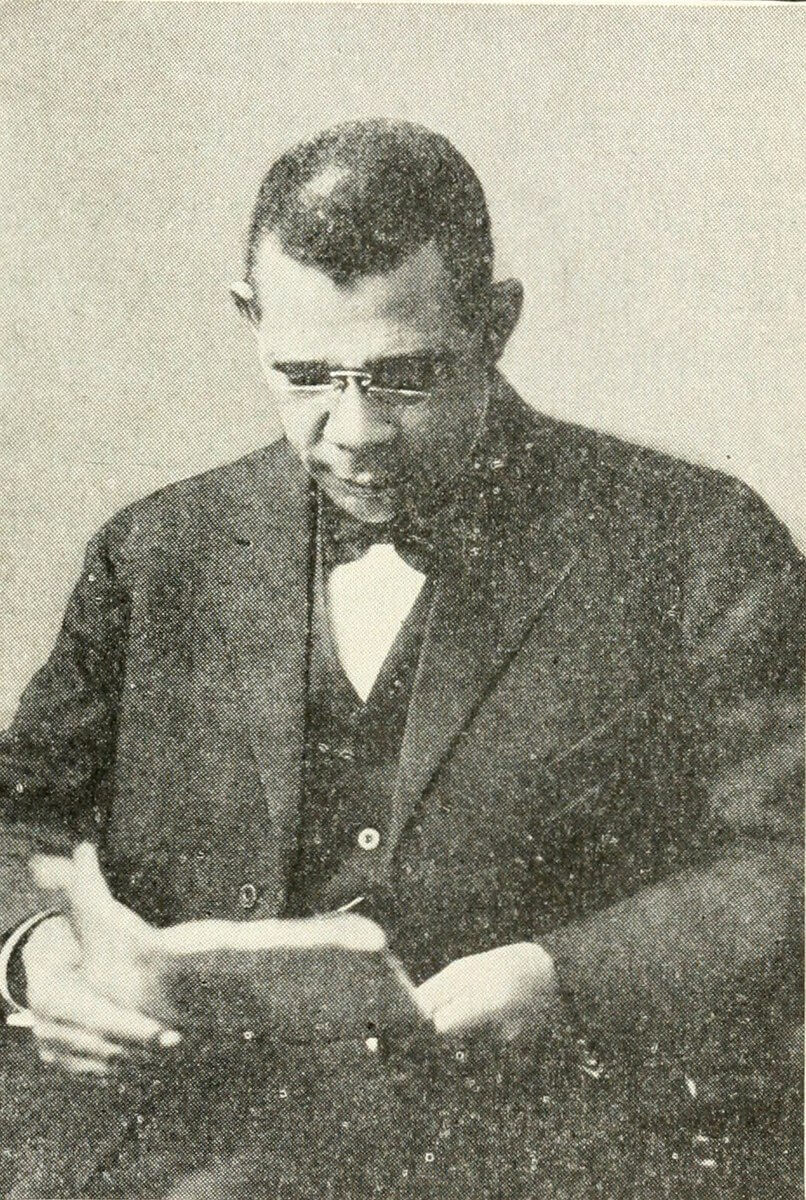
He was an educator, author, orator, Virginian, and — a slave? Dr. Booker Taliaferro Washington wasn’t born eating off of a silver spoon. In 1856, the man that would become one of the most influential African Americans of the 19th century was born into slavery in Franklin County, Virginia.
The 207-acre plantation grew tobacco, and it’s where Washington spent the first nine years of his life “owned” by James and Elizabeth Burroughs. As a youngster, Washington faced conditions much different from kids today. His housing arrangement — a small log cabin that also served as the “Big House’s” kitchen, since his mother, Jane, was the plantation cook — had no floor, no bed, and no glass windows, but rather “openings in the side which let in the light, and also the cold, chilly air of winter,” Washington described in his autobiography, Up From Slavery.
According to the National Park Service, which now preserves the land and history of Washington’s birthplace, Washington wanted to attend school. However, as a slave, he couldn’t. Instead, he had to carry the books to school for the local teacher, who was the plantation owner’s daughter, Laura Burroughs. Following the end of the Civil War and the reading of what Washington assumed was the Emancipation Proclamation, he was finally able to go to school as a student — but only after working a morning job.
In 1872, he learned of a school for formerly enslaved individuals: the Hampton Normal and Agricultural Institute (Hampton University). Washington chose to seek out the opportunity and walked 500 miles to the school, where he excelled as a student. Washington later went on to attend Wayland Seminary in Washington, DC, after which he returned to Hampton Institute to teach. When an opportunity opened in Alabama, the man who founded Hampton Institute, Union Gen. Samuel Chapman Armstrong, referred Washington to the The Tuskegee Normal and Industrial Institute (Tuskegee University)—and as folks like to say, “The rest is history.”
📸: A Boys’ Life of Booker T. Washington/Wikimedia Commons, WeeJeeVee
Almost Heaven, West Washington?
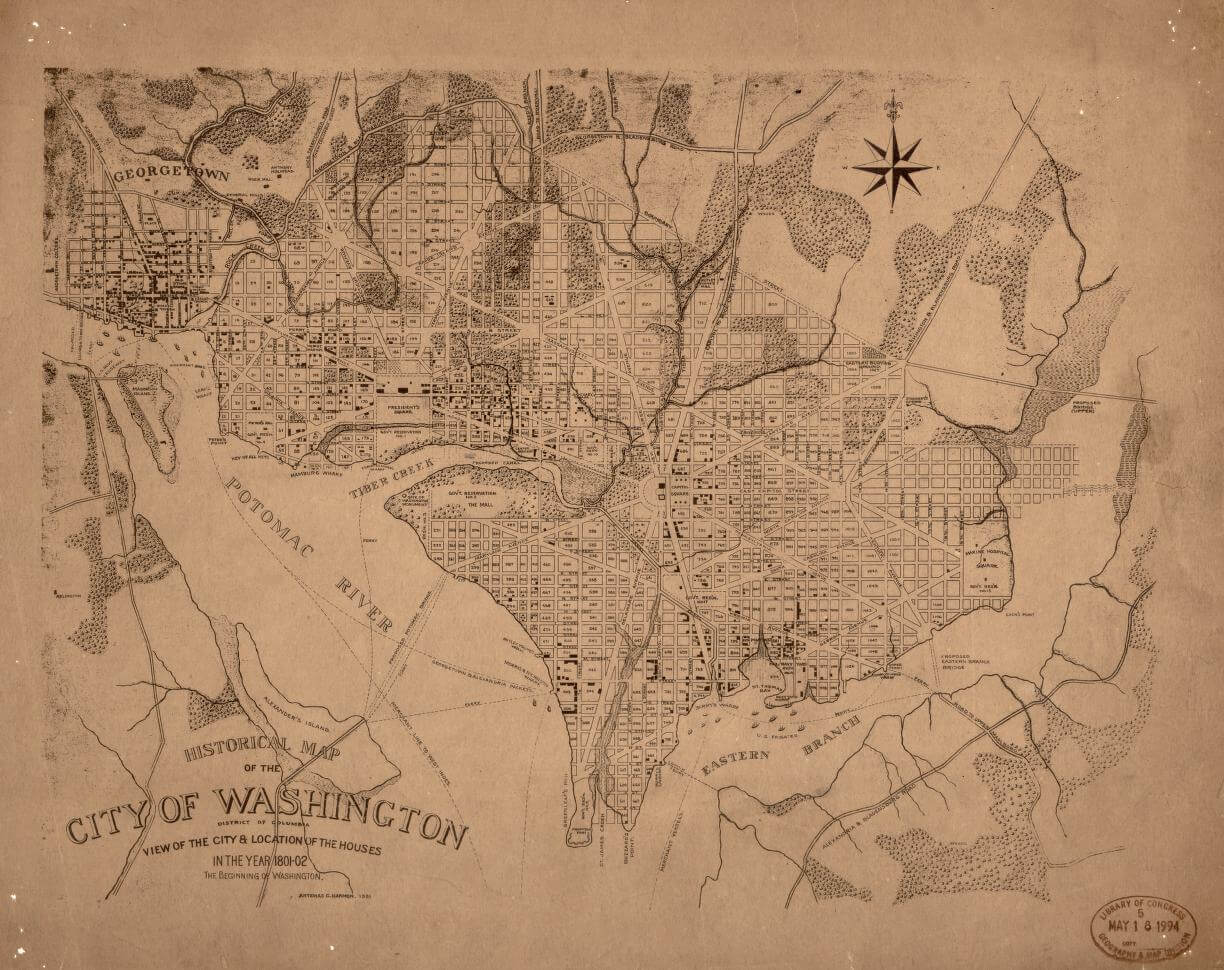
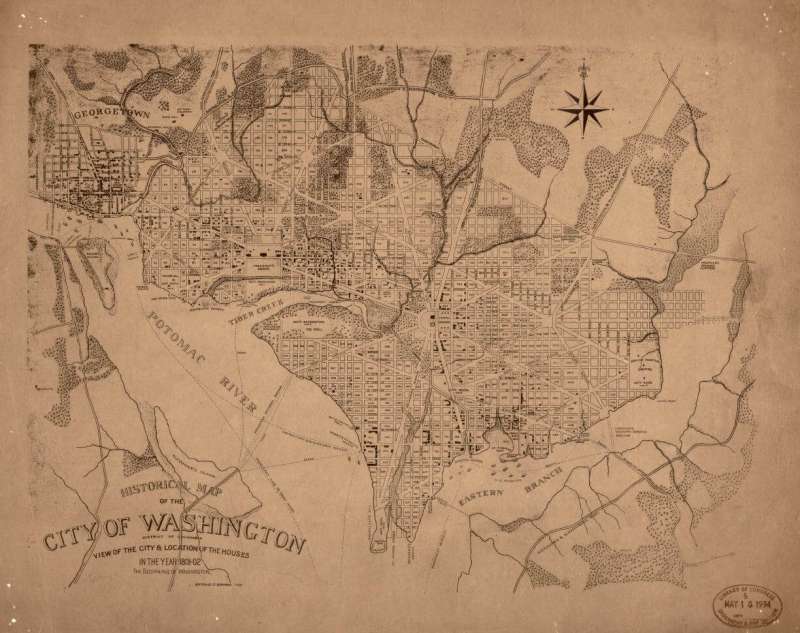
Did you know that up until June 20, 1863, West Virginia history was actually western Virginia history? Yep, that means that when Shepherdstown resident Henry Bedinger and nearby Sharpsburg, Maryland, resident William Good wrote to President George Washington on Dec. 1, 1790, they supported the idea of moving the nation’s capital to—what was at the time—Virginia. Actually, the letter was a bit of an apology too—the duo cited “unavoidable accidents” for not sending the information sooner and requested a “few days” delay in the location selection process.
In July of the same year, the Residence Act passed. The compromise between Virginians Thomas Jefferson and James Madison and immigrant Alexander Hamilton granted Washington the power to ultimately choose the exact location of the capital. However, there was one big condition—the new capital city had to be situated along the Potomac River.
Bedinger and Good helped put their local community in the running. Thanks to modern-day roads, there are about 73 miles between the quaint historic WV town and present-day Washington, DC. In perfect traffic, that’s about an hour and a half. In Washington’s day, approximately 55 miles separated the two as the crow flies, and it had some things going for it—not only was it located along the Potomac, but it also had quite the claim to fame just three years prior. Shepherdstown resident James Rumsey invented the steamboat in 1787.
After a visit from Washington himself in October 1790, Shepherdstown-area folks on both the Virginia and Maryland side of the river pitched in toward the effort. They pledged approximately 475 acres of land and raised over $31,500, according to the National Archives.
Washington and a small team selected the present-day District of Columbia location in 1791—just 17 miles or so from the president’s beloved Mount Vernon home. Two years later, Washington himself laid the cornerstone of the US Capitol Building.
In 2020, fewer than 1,500 people called Shepherdstown home, compared to nearly 713,000 people living in Washington, DC.
📸: Library of Congress, Geography and Map Division
Bound for Blacksburg
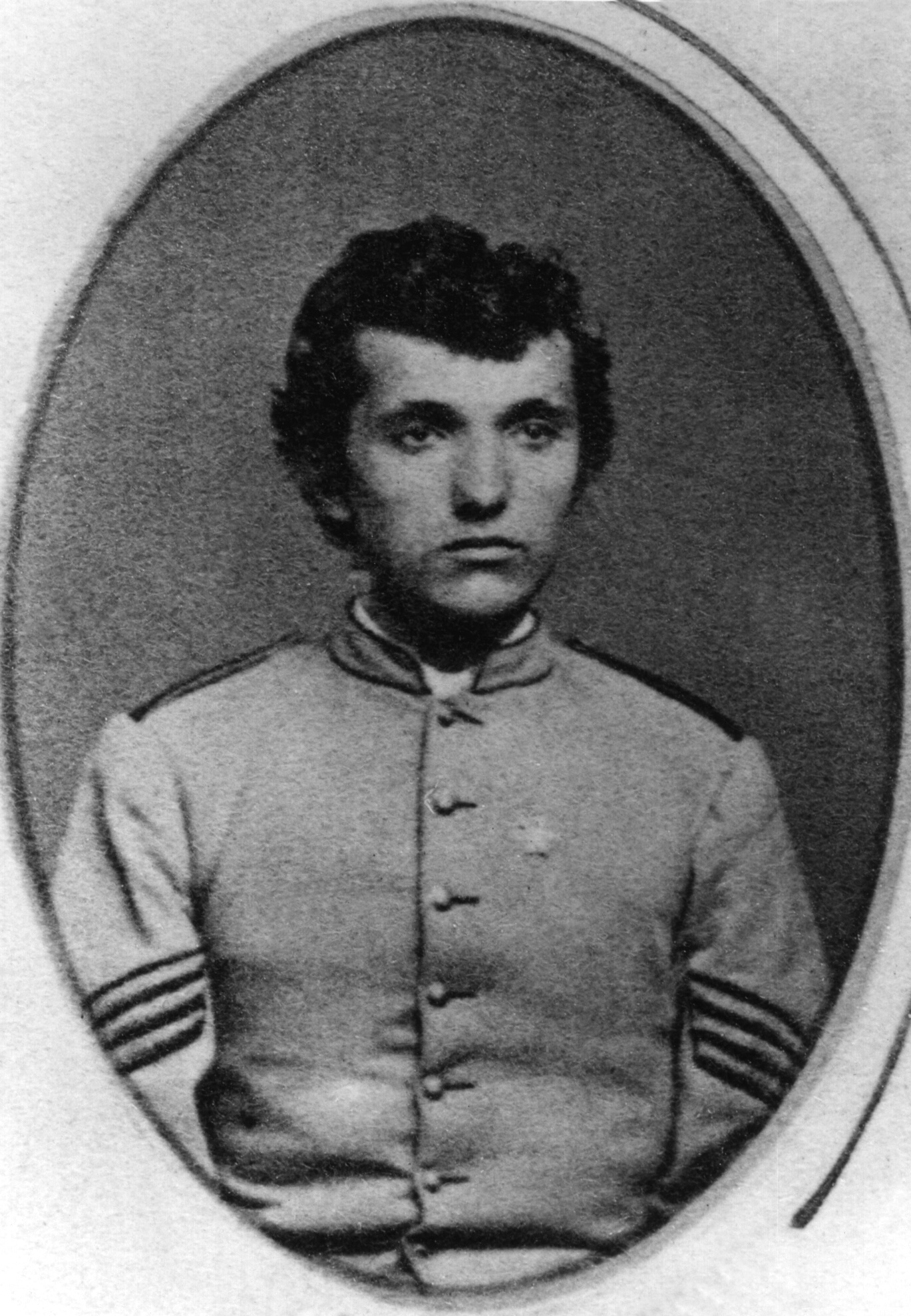
How far would you be willing to walk to receive an education? For William Addison “Add” Caldwell, a 16-year-old from Craig County, around 28 miles was the answer.
Bound for Blacksburg on Oct. 1, 1872, Add and his brother, 18-year-old Milton “Mic” Caldwell traversed two mountains to arrive at Virginia Agricultural and Mechanical College. Does the name of that school ring a bell? It might for Hokie fans — it’s now Virginia Tech.
Add became the first student to enroll at the new college, with a scholarship in hand. His brother joined the educational pursuit a few weeks later, also with a scholarship. According to the Virginia Tech Magazine, which published an article about Add in 1991, among other expenses, tuition was $30, fees were $10 fees, room rent was $5 per month, and uniforms cost $17.25 at the time of the brothers’ enrollment.
The boys from Sinking Creek left their family farm, parents, and siblings to attend the school. Mic never graduated, but Add did — and he did so as part of the college’s second graduating class. After college, Add returned to Craig County as a teacher. He later worked for Norfolk and Western in Roanoke, and then moved to Wilmington, North Carolina, where he took up sales.
Nowadays, the Corps of Cadets at Tech participate in a two-part Caldwell March, which cumulatively honors the steps the brothers took to reach the school 150 years ago. A statue of Add on his trek greets students on the Virginia Tech campus.
📸: Historical Photograph Collection, Special Collections and University Archives, University Libraries, Virginia Tech
Cat For Congress, Anyone?
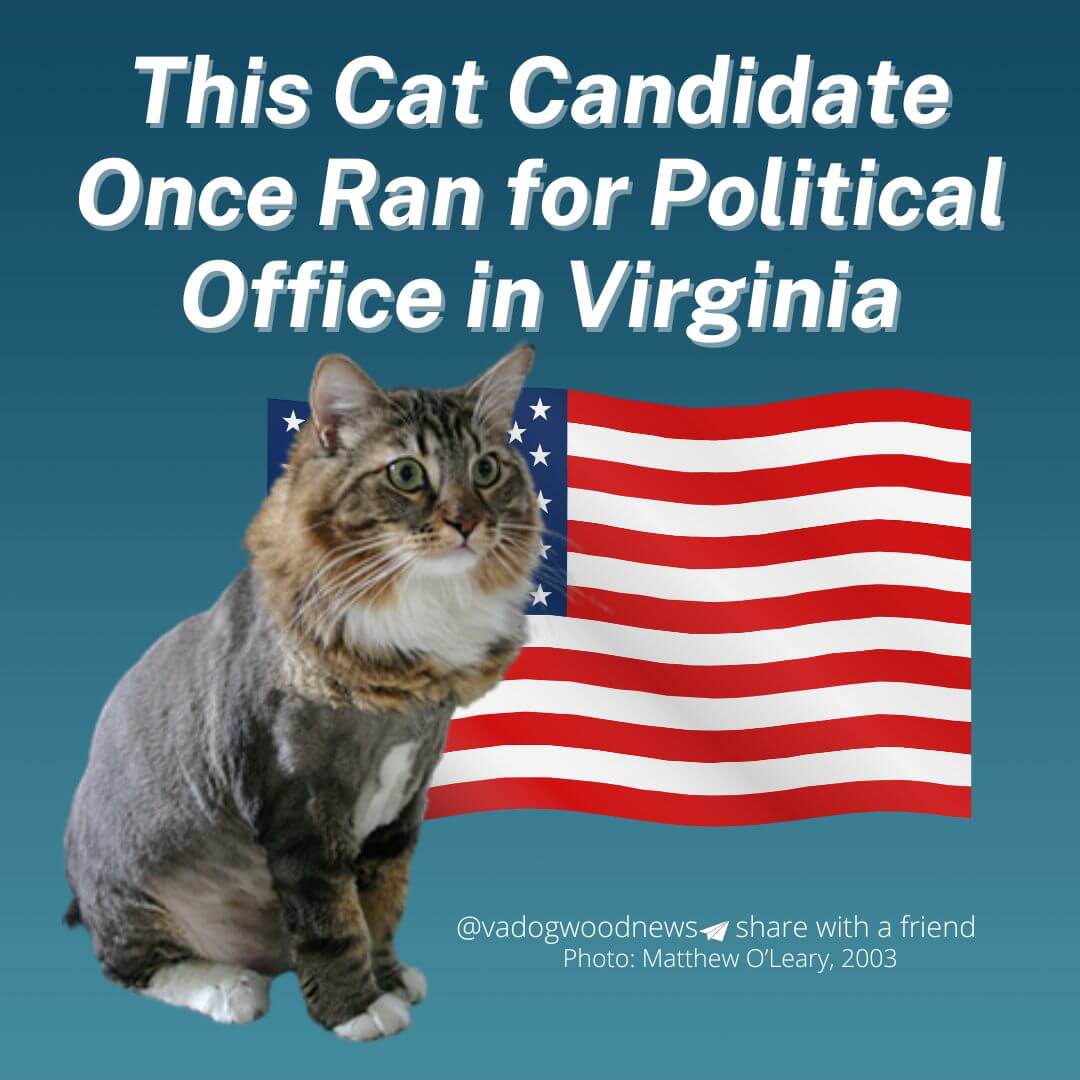
Did you know that there was quite a catfight a decade ago in Virginia over a political race? It was 2012, the year politicians Tim Kaine and George Allen vied for former Sen. James “Jim” Webb’s seat. Their opponent? Hank the Cat.
The formidable feline quickly gained an impressive following — about 14,000 Facebook followers in just two weeks. Over the years, the Springfield cat’s following grew to include more than 97,000 fans on the social media platform.
Ultimately the four-legged candidate didn’t land on his feet in the Senate seat. Hank the Cat came in a solid third place, taking an unknown portion of the more than 9,000 write-in votes received across the commonwealth, compared to Kaine’s 2 million votes and Allen’s 1.7 million votes reported by the Virginia Department of Elections.
Sadly, Hank the Cat passed away in 2014, which would’ve been less than one-third of his first term in office.
📸: 2003 Matthew O’Leary/Hank the Cat with “lion cut”
Test Your Knowledge:
How many of these stories had you heard of before reading this article? If you’re a history buff, we bet you’d love our new Virginia history quiz. Click here to see how much you know about Virginia history.