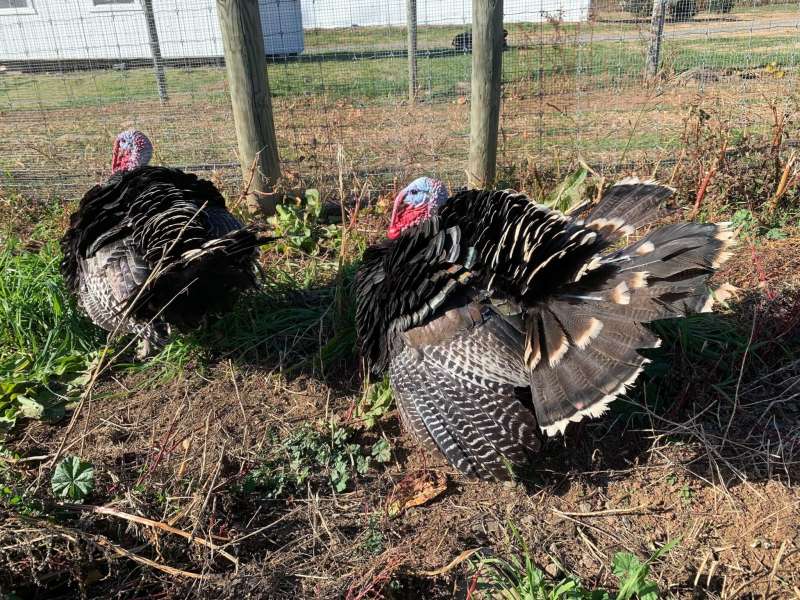
A peek into America’s only peck-turesque KellyBronze farm
In the months leading up to Thanksgiving, the sprawling fields of Heritage Glen Farms in Crozet, Va. are filled with flocks of heritage turkeys. In the days leading up to Thanksgiving? All the birds are boxed up and ready to be flighted out to culinary consumers across the country.
Judd Culver, owner of Heritage Glen Farms, is the only American farmer who raises the fine fowls for Kellybronze Turkeys, a United Kingdom-based company. Across the pond, the birds have been dubbed the “Rolls-Royce” of turkeys. In Crozet? They’re just “bred to be wild.”
Every single turkey found across the world originally hailed from North and South America. When Spanish conquistadors sailed across the seas, they gathered up the birds and took them back to royal families in their home countries. They’re called turkeys because they resembled a bird found in Turkey.
The turkeys raised by Culver and his family look exactly like an Eastern bird; one of the subtypes of turkeys found in America today.
“They just have a little different feather coloring, and the KellyBronze looks traditionally like an Eastern turkey, which is what we would find here in the mountains of Virginia,” he said.
This is the seventh season for Culver and his family at the farm, who are first-generation farmers. It took them a while to get the farm up-and-running to what it is today from when they first bought it in 2014.
Where the cluck is the farm?
Interestingly enough, not many people know that the farm is based in Virginia, as opposed to the U.K. Culver had customers this year that bought a turkey who asked to get the bird shipped to Charlottesville, a 20 minute drive from Crozet. He plans on dropping the birds off himself, and understands where the confusion comes from because the assets the farm uses are from the U.K. He hopes to have American assets next year, to ease some of that confusion customers might have.
The birds raised by Culver and his family are “heritage birds, but what exactly is a “heritage bird?”
“It’s just the natural bird that Mother Nature created,” Culver said.
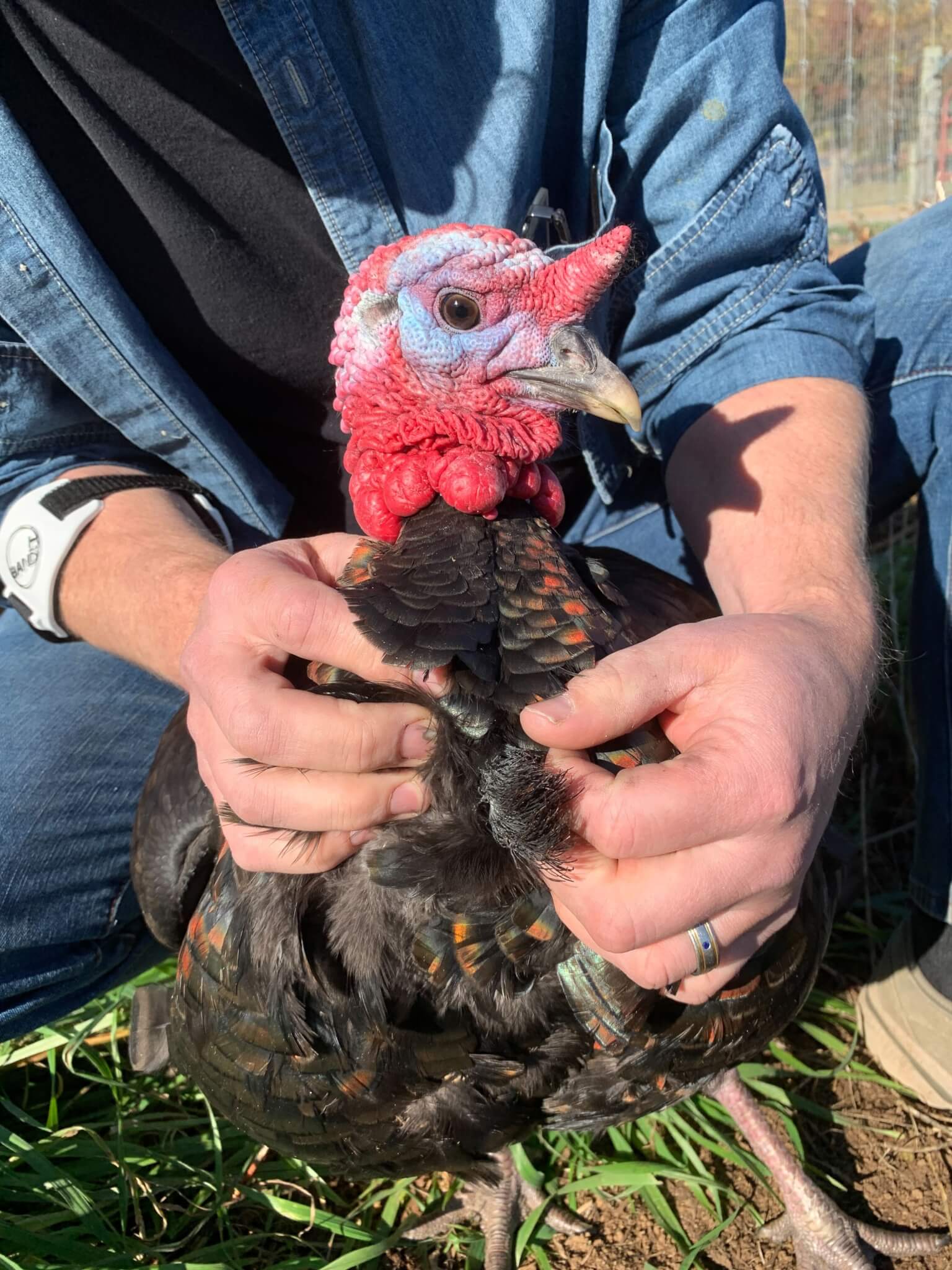
It’s an “old-school” term that differentiates commercial birds consumers get from companies like Butterball and Purdue, as opposed to the birds that “Mother Nature intended.” Peanut Butter and Jelly, the turkeys recently pardoned by President Joe Biden, are examples of the stark white commercial birds that are more commonly seen.
This year, Culver said he placed an order for an extra 1,600 birds in the hopes that people would be back celebrating with their families.
“We have about 450 left out of the 4,700, which is a big number for us. Last year we only did 2,500. We sold out in September last year, so there were people who were disappointed. This year, we put a bunch of Christmas birds down — small birds; 10-to-11 pounders.”
For Culver and his farm, “Thanksgiving doesn’t stop,” because the team does everything by hand. That includes raising the birds to plucking and dry-aging the birds to shipping them out, which adds to their hefty price tag. It’s labor-intensive work that takes longer, but the end result is a quality product.
“But we got birds,” Culver exclaimed.
Contrary to reports that circulated earlier this year, there’s no turkey shortage, which is good news for the procrastinators of the world.
“Everybody says there’s a shortage, but we don’t have a shortage! You can still buy from us,” he said, laughing. He also added that turkeys from the farm were available for sale through noon on Monday, Nov. 22.
Born to be wild
But what makes these birds so special, considering their nickname? The birds don’t have their own silk pillows, nor is there a luxurious turkey spa on the farm, but they’re raised with love and care. They’re also the only dry-aged, hand-plucked USDA-certified turkey in the United States.
“[My wife] Cari always says ‘they live a wonderful life, except for one day.’ Our placement is 200 [birds] per acre,” he said.
It’s a much smaller number compared to commercial farms. “Our slogan’s ‘bred to be wild,’ but a lot of people don’t understand what happens in the commercial industry. What we don’t do is anything; we don’t trim their feet, we don’t de-beak them. We breed, hatch, grow the way mother nature intended, harvest, and then sell them,” Culver said.
The birds live out their best lives in a large, sprawling field, but are hatched in an incubator. The only time they’re inside is when they’re in a brooder barn — “basically a nursery” — for heat for the first couple weeks of life. Depending on what the weather’s like in May, the doors to the brooder barn get opened and they’re allowed to roam outdoors. Until they’re about six weeks old, they do get pushed back into the barn every night for protection.
After that, the birds are mostly big enough to fend for themselves, but they live in a large netted enclosure for about three-to-four weeks, which offers additional protection against enemies like the red-tailed hawk. When the birds hit ten weeks of age, they’re big enough to roam around the roughly 18-acre farm where the hawks won’t try to swoop in and snatch them.
Culver and his family spend a lot of time with the turkeys, to the point where they’re “babied.” His dad moves in for the first ten days of the birds’ life. Humans on the team spend upwards of 12-16 hours a day in the brooder barn, nurturing the chicks for those first ten days.
“It’s basically like having a newborn baby times 4,700,” he said.
Culver makes his own diets for the birds, featuring simple, organic, non-GMO, locally-sourced corn and soybeans that are ground on-site at the farm, with a tiny bit of minerals.
“Everything’s Virginia-grown.”
When they’re in the field, the birds get their protein from insects and arachnids like grasshoppers and ticks, as well as crickets, worms, flies; pretty much any sort of small creature that finds their way into the field. The birds are high-protein eaters, and need more protein than chickens.
“All you need is fresh feed, clean, fresh water, and clean, fresh air. If you provide those three things to any animal, they will thrive. If you drop one of those, then they’ll thrive less. If you drop two of them, they’re gonna start dying. And certainly if you drop three, then they’re gonna die,” he said.
After all these years, it’s been impressive to learn that Culver’s children haven’t gotten attached to the birds. However, his wife got attached to a bird one year.
“Sometimes they’ll throw different colors. So three or four years ago, we had one that threw…it was kind of like a brown because her feathers were kind of brown. So we called her Brownie. I made the mistake of bringing her over to Cari to let her say goodbye before we harvested. She didn’t really want to do that. I thought it’d be nice! I thought she’d say bye! So we don’t do that anymore,” he said, adding that it’s a bad idea to name your food.
“I’ve been in it for a long time. So it doesn’t bother me because I see the full cycle of life. I enjoy breeding them, hatching them, growing them, and then I enjoy harvest as well.”