The proposed merger between Dominion Energy and Florida-based NextEra Energy could affect your electric bill and energy reliability—and new developments seem to emerge daily.
On May 18, Florida-based NextEra Energy announced plans to merge with Virginia’s electric utility, Dominion Energy. If the merger proceeds, it will create one of the largest utilities companies in the country. A website promoting the merger says it will support affordability and reliability, though critics have expressed concerns about rate hikes and quality of service.
On Oct. 20, Gov. Abigail Spanberger (D) said the State Corporation Commission (SCC) should reject the merger unless residential ratepayers were granted a six-year rate freeze and the companies almost tripled the bill credits promised to Dominion’s utility customers. A day earlier, SCC staff also recommended against the proposed merger as it stood at the time.
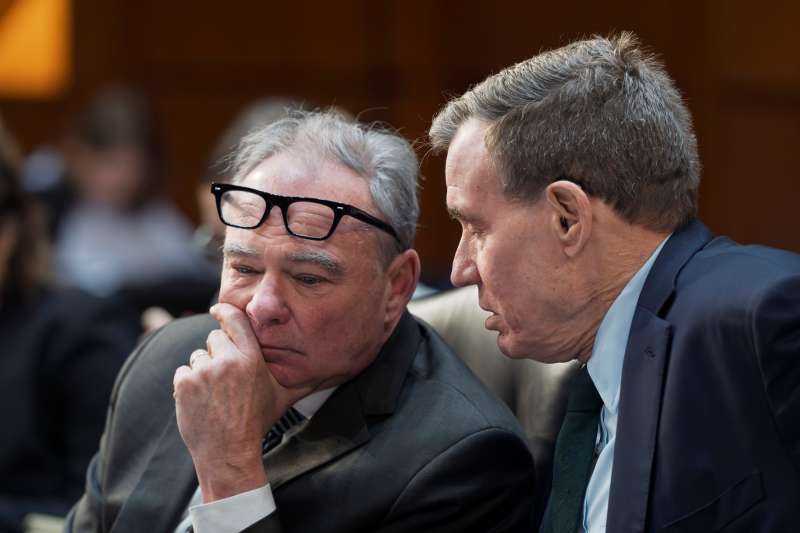
Spanberger and SCC staff aren’t the only ones with opinions on the matter. Dogwood asked both of Virginia’s US senators—Tim Kaine (D) and Mark Warner (D)—and three of the commonwealth’s US representatives—Suhas Subramanyam (D-10th District), Don Beyer (D-8th District), and James Walkinshaw (D-11th District)—to voice their thoughts on the merger and the factors that led to it.
Here’s what they said.
Sen. Tim Kaine weighs the merger’s effects on Virginians
In August, Spanberger announced she would be intervening in the Dominion merger—a decision Kaine praised.
According to CBS 19 News, Kaine said three issues should define the merger: how much Virginians pay for power, whether the merger would impact jobs, and how the deal could influence energy supply.
“The key is, how’s it going to affect Virginia consumers?” Kaine told Dogwood on Oct. 30. “I’ve been reading reports about what SCC staff have said—what the government have said—and I hope those concerns about Virginia consumers are the things that really are the decision-makers for the SCC.”
He added that the merger is “a hugely important issue,” but since it will ultimately be decided within the state government, he wouldn’t get to vote on it and would continue focusing on broader federal issues like the Iran war and tariffs.
Sen. Mark Warner endorses data center regulation
It’s no secret that the data center boom—which increases demand on Virginia’s power supply—was a primary factor leading to the merger.
In at least 10 states, the boom triggered midterm ballot measures calling for data center regulation or cessation. In Virginia, state Sen. Russet Perry (D-Loudoun) even introduced a data center moratorium that would take effect July 1.
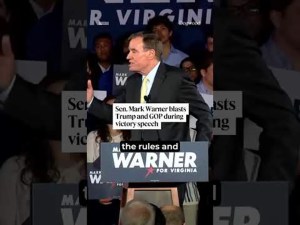
Warner, who was elected to his fourth term as US senator Tuesday night, explained his position on such moratoria to Dogwood.
“A moratorium ought to be decided at a local level,” he said.
He then referred to a piece of legislation that he sponsored, the Data Center Tax Accountability and Disclosure Act of 2026, as an alternative to a statewide moratorium.
“It will take away bonus tax depreciation unless you bring your own power [and] don’t overuse water—and they have gotten better on circulatory [systems],” he said.
If passed, the bill, also known as Senate Bill 5054, would amend a section of the Internal Revenue Code to exclude any property used for AI data centers from qualifying for bonus tax depreciation.
“That, I think, is a much more powerful tool, and then if a local government wants to add more, or take away—but you’ve got to have that baseline.”
Rep. Suhas Subramanyam discusses merger opposition
In addition to being a US congressman, Subramanyam is an IT professional who was appointed as a White House technology policy advisor to President Obama in 2015. He didn’t shy away from his stance against the merger when asked.
“In Congress, I’ve tried to drum up national opposition to this,” he said. “We’ve got Sen. Warner and even some folks on the Republican side to talk about this as well. It’s going to drive up utility costs for every single Virginian, it’s bad for our commonwealth, and it’s bad for our economy.
“We have to make sure we oppose it.”
Subramanyam has been a vocal skeptic of rapid, unchecked data center and transmission line expansion. In a July interview, he stressed to Dogwood that he rejects “the entire premise and structure of how we’re building power infrastructure for data centers,” which will directly impact Virginia ratepayers in tandem with the merger.
Last week, Dogwood asked Subramanyam about SCC chairs skipping recent public hearings related to the merger.
“Normally that’s not out of the ordinary for them to do, but this is not a normal situation,” he said. “They should be at every single hearing, they should be looking at the facts themselves.”
And what about SCC staff opposing the merger?
“I’m glad that the staff is starting to recognize that this is a bad idea too, and I hope that the commissioners take the staff recommendations—they often do in other cases.”
Rep. Don Beyer questions outsourcing of energy futures
Beyer has faced longstanding criticism for accepting donations from Dominion Energy. Despite this, he expressed his concerns over allowing Dominion to merge with NextEra.
“I’m very skeptical of it,” he said. “I think generally, we’ve looked at the history of American governance the last 60 years, we’ve had more and more consolidation, and it’s never good for workers, it’s rarely good for consumers..”
Beyer expressed concern that the merger, and its impact on Dominion, would cause Virginia to lose jobs and control over the future of its energy. And while Dominion wouldn’t technically move to a different state, shareholders of the Florida-based NextEra would own 74.5% of the resulting company, while shareholders of the Virginia-based Dominion would own the remainder.
“Maybe there’s a positive argument but I’ve not heard it yet,” he said.
He went on to praise Spanberger’s involvement in the deal.
“And I’m glad our governor has weighed in and says, ‘not without her approval or supervision.’”
Spanberger doesn’t have the power to approve or reject the merger outright, but she has filed to formally intervene in the deal, increasing her level of oversight.
Rep. James Walkinshaw remains skeptical of merger
Walkinshaw aligned with Beyer in praising Spanberger for her involvement in the historic buyout.
“I give Gov. Spanberger a lot of credit,” he said. “I think very early on she laid out a clear set of terms that would meet her threshold for Virginians—to lower rates, have commitments to protect Virginia and Virginians—and to date, what I have seen and read about it, the merger doesn’t meet those standards.
“So right now it doesn’t look good to me.”
This statement is consistent with what he told Virginia public media in October, ahead of the 2026 general election: “Any deal must protect ratepayers, lower utility costs, and put Virginians first. If it fails to meet those standards, it should be rejected.”
Warner won reelection on Tuesday, as did Subramanyam, Beyer, and Walkinshaw. Kaine is not eligible for reelection until 2030.