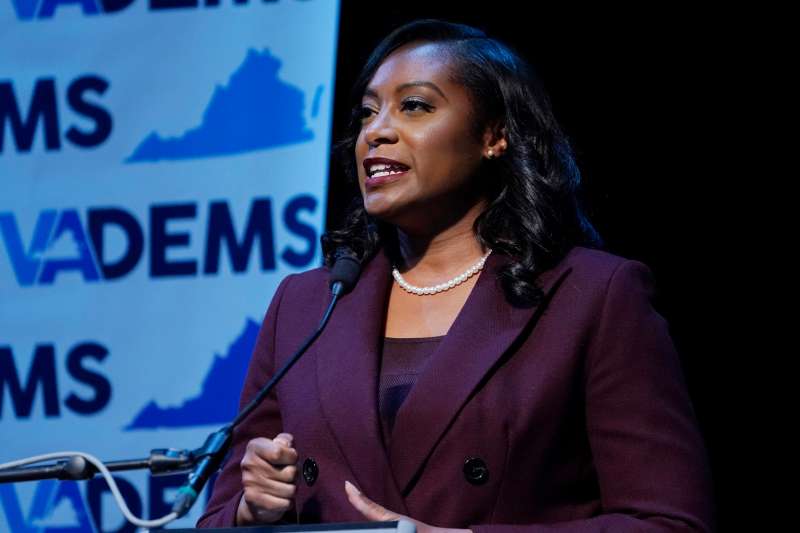
State Sen. Jennifer Carroll Foy (D-Woodbridge) said in an interview with Dogwood that she plans to file legislation to repeal Virginia’s “right-to-work” law that allows workers to enjoy the benefits of a union contract without having to pay union dues.
She will face an uphill fight in next year’s legislative session. Gov. Abigail Spanberger (D) has said she does not support repealing the anti-union law. And similar legislation filed over the years has faltered in the General Assembly. Spanberger could not be immediately reached for comment.
Carroll Foy understands repealing “right-to-work” isn’t something every Democrat agrees on, but she maintains it’s the right thing to do and the right time to do it as national support for labor unions has been on the rise.
“These bills don’t happen or pass overnight—it takes work,” Carroll Foy said. “I understand that Gov. Spanberger has not changed her position, and neither have I.”
Carroll Foy filed a “right-to-work” repeal bill in the 2026 legislative session, but it died without any debate in the Virginia Senate Commerce and Labor Committee, which is chaired by state Sen. Creigh Deeds (D-Charlottesville).
Carroll Foy said she’s hopeful she can persuade Deeds to give the bill a hearing this year. Deeds could not be immediately reached for comment.
“It’s about really making the stronger case to Sen. Creigh Deeds to allow us to have a full and fair hearing,” Carroll Foy said. “I am of the position that bills should not die in darkness.”
Virginia is among the 26 states in the US that have “right-to-work” laws, including North Carolina and West Virginia. “Right-to-work” laws have roots in Jim Crow-era attempts to keep workers segregated and divided. States have adopted “right-to-work” laws as a way to attract business investment, but such laws drive down wages and undermine labor unions’ ability to bargain with employers.
Carroll Foy said at a time when people are struggling amid an affordability crisis while billionaires increase their wealth, getting rid of “right-to-work” is a way of leveling the playing field in Virginia.
“We know that it doesn’t do anything as far as adding more jobs to our economy,” Carroll Foy said of “right-to-work.” “What it does is undermines workers’ negotiating ability to be able to get higher wages and more job protections and security.”