My friends, February is almost over, but we’ve got one last feature we want to share for Black History Month. Today, we’re reflecting on Richmond’s past through the city’s historic Slave Trail.
If you haven’t been, it’s really worth the trip. Along the path, you can read about several of the locations that—though difficult—tell the stories of yesteryear. If you’re curious about the walk, keep reading. And remember, I’m so glad you’re here.
|
|
|
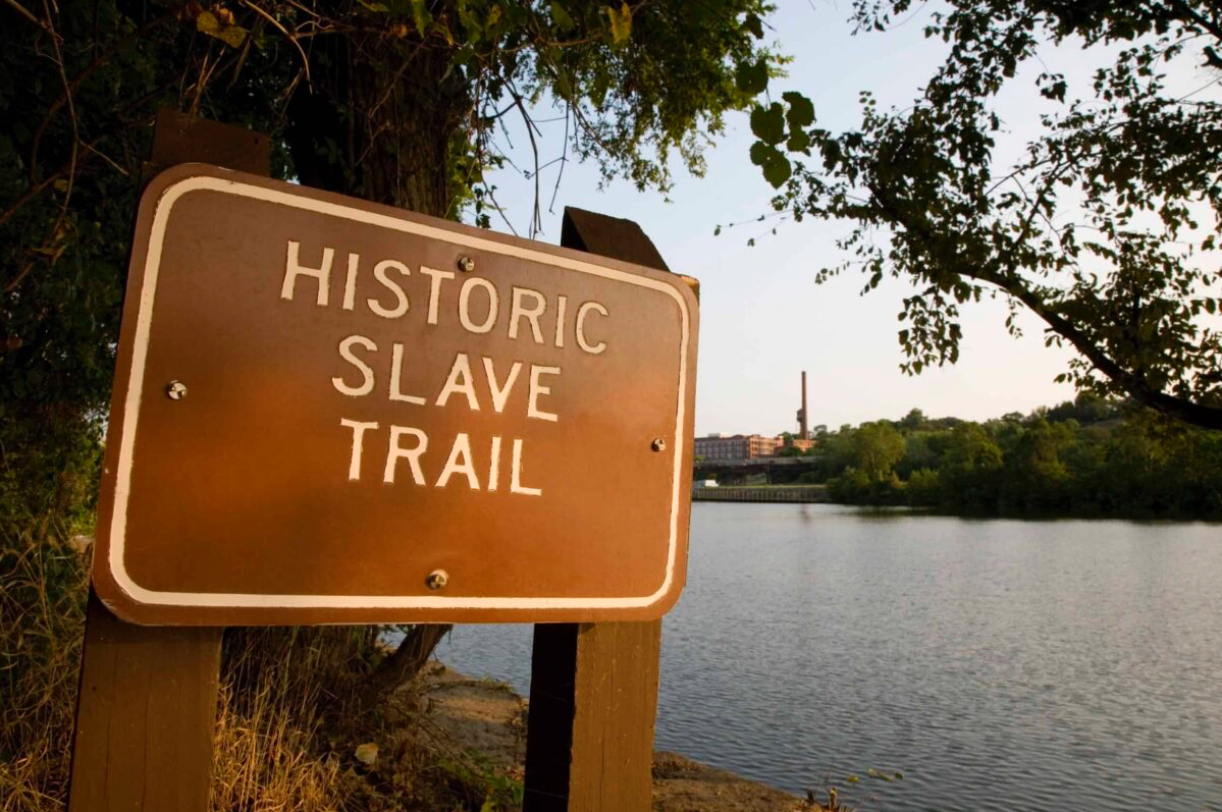
The Richmond Slave Trail follows 17 markers. (Virginia Tourism Corporation)
|
By Aila Boyd
Here’s what you need to know: The Richmond Slave Trail follows 17 interpretive markers along the James River, chronicling the city’s past as a slave trading hub.
Three impactful moments:
-
The first stop, “Crossing the Atlantic,” details how enslaved Africans were transported up the James River prior to 1776 to work in tobacco and wheat fields. Following the 1778 outlawing of the importing of Africans from abroad in Virginia, the Manchester Docks and Rocketts’ Landing were used as “downriver” slave trade ports.
- “Creole Revolt” tells the story of the 1841 revolt on the Creole, which was sailing from Richmond to New Orleans at the behest of Richmond traders. During the voyage, Madison Washington, one of the 100 enslaved Africans on the ship, started a mutiny. He redirected the ship to Nassau. Upon arrival, the Bahamas freed the enslaved on the ship.
-
The British, African, and American triangular trade route is memorialized in the “Reconciliation Statue,” which is identical to ones in Liverpool, England, and Benin, Africa. In 2007, the Virginia General Assembly articulated its regret for the commonwealth’s involvement in the slave trade.
Want to know more? We’re sharing what you can expect to find along the path.
|
|
|
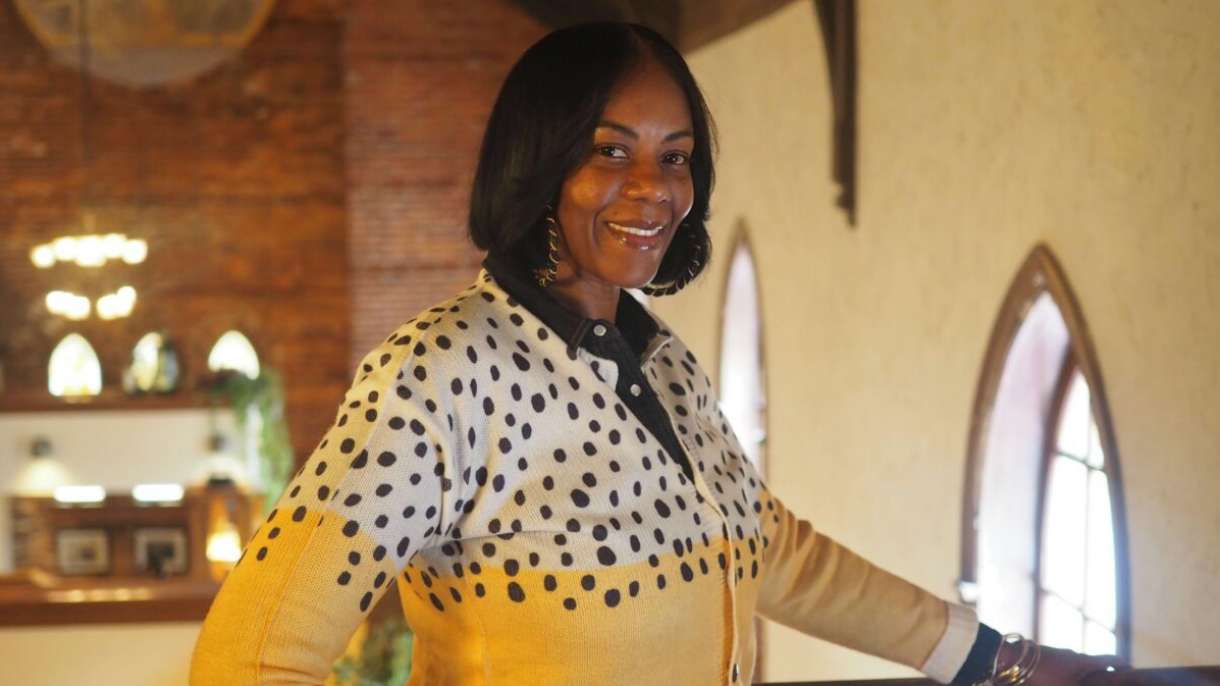
Samira Brooks, a home care provider, says collective bargaining would give workers like her a seat at the table. (Michael O’Connor/Dogwood)
|
By Michael O’Connor
Her husband told Samira Brooks not to go, but she did anyway. It was April of 2020, and Brooks had Covid-19. She was supposed to be resting, but something sounded wrong when she was on the phone with the elderly woman she’d looked after for years as a home care provider.
Brooks got out of bed and threw a mask on. When she got to the woman’s home in Exmore on the Eastern Shore, Brooks found her slouched over. Her breathing was shallow. Brooks called 911 and later learned the woman had Covid pneumonia.
Brooks made around $8 an hour at the time, but didn’t get paid for visits like this done on her own time for a woman who had no one else to rely on. But Brooks can see no other way of doing this work; she views home care as a way of life, not merely a job she’s done for more than 20 years.
“Caregiving doesn’t start or end with the clock,” Brooks said in an interview. “It doesn’t start or end with a paycheck. Caregiving is lifelong. It’s rooted in me.”
Brooks and her fellow workers want the right to collective bargaining. As workers paid with Medicaid dollars administered by the Virginia Department of Medical Assistance Services, they are considered public sector workers, and Virginia bans public sector workers from collective bargaining.
The state Legislature is getting ready to pass a bill that lifts that ban, but it’s not clear if the final version of that legislation will include or exclude home care workers like Brooks.
|
|
|
Moses Malone goes for an impressive score. (AP Photo, File)
|
By Aila Boyd
When Moses E. Malone passed in 2015, he left behind a strong legacy in the NBA. Born in 1955 in Petersburg, he went on to earn career accolades, including being a three-time NBA MVP and 12-time NBA All-Star. He was also part of the 1983 NBA Championship team.
The center played for such teams as the Atlanta Hawks, Buffalo Braves, and Philadelphia 76ers during his 19-year career. With an average of 20.6 points per game, he was enshrined in the Naismith Basketball Hall of Fame in 2001. He played an impressive 1,212 games throughout his career.
Malone is remembered for being mild-mannered off the court but quite aggressive on the court.
|
|
|
Do you want to support Dogwood’s mission while showcasing your products or services to an engaged audience of 35,000+ subscribers?
Email advertise@couriernewsroom.com for more information.
|
|
|
Would you recommend this newsletter to your neighbor?
|
|
|
Thanks for reading. This newsletter was written by Amie Knowles. Amie is a lifelong Virginia resident and mom to a fantastic 8-year-old who loves Pokémon. This edition includes stories from Aila Boyd and Michael O’Connor. It was edited by Paula Solis.
Dogwood is free for everyone. Your support makes our work possible.
|
|
|
You are receiving this email because you opted in via our website.
Our mailing address is:
Dogwood / COURIER Newsroom
611 Pennsylvania Ave. SE
Washington, DC 20003-4303
Want to change how you receive these emails?
You can update your preferences or from this list.
|
|
|
|