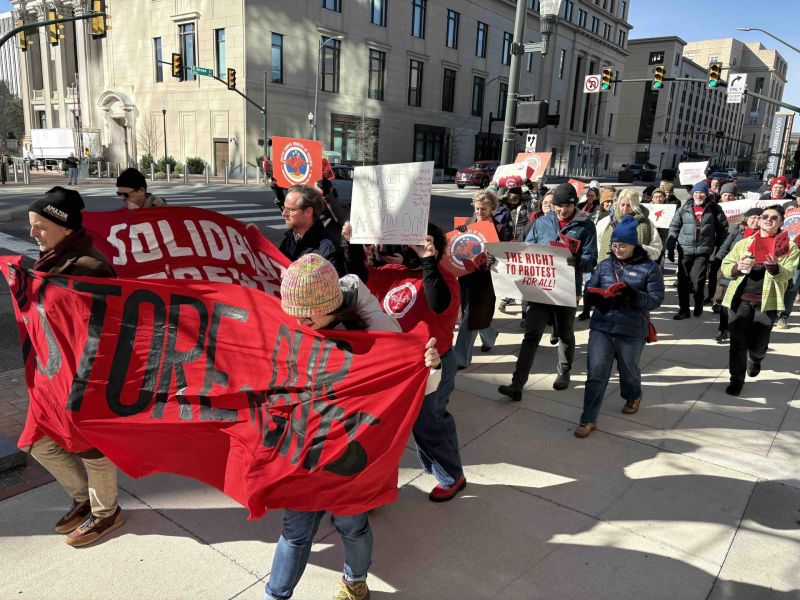
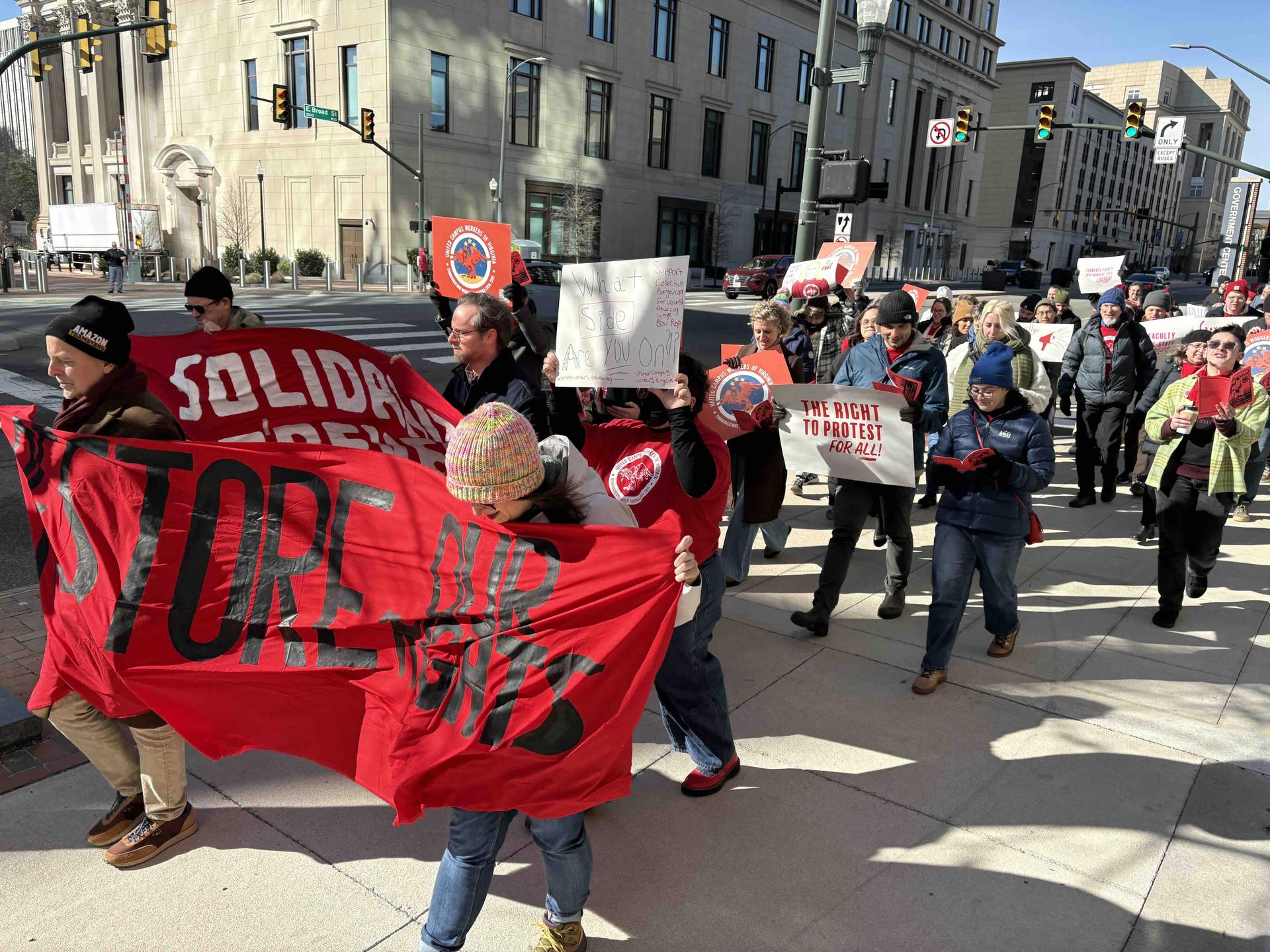
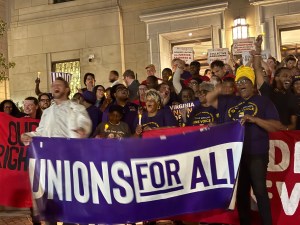
The United Campus Workers of Virginia launched a petition for Spanberger to add them back into the public-sector collective bargaining bill awaiting her signature.
I saw it pop up on my Instagram feed and reached out to Harry Szabo, the president of the union, along with Tim Gibson, president of the Virginia chapter of the American Association of University Professors, to hear more about it.
Szabo and Gibson tell me they are hopeful that Spanberger and state lawmakers can still be convinced to add them back into the legislation this year, but recognize it may be too late in the game.
Given that, they are already thinking up legislative strategies for the 2027 session.
Szabo said there seems to be a perception that certain higher education workers don’t need collective bargaining, but Szabo noted that wages for graduate student workers have not kept up with the cost of living.
“The cost of housing has gone up in basically every university town,” Szabo told me. “And in at least some departments, graduate workers are being paid the same thing that they were being paid 10 years ago.”
Wages for graduate students vary, but some make as little as $14,000 a year, Szabo said.
Gibson told me they want to get the conversation going early to make a strong case for why they deserve collective bargaining rights.
“If you want to defend the university from attacks, you need faculty to have collective power and to feel united and secure enough that they can stand up…to the federal government, to the external actors who want to interfere with universities, how they operate, and what they teach,” Gibson said. “So really, collective bargaining is about much more than just salaries.”