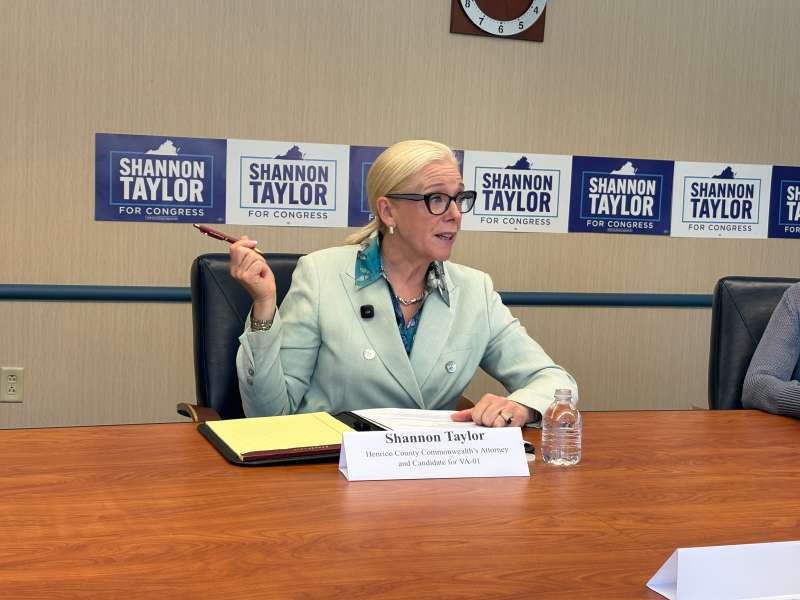
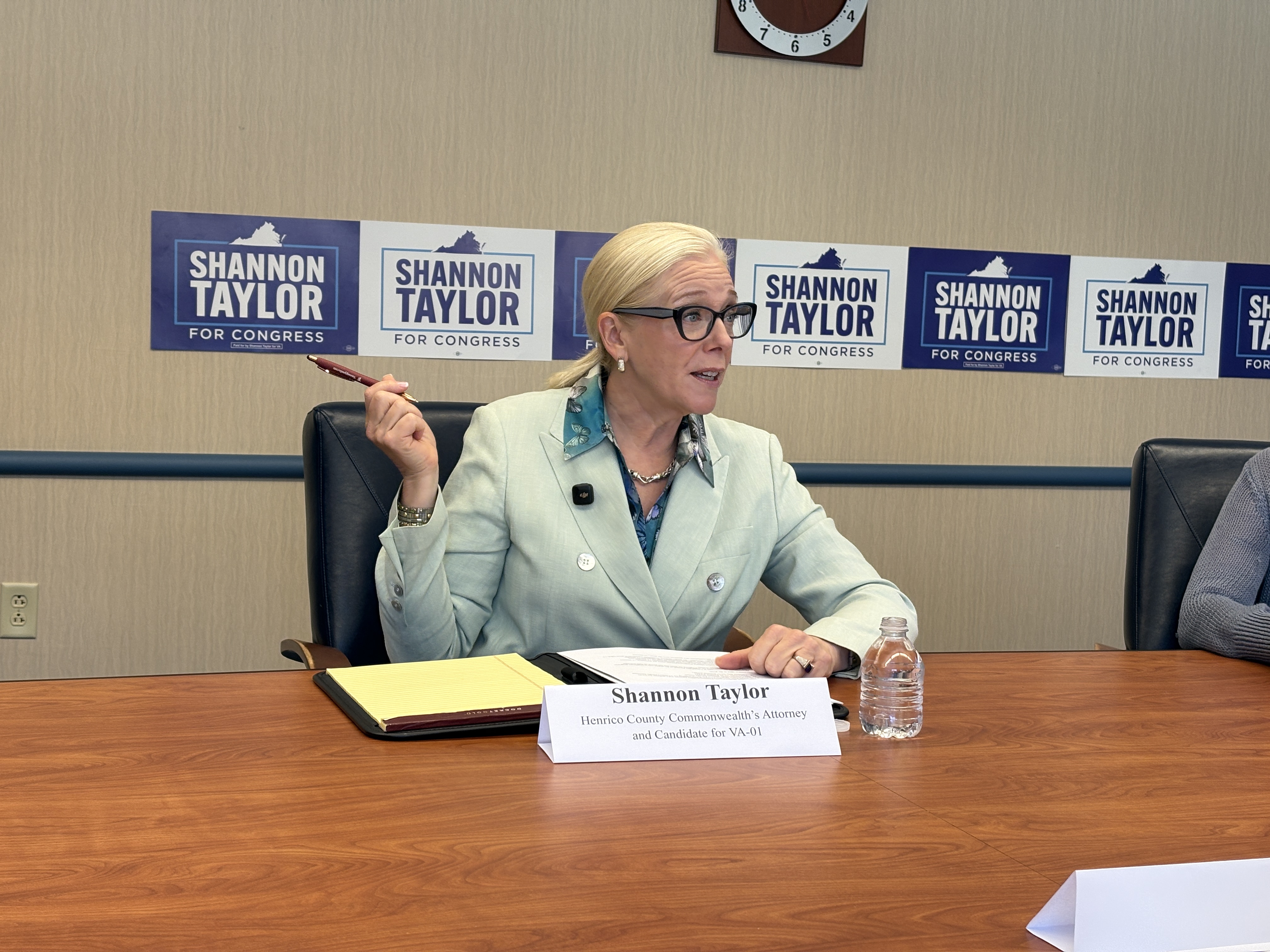
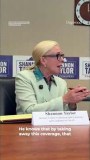
On Monday, I drove south on I-95 to the Glen Allen Branch Library in Henrico County, where Taylor was holding a roundtable on America’s broken healthcare system and the role her opponent, Republican US Rep. Rob Wittman, has played in it.
Among those gathered at the table was Jeanne Robinson, who sits on the Home Care Chapter Executive Board of Service Employees International Union (SEIU) Virginia 512.
She was joined by a resident of Wittman’s district who was worried about the impact of Medicaid cuts to her family’s care, as well as a healthcare provider from the district. Republicans, including Wittman, approved a plan to cut $1 trillion in funding for Medicaid over 10 years as part of President Donald Trump’s One Big Beautiful Bill Act.
Robinson shared how she takes care of her grandson, who has Down syndrome, along with other clients. Like many other home care workers, Robinson, who has a Master’s degree, gets paid $13 an hour through Medicaid.
Robinson worried that people who depend on the program could end up without the care they need. She said she has a client with mental health issues who just got out of jail and depends on Medicaid. How would this woman fare getting out of jail if she loses her healthcare, Robinson wondered.
“My grandson is my grandson,” Robinson said. “But seeing these people I work with that rely on Medicaid—and seniors too, because I have some seniors also—it’s going to be very, very detrimental.”
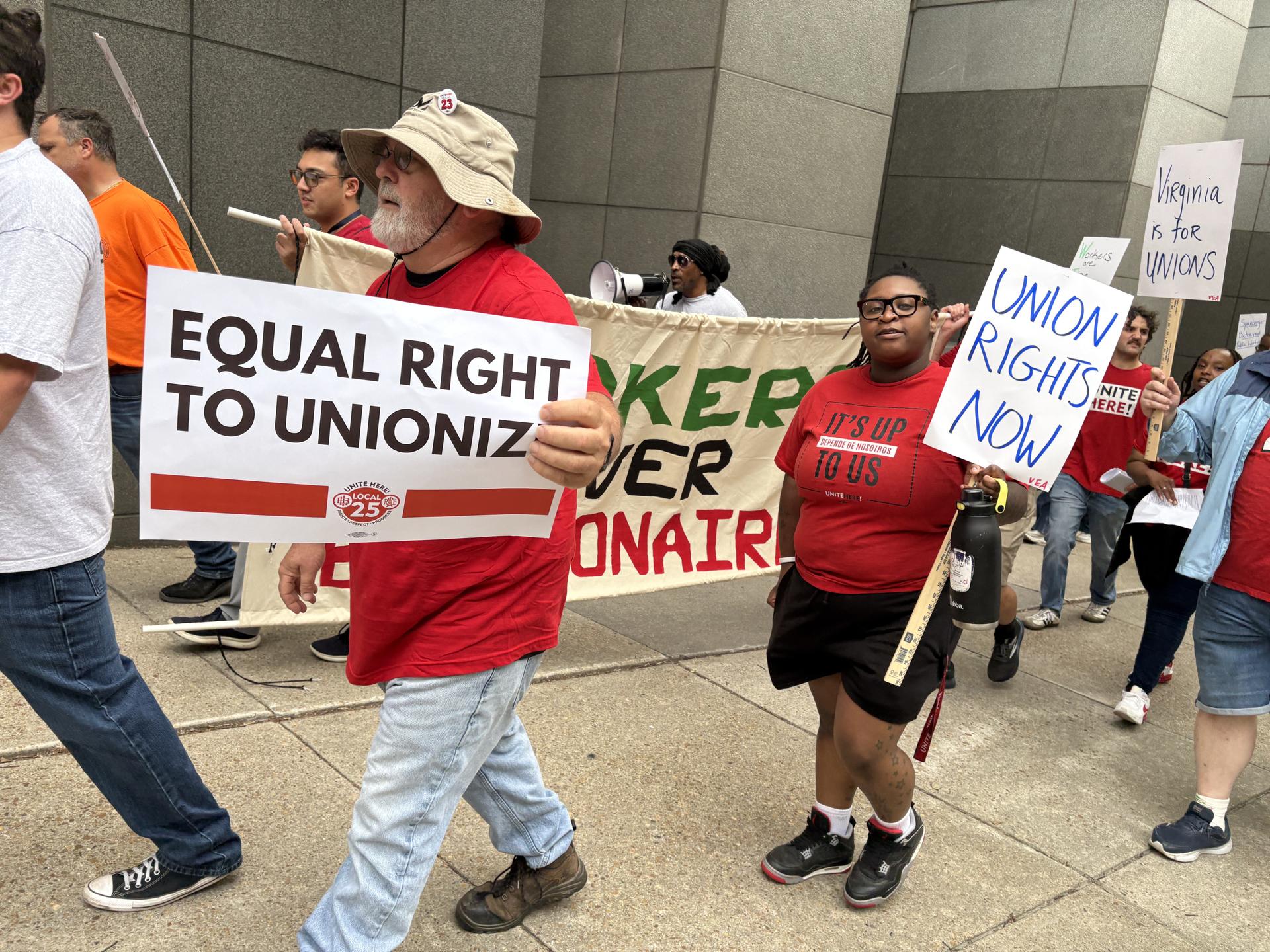
Robinson also said home care workers are too often viewed as “babysitters,” and she hoped winning the right to collective bargaining would help them gain more dignity on the job. Home care workers paid through Medicaid in Virginia are considered public-sector workers.
Robinson said it was discouraging that Gov. Abigail Spanberger vetoed the collective bargaining legislation earlier this year, “but we’re going to keep on pressing to get there.”