Responses to a New Year’s Eve incident raises questions as to what exactly took place.
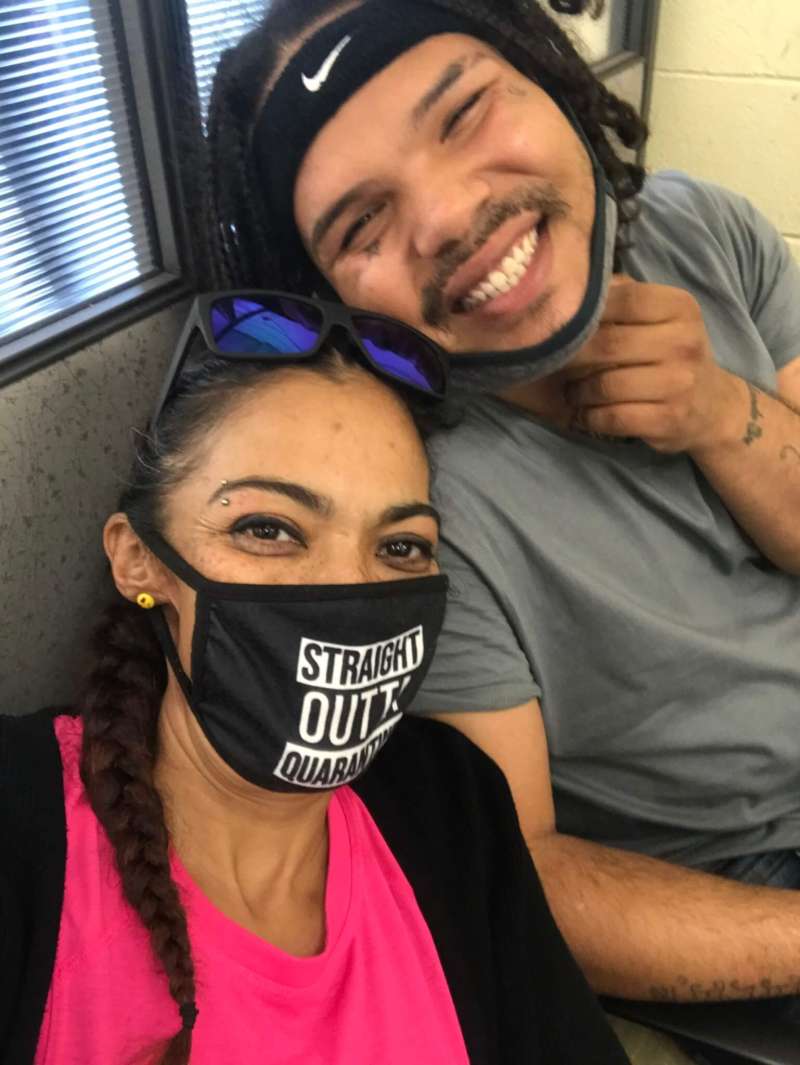
RICHMOND – Richmond police shot Orlando Carter Jr., a Black man, three times in the back on New Years Eve. That part isn’t in dispute. But questions remain about what led to the incident. The department says Carter pointed a gun at police officers and they responded. If that’s true, how was he shot in the back?
Carter, who is currently held in Richmond City Justice Center, now faces two felonies, two misdemeanors and a traffic infraction. Richmond police charged him with felony possession of a firearm by a felon and felony eluding police. The two misdemeanor charges against him are for reckless driving and not having an operator’s license. He also faces a traffic infraction charge for failing to use his turn signal.
This is the infraction that apparently began it all. For failing to use a turn signal, police pursued Carter around 5 p.m. that night.
“So basically, due to traffic violations, at the end of the day, he got shot,” said Carter’s mother Jennifer Carter. “Because he looked suspicious, they turned around and began to follow him.”
On a street inside Mosby Court, one of Richmond’s largest public housing projects, Carter exited the car. But there’s debate about how that happened.
Police Say Carter Broke His Own Leg
According to Richmond Deputy Commonwealth’s Attorney Mike Hollomon, the police say Carter broke his own leg jumping out of his vehicle, which they say was still in motion at the time.
Carter’s leg broke in two places. According to his defense attorney Katherine Poindexer, the injuries to Carter’s tibia and fibula bones are more consistent with crushing than breaking due to a fall.
“Orlando told me that when he got out of the car, he went behind his car where the trunk is, and Officer Riley, in his squad car, hit Orlando and that’s how Orlando broke his leg,” said Ms. Carter.
According to Poindexer, she has witness statements confirming this version of events.
“The police officers hit [Carter’s] car and crushed his leg between it,” Poindexer said. “Witness statements confirm his car was hit by police.”
Dogwood can’t confirm this, however, as none of the witnesses would go on the record with us.
Carter Shot in the Back While Facing Police?
According to the prosecution, when he fell to the ground, Carter’s gun landed beside him. Hollomon says that’s when Carter picked it up and aimed it at police officers.
“You can hear them stating he’s got a gun when he jumped out of the car,” Hollomon said, referring to body cam footage of the incident. “He dropped it. He could have left it there.”
Dogwood filed Freedom of Information Act requests to get that body cam footage. The Richmond Police Department rejected those requests.
“The records you have requested are part of a criminal investigative file and an administrative investigation,” wrote William Shipman, the department’s Associate General Counsel. “As such, we will not release those records.”
Holloman says that when Carter allegedly pointed a gun at an officer, that’s when police shot him. Then, the police allege that Carter, who at this point had a broken leg, got up and backed away while continuing to point a gun at police.
But there’s a problem with that narrative. Carter has bullet wounds in his back and in the backside of his arm and leg. He does not have injuries from gunshots to the front of his body.
“He was shot three times in the back which is not consistent with facing police and shooting at them,” Poindexer said.
Police shot Carter three times in the back. Representatives of the department later told the Richmond Times Dispatch they only recovered three bullet casings from the scene.
Already crushed and shot, Carter’s mother describes what happens next as inhumane.
Police Drag and Confine Carter Without Charges
A video of Carter’s arrest shows police dragging what witnesses at the scene say is his limp body across the ground. A crowd of unidentified witnesses off camera in the video below call out to the police, enraged by their treatment of Carter.
“They broke his right leg, and they shot him in his left leg, so he wasn’t really moving that fast. And he slipped and fell, and when he slipped and fell they put their knee on him and handcuffed him and dragged him in the street to another cop car,” Ms. Carter said. “They dragged him like what you do to animals. That’s what you do when you go hunting. You shoot them and you drag them to wherever you’re taking them.”
Afterwards, Carter’s mother didn’t hear from him for another four days. According to her, Carter spent that time detained in the hospital against his will.
“According to my son, he said that when he was at MCV, they didn’t do anything as far as the bullet wounds. They treated him for only the leg, and they refused to let him use the phone to call me. And I’m his emergency contact,” said Ms. Carter. “He was there for four days with no communication, no contact, no nothing. Not even the hospital would give me anything. I left several messages for a doctor to call me. Nothing. Because they claimed that he was an inmate. And then, when I would call RPD, they didn’t have him so they couldn’t give me any information either.”
Representatives of VCU Health said they could not comment on the care of an individual patient but that, in general, visitation of patients is custody is determined by the custodial agencies guidelines.
Carter’s mom lost contact with him the night of Dec. 31. Police did not charge Carter with a crime. however, until Jan. 4.
The questions surrounding Carter’s detainment don’t stop there.
Carter File Missing From the Record
When police charge a person with a crime, details about their case are input into the Virginia courts case information system. This is an electronic database where people can find out the status of a case and when its next hearing will be.
In most cases, as soon as police arrest someone, their case information is filed online. But Richmond’s judicial system didn’t show any record of Carter’s arrest until Jan. 7. His case didn’t appear in the system until after two bond hearings. At that point, he had already spent three days in jail.
“The charges just recently came in because he has to go to court. It just seems a little fishy,” said Lawrence West, founder of BLM RVA and member of ‘The Kitchen’ at Marcus-David Peters Circle.
BLM RVA is a Richmond-based Black liberation advocacy group. Upon hearing about Carter’s case, West jumped into action. He reached out to Ms. Carter to offer her support and advice, including recommending Poindexer to represent her son.
“It’s good to have someone not looking at you like a criminal right off the bat,” West said.
Within a few days of his incarceration, Carter had two bond hearings. Until the Richmond judiciary filed his case information, supporters like West were unable to know when and where they need to be to witness his trial. Even if supporters were miraculously able to find the time and courthouse where Carter’s hearings is taking place, they faced another barrier.
In Richmond’s John Marshall Courthouse, there are several courtrooms which often hear cases at the same time. The court uses a digital display outside the courtrooms to show where each case will be. Once again, Carter’s case did not appear in this information system. This means that supporters who somehow made it to the right building at the right time could only guess which courtroom was hearing Carter’s case.
A Bizarre Bond Hearing
A district court judge granted Carter a $10,000 bond on Jan. 6. However, because the charges against Carter involve possession of a weapon, the Commonwealth is able to object and appeal the bond hearing. As a result, the Richmond Circuit Court considered the appeal on Jan. 7.
The only appropriate word to describe the hearing is bizarre.
Throughout the hearing, the presiding judge, Hon. David Eugene Cheek, continuously interrupted and shouted over Poindexer, who he spoke to with condescension. Poindexer had to repeatedly beg the judge to let her finish her sentence, because he interrupted her so much she was unable to make a case for her client. The judge treated Hollomon, a man, with respect throughout.
The hearing only gets more irregular from there.
A Flight Risk or Danger to Society
Bond hearings are not the same as trials. Their purpose is not to determine the guilt or innocence of defendants.
Instead, they determine whether the defendant is a flight risk, and whether they are a danger to others. According to the Virginia Code, there must be probable cause that the defendant will not appear for trial for the court to deny them bond. The court must also prove the defendant’s liberty creates a danger to himself or to the public.
Hollomon argued Carter’s previous criminal convictions makes him both a flight risk and a danger to society. The judge said repeatedly that he agreed with that statement.
“The strength of evidence is indicative of a danger to the community,” said Cheek. “His trust factors are very low since we have evidence from 2014 [of criminal behavior].”
Carter is in a cast that goes up to his mid-thigh and is recovering from three fresh bullet wounds. Poindexer argued that he’s physically incapable of eluding police or hurting anyone.
“He’s in pain,” Poindexer said.
Carter, who appeared in the hearing via video chat from the jail, did not seem to be capable of understanding the proceedings. When asked to waive his rights to appear in court, Carter said he was having trouble concentrating due to his injuries.
“I’ve got major head injuries. I’m having a hard time right now,” Carter said.
At one point during the hearing, Carter attempted to defend himself. He raised his hand to speak, but the judge immediately said his attorney doesn’t want Carter to testify in case he incriminates himself. However, Poindexer did not say this.
Berating the Victim’s Family
In another irregular move, during the hearing Cheeks abruptly asks if Carter’s mother and father are present. Once they identify themselves, the judge instructs them to raise their right hands. He proceeds to place both Mr. Orlando Carter Sr. and Ms. Carter under oath on the spot.
The judge then proceeds to berate Carter’s parents at length, implying that their poor parenting is the reason why their son is sitting in jail.
“Something must be going wrong with your family,” Cheek said.
Cheek goes on to interrogate Carter’s parents, repeatedly demanding that they tell him the reason why Carter is in jail. His parents say their son suffers from mental health disorders including PTSD and depression. However, that wasn’t enough for the presiding judge.
Judge Cheek would not accept the response. He continuously insisted that Carter’s mental illness is an excuse for his behavior, not a reason.
At a loss for words, Ms. Carter was close to tears by the time the judge finished berating her. Mr. Carter was almost shouting by the end.
“He’s really not a violent person. He’s made some mistakes in the past,” said Ms. Carter. “They’re using his past against him and they’re not taking into consideration his injuries.”
The Facts of the Case
Though it’s not technically relevant to the questions that a bond hearing attempts to answer, Hollomon went over the police’s version of events during the hearing. He said in order to determine flight risk, the facts of the case have to be considered.
However, instead of disregarding or objecting to this information, Judge Cheek repeatedly referred to this narrative as if they are statements of fact.
In response to this assumption of her client’s guilt by the judge, Poindexer objected to Hollomon broadening the scope of the hearing. In order to counteract the narrative that the Commonwealth presented, Poindexer provided her client’s own version of events.
However, she said she didn’t want to reveal Carter’s legal strategy before the actual trial.
Judge Says Victim Deserves His Injuries
Judge Cheek was not swayed by Poindexer’s perspective on the events of Dec. 31. In fact, he told the defendant that it didn’t matter to him whether the assaults his lawyer described are true or not.
“Even if the facts that Ms. Poindexer says are true, I don’t know if it’s relevant,” Cheek said.
According to the judge, Carter should actually count himself and his three bullet wounds lucky. He praised Richmond police for their restraint in only shooting him three times in the back.
“He could have been killed but for responsible police behavior,” said Cheek.
Looking at a person in a cast and with bullet wounds only a few days old, the judge told Carter that he deserved what happened to him because he had a gun in the car.
“He earned his pain,” Cheek said.
What Now?
In another bizarre twist, after hours of berating Carter’s family and shouting over his defense counsel, Cheek abruptly ended the hearing by granting him bond. Carter now has a personal reconnaissance bond of $20,000. With a personal recognizance bond, the family does not have to pay upfront, but must pay the entire sum if the defendant does not appear in court.
The court put Carter under house arrest until his next hearing date on Jan. 28.
The Richmond Police officer who shot Carter, Ja-Ontay Wilson, is on administrative leave while the incident is under investigation by the Officer Involved Investigation Team.
Want to help the Carter family pay for their legal fees and expenses? Donate via Cash App using username $JenJen913.
Meg Shiffres is Dogwood’s associate editor. You can reach her at megan@couriernewsroom.com.
Julia Raimondi is a freelance reporter for Dogwood. You can reach her at info@new.vadogwood.com.