Bird illness targeting younger animals with no known cure, a situation not confined to this state.
BOYCE – Take down your bird feeders, at least temporarily. That’s the word from Virginia wildlife officials, as they try to figure out what’s causing a mysterious bird illness across the state.
Jen Riley, director of veterinary services at the Blue Ridge Wildlife Center in Boyce, noted that the facility is one of many coordinating with national labs on the issue.
“We’re trying to figure out which things it’s not,” Riley said. “So we’ve ruled out a bunch of things at this point, but nobody has a definitive answer.”
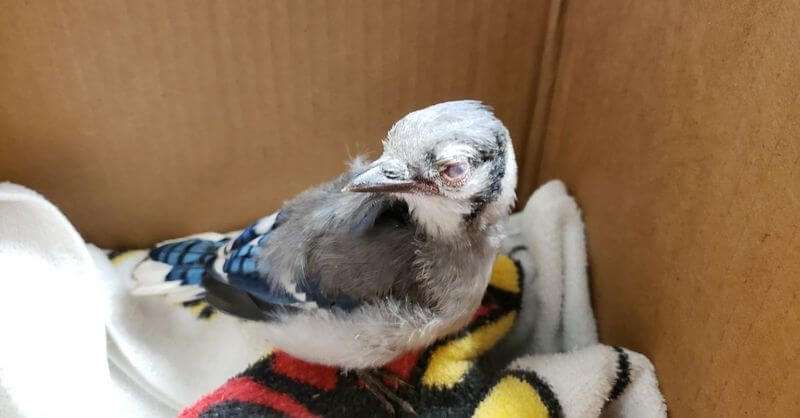
Reports involved baby birds in Washington D.C., Virginia, Maryland and West Virginia experiencing eye swelling and crusty discharge, as well as neurological problems.
“No bird should ever have crusted, closed eyes with discharge,” Riley said. “And no bird should ever be stumbling around, kind of with a drunken gait. That’s never going to be normal for any bird.”
Impacted species include Common Grackles, Blue Jays, European Starlings, American Robins and various finch species.
Age also plays a factor.
“Right now, we’re only really seeing it in fledglings. So that’s kind of an important thing to notice too,” Riley said. “If you’re seeing it in adult birds, it’s probably something different.”
Seeking a Solution To The Bird Illness
While Virginia sounded the alarm in June about the bird illness, Riley said case numbers recently trended downward in the Shenandoah Valley region.
Despite the recent trend, experts will continue to monitor the situation until they pinpoint the issue.
“There’s a lot of hunches, but no confirmed answers yet,” Riley said.
Meanwhile, there are several ways humans can help potentially reduce the number of animals impacted.
The Virginia Department of Wildlife Resources asked that people stop feeding birds and that they clean feeders and birdbaths with a 10% bleach solution.
Riley noted that the measures serve as a precaution.
“We don’t know that it’s necessary yet, but that’s one of the ways that diseases can be spread, is through feeders and birdbaths and things like that,” Riley said. “If it’s something that’s contagious, we want to avoid areas where birds congregate and that’s primarily feeders and baths. At this point, they’ve asked that all feeders and baths be taken down.”
Aside from spreading illness, Riley noted the continuous importance of keeping congregate areas neat and tidy for feathered friends.
“Feeders should always be kept clean if you’re going to use them, but especially when there’s [a] disease outbreak,” Riley said. “If there’s a COVID outbreak, for example, we don’t want to all share a glass at a party. So it’s this kind of principle there.”
What to Do
The Virginia Department of Wildlife Resources also asked that people avoid handling birds, but wear disposable gloves if necessary.
“We are asking that people don’t bare-hand contact them,” Riley said. “So if you have to collect one, use gloves, use towels, things like that. You don’t want to directly touch these guys because we don’t know what it is and if it’s contagious to others.”
If you must remove dead birds, place them in a sealable plastic bag and dispose with household trash.
The Virginia Department of Wildlife Resources also reminded Virginians to keep pets away from sick or dead birds as a standard precaution.
Due to the number of birds impacted, some Virginia wildlife centers limited their intake. The Blue Ridge Wildlife Center still accepts patients, but the prognosis for those with the new illness isn’t positive.
“Unfortunately, this is not a disease that birds recover from. They’re all pretty much dying within 24 hours,” Riley said. “At this point, we are just euthanizing upon admission for anything that has these kind of signs.”
Those encountering dead or sick birds in Virginia may submit an event report.
Amie Knowles reports for Dogwood. You can reach her at amie@couriernewsroom.com