
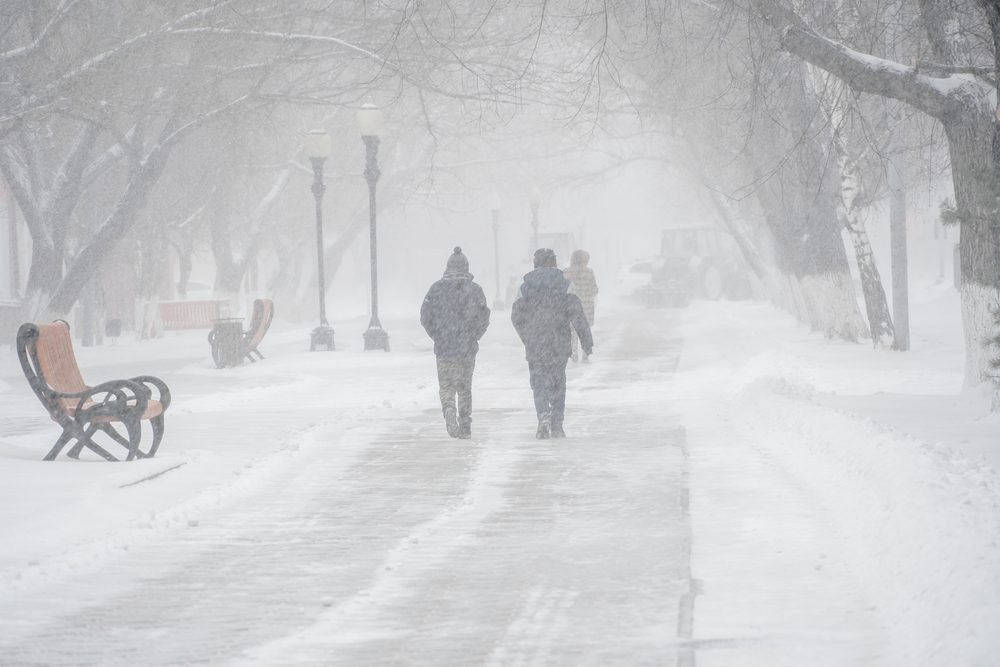
Photo credit: Sambulov Yevgeniy/Shutterstock
The reliability of Virginia’s power grid depends not just on weather, but on how electricity is generated, stored, and moved across long distances.
As Winter Storm Fern brought snow, ice, and freezing temperatures to Virginia over the weekend, many Virginians did what they’ve learned to do during major storms: check outage maps, stock up on supplies, and hope the power holds.
As residents hunkered down, the state’s power grid was being tested—not just by winter weather, but by stresses that energy experts say have been building for years.
READ MORE: Virginia declares state of emergency for weekend winter storm, threatens power and travel
Energy experts say storms like Fern act as stress tests, revealing weaknesses in power systems long before the first snowflakes fall—and what kinds of power systems hold up better under pressure. According to US Power Outages, a website to track outages through counties and utility companies, at the time of this story’s publication nearly 22,000 Virginians were still without power—with more than 15,000 reported from Appalachian Power Company.
Cold temperatures push the grid to its limits
During winter storms, electricity demand spikes as households turn up the heat, and as utility companies work to keep their systems running. Extreme cold that lasts longer than usual creates a dangerous situation for power grid reliability, according to a 2021 analysis of the February Texas blackouts caused by Winter Storm Uri.
The report found that even though Uri “did not set records for the lowest recorded temperatures in many parts of the state,” power plants and fuel systems across the grid were not prepared to operate reliably under sustained conditions. In fact, grid operators had to deliberately shut off electricity to some customers on purpose so the entire system wouldn’t completely collapse in a “catastrophic failure.”
Outages often start far away—and distance makes them worse
In Virginia, power flows through the Eastern Interconnection—one of two major and three minor power networks, or “interconnections,” that tie together all the power plants, power lines, and utilities across North America. Electricity is then delivered to customers by large utility companies like Duke Energy. In its 2023-2024 Winter Reliability Assessment, the North American Electric Reliability Corporation (NERC), which evaluates grid risk nationwide, warned that the Eastern Interconnection faces “elevated risk” of insufficient power during severe winter weather.
When the power goes out, the problem rarely begins in a neighborhood, county, or even within a single state like Virginia.
Power failures are typically triggered by outages at power plants, frozen fuel supply systems, or breakdowns in long-distance transmission. When one part of that chain falters, the effects can ripple outward, knocking out power across wide regions.
Outages during 2022’s Winter Storm Elliott began upstream at power plants and in frozen natural gas production and delivery systems across multiple states—rather than in local distribution networks where electricity was mainly used.
According to a joint investigation, extreme cold caused widespread, unplanned outages at more than 1,700 generating units across the Eastern Interconnection. As generation failed and fuel supplies froze, grid operators were forced to take emergency actions to keep the system from tipping into uncontrolled outages. The investigation showed that cold-related failures at fossil fuel-dependent power plants and supply systems played a central role in the outages.
Local energy can limit cascading failures
Energy generated closer to where it is used can reduce some of those outages and improve grid reliability. Unlike fossil fuel power, which depends on fuel moving hundreds of miles through pipes and wires, rooftop solar and batteries work right where the electricity is used.
RELATED: Virginia invests $481K in Sussex County project to boost clean energy supply chain
According to research from the National Renewable Energy Laboratory (NREL), which studies grid performance and resilience nationwide, distributed energy resources—such as local solar generation paired with battery storage—reduce reliance on long-distance fuel delivery and transmission.
NREL’s report shows that shortening the distance between supply and demand can help limit cascading failures when parts of the grid are under stress. These systems are not outage-proof, researchers note, but they can help contain disruptions rather than allowing them to spread across entire regions.
Solar and batteries act as quiet stabilizers—here’s how
Solar power doesn’t shut down just because it’s cold, which is why energy experts say they can help stabilize the grid during winter storms—even when conditions are far from ideal.
According to a winter weather resilience brief by Mountain View Solar, which examined how solar and battery systems perform during cold, snowy conditions, solar panels can continue generating electricity during winter weather, including on cloudy days, while batteries store that energy for use when demand spikes or the grid is under strain.
When gas supplies freeze or spike in price during cold snaps, batteries paired with solar can keep providing power without waiting for fuel deliveries to restart.
READ MORE: Virginia explained: How clean energy works, and how it could lower utility bills
A technical analysis from HBOWA helps explain why winter conditions don’t automatically knock solar offline. The company says solar panels can actually operate more efficiently in cold air, which reduces electrical resistance compared to extreme heat. Snow doesn’t always block production either: panels are typically installed at an angle, allowing snow to slide off naturally once sunlight warms the surface.
Snow-covered ground can also help. HBOWA explains that snow reflects a large share of available sunlight back upward—sometimes as much as 80%—increasing the amount of light that reaches solar panels from below. That reflected light can partially offset shorter daylight hours during winter storms, especially when skies clear after snowfall.
Batteries add another layer of stability. Both MTV Solar and HBOWA note that battery storage allows electricity generated during daylight hours to be saved and used later, including overnight or during outages.
RELATED: Virginians have spoken—they’re ready for clean energy
What this storm revealed about the grid
Winter Storm Fern did not break Virginia’s power grid, but it exposed the pressures the system faces when the temperatures drop, demands rise, and long-distance energy delivery collides. Climate scientists say a warming planet is linked to more frequent and more intense extreme weather—that means the kinds of grid stresses we’re seeing now are just the beginning. As winter storms become more frequent and intense, energy that is local, diversified, and backed by storage is increasingly seen as one of the grid’s strongest defenses.
READ MORE: Who’s driving up your energy bill? It’s not you

No Results Found
The page you requested could not be found. Try refining your search, or use the navigation above to locate the post.
No Results Found
The page you requested could not be found. Try refining your search, or use the navigation above to locate the post.
