Next time you grab your trusty ChapStick, you can thank a Virginia inventor. (Natalia Blauth/Unsplash)
From the Virginia Reaper to ChapStick, here are 10 surprising and groundbreaking things that were invented in Virginia.
Virginia’s legacy of innovation extends far beyond its role in American history, reaching into homes and industry. From Cyrus McCormick’s game-changing Virginia Reaper and Thomas Jefferson’s ingenious folding ladder at Monticello to the creation of ChapStick in Lynchburg and the formulation of modern-day Mountain Dew in Southwest Virginia, the commonwealth has served as an incubator for ideas that have reshaped American life.
Here are 10 inventions that were developed or perfected in Virginia, along with the inventors whose creativity has left a lasting mark.
Virginia Reaper
Inventor: Cyrus McCormick
Cyrus McCormick changed the way farmers approached agricultural production in 1831 when he introduced the “Virginia Reaper” (aka the McCormick Reaper). Credited with being the first effective reaper, it allowed farmers to harvest all the grain they wanted without exerting as much effort. It was developed on his farm, Walnut Grove, in Rockbridge County.
Although he patented the reaper in 1834, he continued to refine its design for roughly the next decade. His success later allowed him to launch the McCormick Harvesting and Machine Company, which went on to become one of the most successful manufacturers in the country during the industrial age.
Folding ladder
Inventor: Thomas Jefferson
Those who have been to Monticello are likely familiar with Thomas Jefferson’s dual-faced, seven-day clock that has a striking mechanism to mark the hour. It’s known as the “Great Clock” due to its size and prominent location in Entrance Hall. Although the clock was designed by Jefferson, it was built in Philadelphia.
However, a folding ladder was used to reach the clock so that it could be wound each Sunday with a crank key, an invention that was designed and made in the Joiner’s Shop right there at Monticello. The design was later adopted by those who needed elevation for pruning trees and accessing books in libraries.
Gas-powered peanut stemming and cleaning machine
Inventor: Benjamin Hicks
Benjamin Hicks, a Black Virginia farmer from Southampton County, changed the way peanuts are harvested in the late 1890s through his gas-powered peanut stemming and cleaning machine. Prior to his invention, peanut harvesting was a slow and laborious process, but the machine enabled it to be performed more quickly.
Hicks had to defend his machine against a lawsuit from a large farming equipment company, which he won. The machine went on to become widely adopted in the Tidewater region, the epicenter of peanut production in the U.S. at the time.
ChapStick
Inventor: Dr. Charles Browne Fleet
The iconic lip balm ChapStick traces its roots to Lynchburg, where Dr. Charles Browne Fleet, a pharmacist and inventor, concocted the balm in his pharmacy in the 1890s. The product originally looked like a small candle that lacked a wick and was wrapped in foil. Unfortunately for Fleet, he had a hard time getting customers to smear the odd-looking formula on their lips.
However, Fleet’s friend John Morton agreed to buy the formula for $5. Morton’s wife ingeniously realized that the melted formula should be poured into a brass tube that could be used to push the product up. By the late 1930s, ChapStick was gaining popularity. It continued to be produced in Lynchburg until the early 1960s, when it was bought by a pharmaceutical company.
Mountain Dew
Inventor: William H. “Bill” Jones
Although Mountain Dew was originally created in Knoxville, Tennessee, in the 1940s, William H. “Bill” Jones is credited as being the man who made the soft drink what it is today. Jones was president of the Tip Corporation in Marion, which had acquired the clear lemon-lime drink. Through taste tests using locals, he refined the drink’s formula in 1961.
It didn’t take long for the new formula to catch on, and sales skyrocketed. By 1964, the Tip Corporation was acquired by the Pepsi-Cola Company.
To commemorate Marion’s connection to the iconic soft drink, the Virginia Board of Historic Resources installed a historical marker in the town in 2024, recognizing it as the “Birthplace of Modern Mountain Dew.”
Electric streetcar
Inventor: Frank Sprague
Frank Sprague was inspired to make the electric streetcar after a trip to London. While there, he took issue with the steam engines due to the amount of smoke they poured out. After sketching his new idea for an electric streetcar and holding an exhibition in Philadelphia, he was contracted by the Richmond Union Passenger Railway Co. in 1887 to build an electric streetcar system. The daunting contract called for 12 miles of track, a power plant, overhead lines, 80 motors, and 40 railcars.
The contract pushed Sprague to his limits. After multiple failures and $75,000 of his own money, he finally proved his idea had merit in mid-1888 by demonstrating that 22 streetcars could ascend Church Hill without losing power.
It didn’t take long for his invention to gain traction. Less than a decade later, 11,000 miles of electric street railway had been laid throughout the country.
Cigarette-rolling machine
Inventor: James Albert Bonsack
James Albert Bonsack, who grew up the son of a woolen mill owner in Roanoke County, revolutionized the cigarette industry with his cigarette-rolling machine, which was patented in 1881. Although he came up with the invention because of a competition held by Allen and Ginter, a Richmond tobacco firm, they declined the invention in favor of continuing to sell hand-rolled cigarettes.
However, fate would have it that the firm’s competitor, W. Duke, Sons and Company in Durham, North Carolina, decided to run with the invention. As a result, domestic and international cigarette production underwent significant growth.
Lane Hope Chest
Inventor: Edward Hudson Lane
The Lane Hope Chest was manufactured by the Lane Company, an Altavista furniture-maker that was founded by Edward Hudson Lane in 1912. Before the company started making these renowned chests, they produced pine ammunition boxes for the government during World War I.
Following the war, the company shifted its production to cedar chests, which were widely advertised throughout the 1920s. Known as the Lane “Hope Chest,” they were used by young women to store home furnishings that they might use once married. The tagline used to market the chests was “The gift that starts the home.” The chests continued to grow in popularity during World War II because military men bought them for their girlfriends before going to war.
Luggage hook and wheel carrier
Inventor: Debrilla M. Ratchford
In 1978, Debrilla M. Ratchford, a 25-year-old Arlington flight attendant, received a patent for a hook designed to fit through luggage handles and a wheel carrier designed to support the luggage. Both inventions were meant to make it easier for passengers to handle their suitcases.
The hook was made of metal in the shape of a “J” and could be used to connect the handles of three or more suitcases. From there, the wheel carrier would have been attached to the primary suitcase to help the suitcases move. At the time she received the patent, Ratchford was contemplating selling the patent or producing and selling the invention herself.
Trebark camouflage
Inventor: Jim Crumley
Jim Crumley changed the way camouflage is viewed when he introduced his Trebark camoin 1980. Uniquely designed, it resembles tree trunks with seven earth-tone colors instead of jungle leaves, which are better suited for foreign combat and not hunting.
Crumley came up with the design in his Northern Virginia home. He later moved his base of operations to the Roanoke Valley.

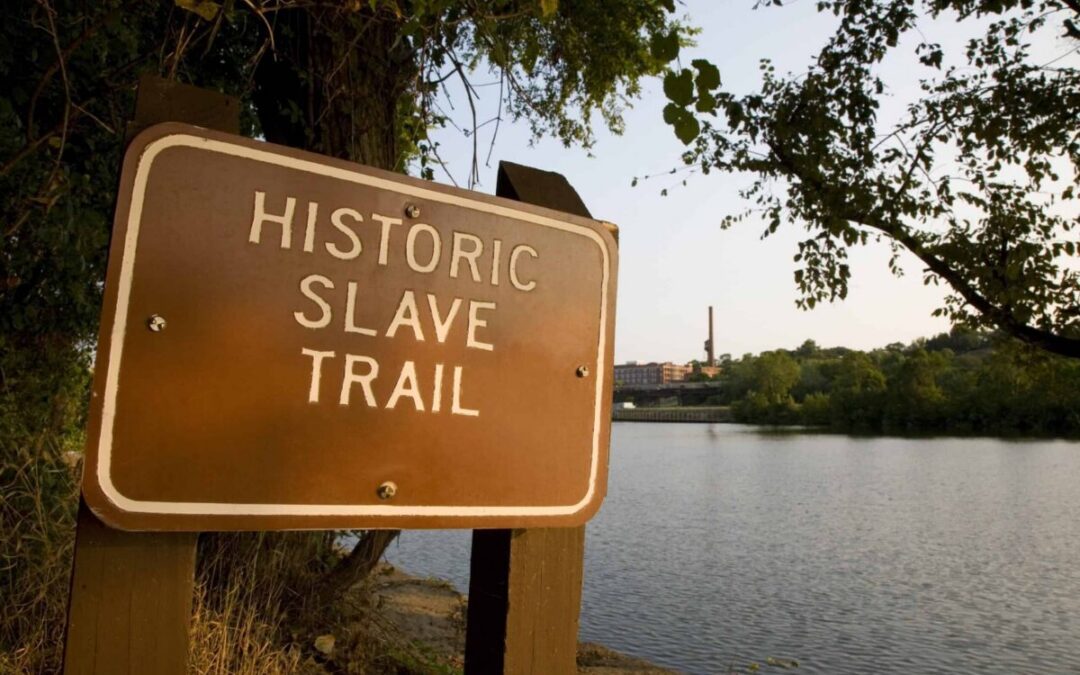
17 sobering stops along the Richmond Slave Trail
The Richmond Slave Trail follows 17 interpretive markers along the James River, chronicling the city’s past as a slave trading hub. To recognize...
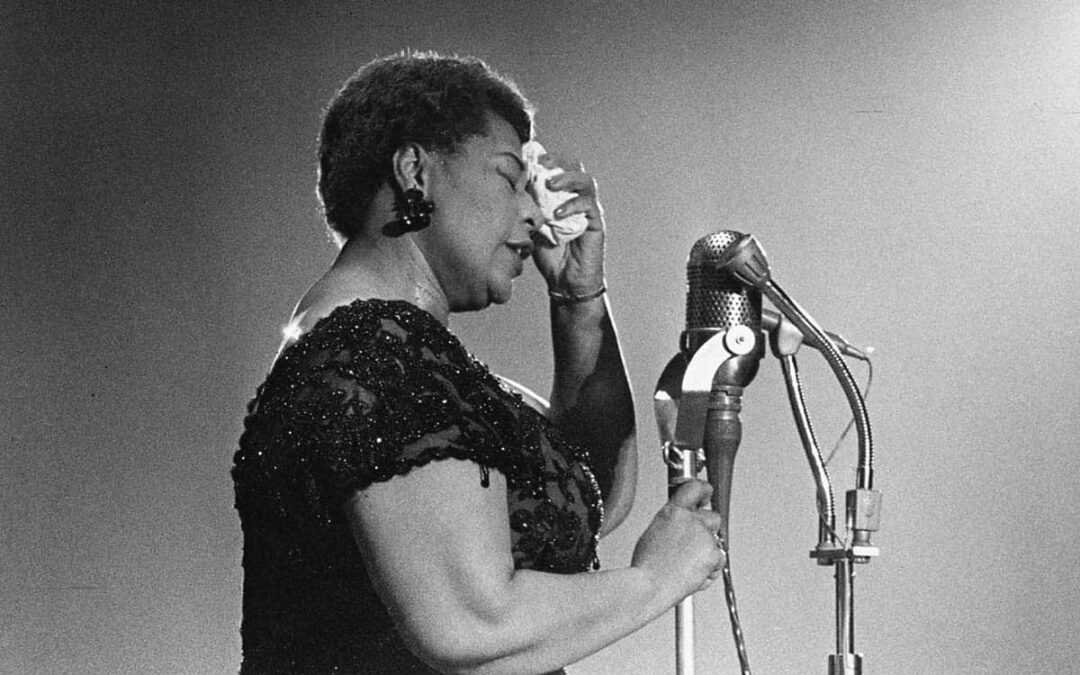
5 fascinating facts about Newport News native Ella Fitzgerald
Here are five facts about Ella Fitzgerald, a Newport News native who is one of the greatest jazz singers of all time. Before she moved to New York...
This winter, learn the real story of Pocahontas
Pocahontas’s life is often shaped by the colonizers who rewrote her history. This is the real story of the Native American girl whose name meant...

8 historical (yet haunted) battlefields in Virginia
At these haunted battlefields in Virginia, bloody histories and ghostly legends come together. Nowadays, Virginia’s rolling hills and tranquil...

Songcatchers: The fascinating story of how scholars saved Appalachian music from extinction
At the turn of the 20th century, academics traveled the Appalachians to save ancient music before it was lost. Learn how the legacy of the...
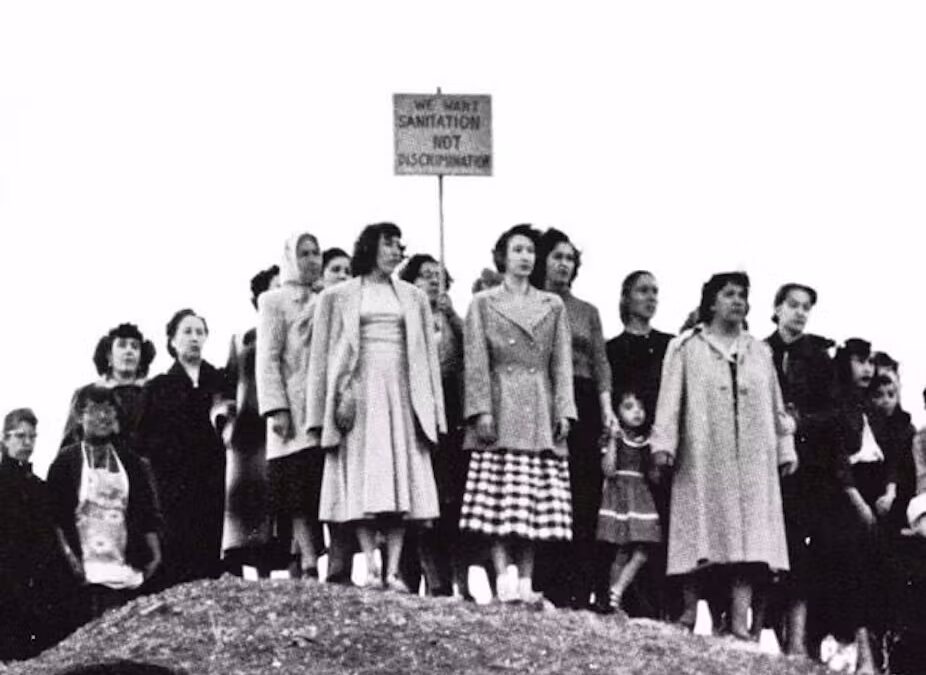
5 unsung films that dramatize America’s rich labor history
By Peter Dreier, Occidental College The U.S. is in the midst of a new upsurge of union organizing. Is a Hollywood drama about angry Starbucks...