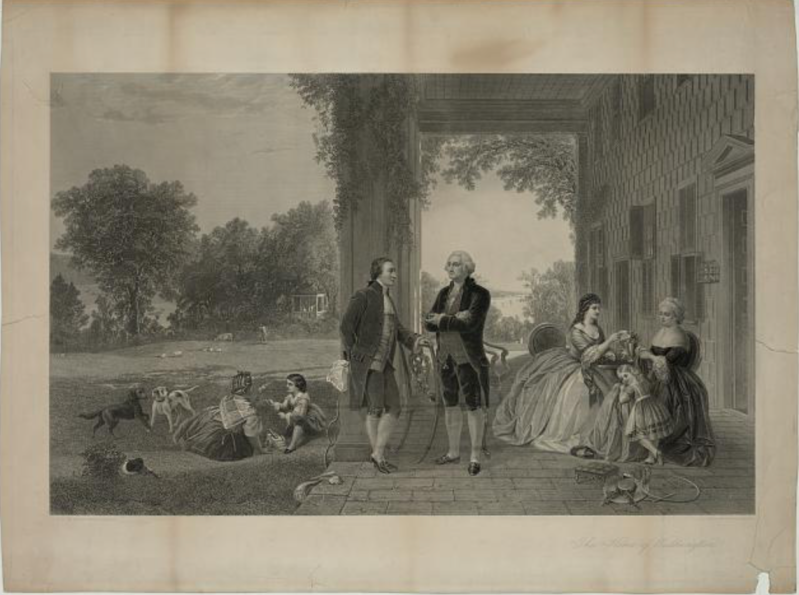
Did you know that after leading the nation, George Washington became one of its largest whiskey producers? Or that the most iconic estate in American history, Mount Vernon, narrowly escaped the clutches of decay, thanks to the determination of a South Carolina woman?
The mysteries don’t stop there. Delve into the complexities of Washington’s life, which go beyond beyond the stoic portraits and textbook narratives you might’ve become accustomed to. Spoiler alert: He had a dog named Drunkard.
Washington Made Whiskey
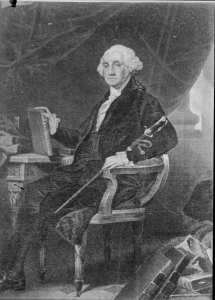
When you think of George Washington, what’s the first thing that comes to mind? His leadership as president? His vast estate at Mount Vernon? His role in the Continental Army? The Virginian had many defining characteristics, but did you know he also had another claim to fame?
The founding father was also one of the country’s largest whiskey producers. After his second presidential term ended in 1797, Washington built a distillery. According to George Washington’s Mount Vernon, he used local materials like large river rocks from the Falls of the Potomac and sandstone blocks from his quarry. By 1799, the former president produced nearly 11,000 gallons of whiskey, using the following recipe: 60% rye, 35% corn, and 5% malted barley.
The distillery burned in 1814 and was reconstructed in the early 2000s. Now, guests can enjoy—and taste—what Washington’s visitors experienced more than 200 years ago.
Washington’s Home Was Wasting Away
It’s hard to believe that the most popular historic estate in America almost, well, wasn’t. Averaging one million guests a year, George Washington’s Mount Vernon opened to the public in 1860. Only a few years prior, the estate was actively deteriorating. The Virginia home could’ve been lost to time had it not been for a South Carolina woman by the name of Ann Pamela Cunningham.
In 1853, Cunningham received a letter from her mother who saw Mount Vernon during a homeward bound steamboat trip. The writer was “painfully distressed” at the “ruin and desolation” of the first president’s estate. According to the Advisory Council on Historic Preservation, the mother’s letter posed the question: “Why was it that the women of his country did not try to keep it in repair, if the men could not do it?”
The letter inspired Cunningham, who founded the Mount Vernon Ladies’ Association. It is among the first—if not the very first—nationwide women’s organizations, according to the National Park Service, and is also one of the oldest national historic preservation organizations in the country.
After fundraising to purchase the estate, the organization did just that in 1859 for $200,000. A restoration effort began shortly thereafter—and more than 160 years later, the Mount Vernon Ladies’ Association still owns the property.
There’s a Federal Holiday to Honor Washington’s Birthday
Alongside the birthday of the nation’s 16th president, Abraham Lincoln, Presidents’ Day also honors the birthday of the country’s first president, George Washington.
Washington was born in Westmoreland County, located in the Northern Neck of Virginia. Before his big textbook debut as the commander of the Continental Army in the Revolutionary War, Washington first commanded Virginia troops during the French and Indian War (1754–1763).
It took eight years after the 1781 victory at Yorktown—the Confederation Period—for Washington to become the first President of the United States. After serving two terms, he declined to run for re-election, setting the appropriate timeframe in office as an unofficial precedent until the ratification of the 22nd Amendment in 1951.
Washington’s Birthday Was Affected by the Gregorian Calendar Adoption
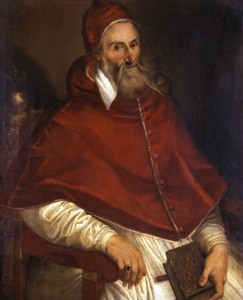
Speaking of Washington’s birthday, there’s an interesting fact about that… 11 days went missing in September 1752, and it impacted the way we view time.
271 years ago, the British and colonists, including those living in Virginia, adopted the Gregorian calendar, named after Pope Gregory XIII. The change from the Julian calendar—yep, you guessed it, named after Julius Caesar—meant that a new year started on Jan. 1, rather than Mar. 25. It also meant that in 1752, there were 11 “days” that simply disappeared! In order to make the change, the calendar shift did away with Sept. 3 through Sept. 13, implementing the new calendar on Sept. 14, 1752.
Surprisingly, the changes weren’t implemented by the British or colonists any time remotely close to when the calendar originated. They waited a whopping 170 years after the Gregorian calendar’s origin in 1582 to make the switch, despite most nearby Roman Catholic countries quickly adopting the “New Style” calendar. That led to “double dating” instances in Europe, used to denote year changes, according to research published by the Connecticut State Library. Over time, the changes—implemented to better align with the Earth’s rotation around the sun and in an attempt to keep Christian holidays in their respective seasons—created an 11-day difference between protestant England and the countries that adopted the “New Style” calendar.
From people rioting about the loss of 11 days to confusion about when to honor previously established dates moving forward, the eventual switch in 1752 didn’t go over without a headache. It even impacted a famous Virginian—George Washington! While we now recognize Washington’s birthday as Feb. 22, 1732, the nation’s first president was actually born on Feb. 11, 1731, according to the Julian calendar used at the time of his birth.
Marquis de Lafayette, Washington, and the American Foxhound
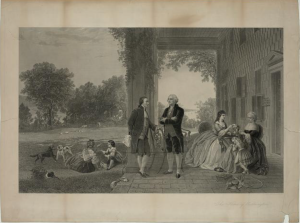
Who’s a good boy?! Maybe it’s George Washington’s pet dog, Drunkard. Or possibly the ham-stealer, Vulcan. Perhaps it’s a good girl instead, like his beloved four-legged friend, Sweet Lips.
Yes, Washington was a dog lover (with a pretty epic knack for naming, if we do say so ourselves). At George Washington’s Mount Vernon, scholars noted that the leader cared for dozens of dogs—a variety of breeds at that—and at least 36 of them were American Foxhounds, a breed Washington helped develop thanks to a gift from a certain well-known Frenchman.
In 1785, none other than the Marquis de Lafayette, who fought alongside Washington in the American Revolution, sent seven French hound dogs across the Atlantic Ocean. The gift came four years before Washington’s presidency began. The American leader bred the hounds Lafayette sent with his own. While he called the breed “Virginia Hounds,” Washington effectively produced the American Foxhound, one of the first recognized dog breeds unique to American soil. The designation came nearly 100 years later in 1886 by the American Kennel Club.
Whether they belong to the President of the United States or the average Virginian, dogs are dogs are dogs. Martha Washington, George’s wife, learned that fact the hard way one evening when she hosted a dinner party, according to a story published by George Washington’s Mount Vernon. When the meal was served, Martha noticed that the ham she requested was missing. When she asked the butler about the entree, he explained that Vulcan, one of George’s dogs, had effectively stolen and eaten the prized piece of meat. While Martha didn’t find the humor, the historic site noted that “the guests chuckled, but the general laughed heartily.”
George went on to own breeds from all seven of the American Kennel Club’s variety groups.
Washington Never Ran for President
You might’ve heard a rumor “running” around that George Washington ran a 40-yard dash in 4.22 seconds. We checked in with the experts at George Washington’s Mount Vernon and have some unfortunate news.
“Yea, no, didn’t happen,” said Matt Briney, vice president of media and communications at Mount Vernon. “Although he was very athletic.”
Ironically, the 40-yard dash isn’t the only thing Washington didn’t run. Washington never ran for the presidency in a traditional sense. He was unanimously elected by the Electoral College twice, without ever facing an opponent.
Briney said that the 40-yard dash story stemmed from a Google knowledge graph error discovered a few years ago. It’s since been corrected.
Washington Isn’t Buried Where He Was First Buried

224 years ago, George Washington took his final breath, following an illness he contracted after being outdoors in the rain. The nation’s first president, a Virginian, died at his Mount Vernon estate on Dec. 14 around 10 p.m.
According to the Library of Congress, the leader’s last words reportedly were: “I feel myself going. I thank you for your attentions; but I pray you to take no more trouble about me. Let me go off quietly. I cannot last long.”
Washington was originally buried in the tomb pictured, and reinterred in 1831 to his final resting place. Both locations were on his property at Mount Vernon.
Was Mary Washington a Gold-Digger?
When you think of a “gold-digger,” George Washington’s mother, Mary Washington, probably isn’t the first person that comes to mind. But the first president’s letters reveal quite the story about Mary, who seemingly always wanted money.
It all started in 1771 when George purchased a home for Mary in Fredericksburg. That home was close to familiar neighbors—her daughter and son-in-law, Betty and Fielding Lewis. Rather than show her gratitude for the house, Mary instead complained, claimed that she lacked resources, and asked George for money.
A decade later, Mary took the issue to the Virginia House of Delegates, where she requested a paid pension with the claim that she couldn’t support herself. Basically, Mary attempting to highlight her finances in front of the House was the 1780s equivalent of going on Jerry Springer—and George didn’t like that. He wrote to Virginia legislator Benjamin Harrison and dismissed his mother’s claims, noting sufficient funds he sent along with the house he purchased for her with “garden and lotts” of her choosing. George also wrote, “[S]he has not a child that would not divide the last sixpence to relieve her from ‘real’ distress.”
1797 saw yet another financial outpouring from George to his mother, but he noted in a letter to her that he, too, was hard pressed. When Mary passed away in 1789, George wrote a letter to his sister about her death—and money came up one final time, despite a much nicer start about Mary being “translated to a happier place.” George claimed to have “never in my life received a copper from the estate,” despite giving hundreds of pounds to his mother in cash. But in the end, he asked for no retribution.
“I conceived it to be a duty whenever she asked for money, and I had it, to furnish her,” George wrote, adding that he did so even though she had what she needed.
Washington Wrote about Snow at Mount Vernon
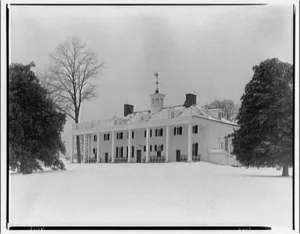
Stories of snowstorms in Virginia are nothing new. In fact, both George Washington and Thomas Jefferson wrote in their journals about a massive snowfall in 1772. Both future presidents jotted down that three feet of snow fell on January 28.
Have you ever wondered what a president’s house looked like in the snow? This picture from the Mount Vernon estate was taken in the 1900s. While it might not have been three feet, it certainly gives the idea of what George might’ve seen on a snowy day at home.