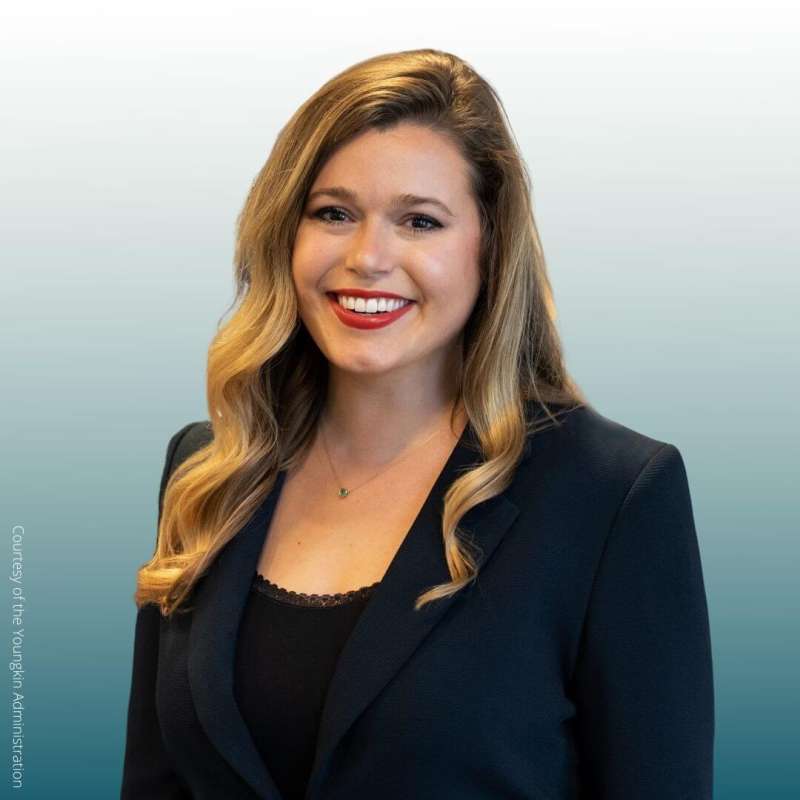
McKenzie Snow is a long-time advocate of “school choice.”
Another President Donald Trump-era person has taken one of the top education positions in Virginia. McKenzie Snow, who previously worked as an aide to former US Secretary of Education Betsy DeVos, as well as an official in the Trump administration as the K-12 policy director for the US Department of Education, was appointed to the role of Virginia’s deputy secretary of education on April 11. The position places Snow under Aimee Guidera, state secretary of education in Gov. Glenn Youngkin’s cabinet.
Prior to her position in Virginia, Snow worked as the Division Director of Learner Support in the New Hampshire Department of Education. She has a storied past of working alongside conservatives, previously serving as the director at former Florida Gov. Jeb Bush’s Foundation for Excellence in Education, and working at the Charles Koch Institute.
Snow is a long-time advocate of “school choice,” defined by EdChoice as an idea that “allows public education funds to follow students to the schools or services that best fit their needs — whether that’s to a public school, private school, charter school, home school or any other learning environment families choose.”
In 2017, Snow and other policy experts penned a submission to the Thomas B. Fordham Institute’s 2017 Wonkathon, centered around school choice. There, they presented ideas like implementing a federal tax credit scholarship program, expanding the allowable uses of the 529 Plans; college saving funds designed to help encourage saving for future higher education expenses, and increasing funding for the federal Charter School Program.
Since school choice takes money away from public schools, doing so could have a detrimental impact on the already-struggling commonwealth. In November 2021, the Commonwealth Institute ranked Virginia as 41st for state per-pupil funding, despite being in the top 10 for household income earnings. The analysis further found that Virginia places a “relatively high burden” on localities to pay for a majority of K-12 costs, and that the local share is funded primarily through property taxes. The funding level can impact everything from the level of courses offered to overall student achievement, and disproportionately impacts students of color and students in high-poverty areas.
One of the few specific things Youngkin said about education on the campaign trail was that he hoped to open 20 more charter schools in Virginia. In the commonwealth’s regular session of the General Assembly, Republican Sen. Mark Obenshain’s Senate Bill (SB) 125 aimed to switch up to three existing public school divisions into charter divisions. The bill failed in early February.