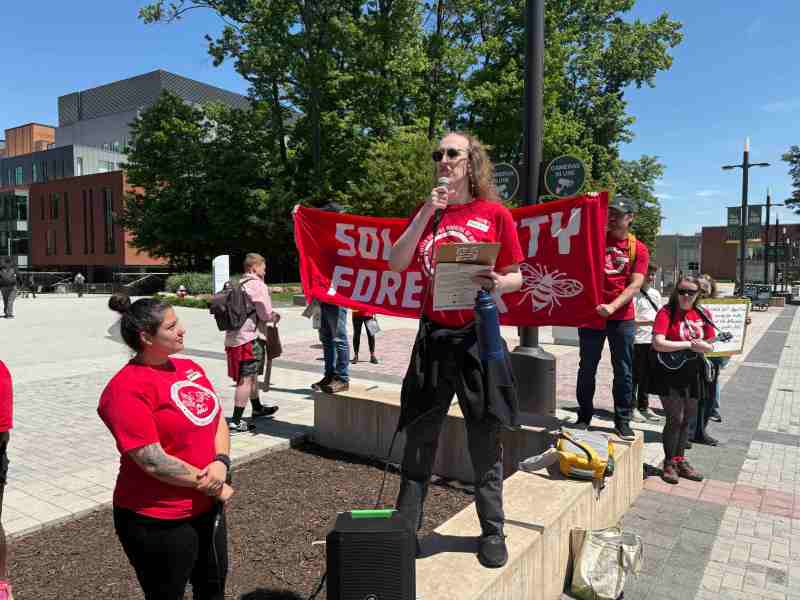
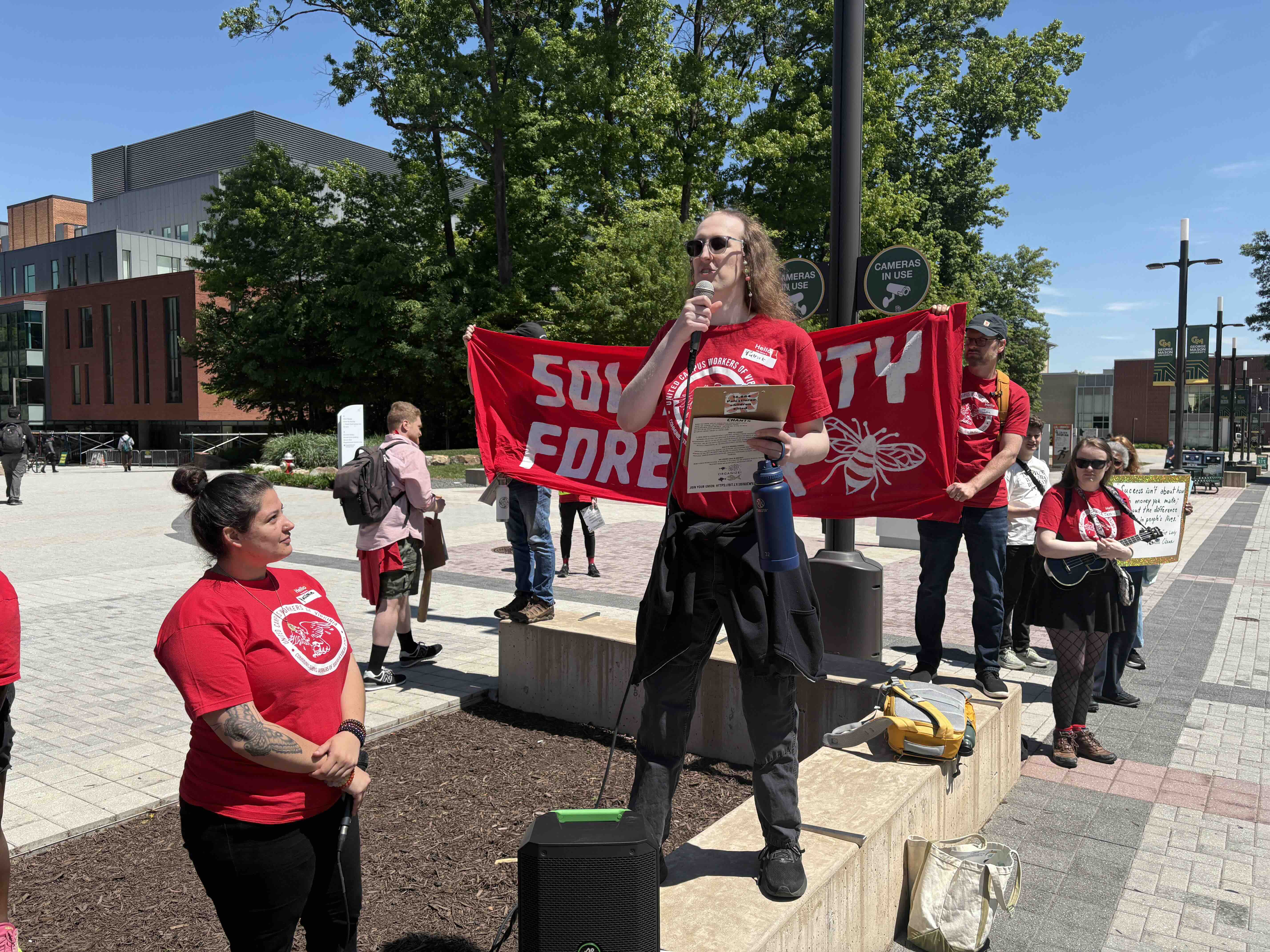
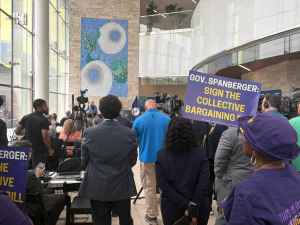
Last Friday, I found myself in Fairfax on the campus of George Mason University, where student workers and their supporters rallied on what was International Workers’ Day.
It was a coming out party of sorts: For two years, campus workers at George Mason have been organizing themselves into the latest chapter of United Campus Workers of Virginia.
I asked Yassmin Salem, a public art manager at George Mason who helped organize workers there, what two years of organizing looks like.
“ It looks like a lot of inner work, a lot of meetings, a lot of social gatherings to build trust with each other,” she told me. “It looks like a lot of tough conversations and willingness to be vulnerable about your experience and make people feel that they’re not alone.”
Virginia campus workers aren’t the only ones pushing harder for fair pay and job security. Last month, graduate students at Harvard University went on strike after contract negotiations broke down. And graduate students at the University of Illinois Chicago also went on strike in April.
A key concern raised at Friday’s rally at George Mason by Salem and her fellow workers was about the role artificial intelligence is playing at the university, which has embraced the technology.
Speakers warned about campus workers being made to train bots that could replace them all while food delivery robots rolled around the rally. At one point, someone fell over as a result of one of the wayward robots.
“We don’t want a university run by bots,” Salem said. “We want a university run by people.”
There are signs all over GMU’s campus letting people know they are being surveilled, reading, “Cameras in use.” That didn’t stop campus workers from marching and chanting, “Get up! Get down! Fairfax is a union town!”
Between the robots and the cameras, the stakes of the fight for these workers felt tangible in an immediate way.