State officials say the variant spreads twice as much as earlier strains of the COVID-19 virus and most Virginians could be exposed.
In both Virginia and the United States, the Delta variant of the COVID-19 virus dominates. A total of 80% of Virginia cases that underwent special testing to identify the strain came back positive for Delta, according to state epidemiologist Lilian Peake.
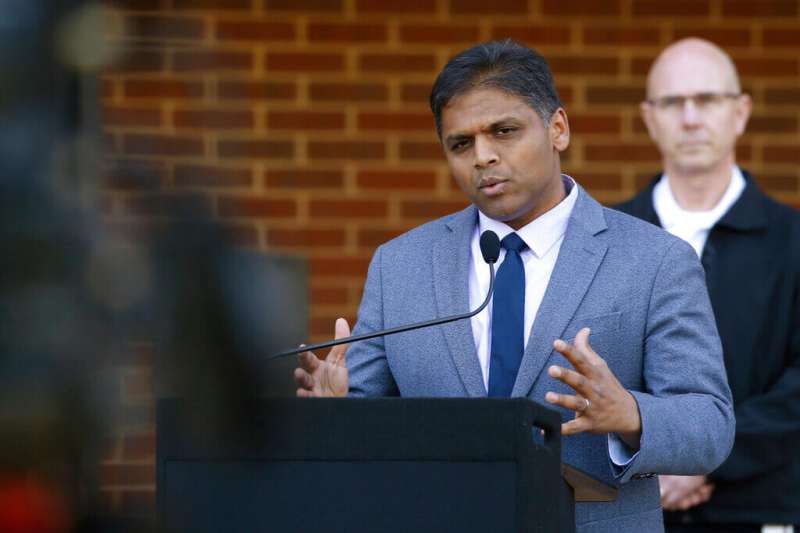
Peake spoke at a press conference with Virginia’s Vaccine Coordinator Danny Avula and Deputy Director of the Office of Epidemiology Laurie Forlano on Tuesday, where state officials urged the public to consider their vaccination options.
“We know that the Delta variant is much more infectious. It spreads more than twice as easily from one person to another compared with earlier strains of the virus,” Peake said. “New data show that people infected with the Delta variant have higher viral loads – and that means the amount of virus in their body. And that means it’s easier for them to spread it to others. And it also may mean that they’re at-risk of having more severe disease, but that’s still being studied.”
Some vaccinated Virginians have tested positive for the Delta variant. Forlano noted that some vaccinated individuals who contract Delta could be infectious and spread the virus to others, and called the breakthrough COVID cases in the vaccinated population a “fairly pivotal discovery.”
That finding and others led state officials to introduce guidance in areas of substantial and high transmission, including that everyone two years and older should wear masks in public indoor settings. For unvaccinated individuals, experts encouraged social distancing, avoiding large crowds and mask wearing .
To further slow the spread, Peake urged vaccination.
“Because the Delta variant is more infectious, a higher percent of the community needs to be vaccinated to interrupt that spread from person to person,” Peake said. “The vaccination rate in the US and in Virginia isn’t high enough yet to curb that spread. And so that’s why you’re seeing this rapid surge in cases, especially in the areas with the lower vaccination rate.”
Back to School
One of the major topics the experts discussed focused on children returning to in-person classes.
“I know that some school divisions in Virginia have already opened their doors to students, but we know it’s on the top of parents’ minds right now,” Forlano said. “We strongly feel that children should return to full-time, in-person learning in the fall with those layered prevention strategies in place, which includes the recommendation from CDC for universal masking. Both VDH and educational experts believe that students benefit from in-person learning and safely returning to in-person instruction in the fall, this fall, 2021, with the shared priority is all of ours.”
Forlano said the best way to protect both students and teachers was for those 12 and older to get the vaccine.
“For those who are too young to be vaccinated, masking and distancing [and] other strategies remain important,” Forlano said.
She further encouraged those around younger students – like parents and supervising adults – to get the vaccine, giving a layer of added protection.
“Vaccinated people are less likely to be infected. They are less likely to transmit the virus to others,” Forlano said. “And people who are old enough – age 12 and older – can be vaccinated to protect those who are not yet old enough to receive a vaccine. So we can get vaccinated ourselves to protect those children who can’t be.”
On the Horizon
As the battle against COVID-19 continues, new happenings are on the horizon.
Avula noted that the FDA could fully approve the Pfizer vaccine within a matter of weeks. The vaccine is currently authorized for emergency use.
He also said the Food and Drug Administration could approve and subsequently recommend a third dose of the vaccine for immune-suppressed individuals. However, the potential of the third dose likely wouldn’t come for another week or so, the doctor said.
For children ages five to 11, Avula said a vaccine could be just around the corner. He estimated that children in that age range could receive a vaccine as early as September, potentially a month earlier than previously estimated.
“That will help with the school conversation, certainly,” Avula said. “It will also help move us collectively forward in terms of the overall percentage of Virginians vaccinated, which right now stands right about 64% of eligible individuals.”
So why will it take nearly 10 months after the adult version of the vaccine for the childhood vaccine to reach emergency authorization? Because scientists had to take different, additional precautions for children.
“Part of the reason that these trials for younger age groups have taken longer than the 12 and ups are because they are having to use different dosing strengths. So we haven’t seen any information on that, but that was certainly part of what was playing out in clinical trials,” Avula said. “And so I do expect we’ll see different strengths for different age groups and again, why it will likely be even longer for kids down, like, between six months and four years of age as they continue to work on different dose strengths there.”
Vaccine Hesitancy
As the Delta variant surges, vaccine hesitancy still plays a role in the pandemic.
For parents as childhood vaccines ebb toward authorization, Avula addressed the concern.
“This [has been] a challenge all along the way,” Avula said. “From the beginning, we’ve had approval for 16 and 17 year olds with Pfizer and then subsequently the 12 to 15. And so we have part of our outreach effort, part of our communications campaign, has been targeting different demographics to help them understand the importance, the safety, the efficacy of the vaccines.”
The doctor expressed that one of the first steps in addressing vaccine hesitancy centers around acknowledging misinformation.
“The other thing that we’ve learned is so much of this has to happen through very personal connections – whether that’s a trusted healthcare provider, a trusted faith leader or someone in your family,” Avula said.
He expressed a continued goal of sharing information with primary care doctors, health providers, community ambassadors and local leaders to talk with people in their communities and ask questions about their concerns.
“I do think for folks who are still vaccine hesitant at this point, it’s just going to have to happen one relationship at a time,” Avula said.
Amie Knowles reports for The Dogwood. You can reach her at amie@couriernewsroom.com