As Virginia regulators move closer to making a decision on the Dominion Energy-NextEra Energy merger, Virginians are speaking out about what the deal could mean for their power bills.
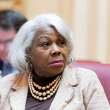
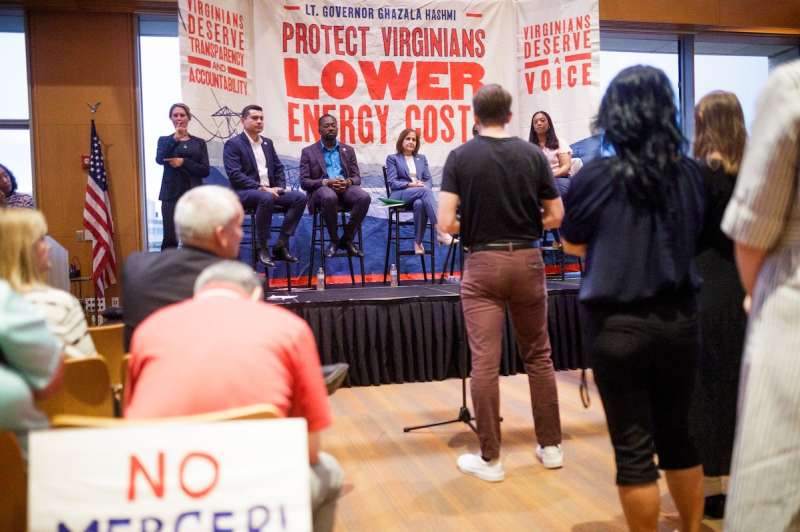
In September, Lt. Gov. Ghazala Hashmi hosted a five-city Energy Costs Listening Tour about the proposed $67 billion deal that would combine the Richmond-based Dominion Energy with NextEra Energy, which is headquartered in Florida. Nearly 130 residents across Loudoun County, Norfolk, Richmond, Charlottesville, and Roanoke showed up to share their concerns.
The two power companies are promoting the merger as a way to build “a stronger company to meet growing power demand.” Meanwhile, critics say they’re worried about everything from previous failed deals to the potential for rate increases passed on to consumers.
“Virginians are already struggling with the cost of keeping the lights on, and they deserve certainty that this takeover will not leave them paying even more,” Hashmi said in a media release. “After listening to Virginians from different backgrounds across the commonwealth and closely reviewing this proposal, I have concluded that it does not provide the protections Virginians demand and should not be approved.”
A full report summarizing the listening tour documents concerns ranging from clean energy and data centers to accountability. But across the five locales, one recurring theme surfaced: How would the proposed merger affect the people already struggling to afford their electricity bills?
In Loudoun County, Bronwyn Longchamp, a Sterling resident living in the “Data Center Alley” area, was one of the 21 people to speak. She said that despite lowering her household usage, her electricity costs have increased substantially.
Jessica Buell of Prince William County also brought up affordability. She wondered if residential solar could be an option to reduce bills, highlighting recently expanded laws that allow residents to plug a solar panel into a standard wall outlet to offset home energy usage.
Similar concerns surfaced in Norfolk. Phyllis McCants spoke about a sharp increase in her electric bill—even a shutoff notice—and an odd smell emitting near a local power infrastructure. Another Norfolk resident, identified in the report only as Debbie, spoke about high winter electric bills and her concern that lower-income and older residents will face difficult decisions between electricity, food, and medicine.
Dr. Tamika Quinn, meanwhile, pushed for officials to consider the “health consequences of energy ‘unaffordability’ for vulnerable communities, not merely financial effects,” according to the report.
Residents also raised questions about whether the merger could affect Virginia’s clean-energy goals and how much accountability customers would have if problems arose.
In Charlottesville, Frances Rousset brought up the Virginia Clean Economy Act, a 2020 state law establishing Virginia’s transition toward zero-emission energy production by 2050. Rousset highlighted renewable-energy goals, spoke about proposed gas plants, and focused on affordability, ultimately requesting that officials oppose the acquisition.
Others questioned how much power customers would have in dealing with a larger utility. Roanoke resident Alex Smith, for example, described a personal billing dispute while living in Richmond and noted concern that an out-of-state utility could make settling similar circumstances even more difficult.
In Richmond, 32 commenters took a stand where they spoke about rising bills, data-center demand and tax incentives, transmission costs, vulnerable households, and more. Unlike the other locations featured, the report did not include public commenters’ names or individually based concerns for the session held in the state capital.
While some supporters of the merger participated in the listening sessions, the report documented more opposition than support.
Ultimately, the State Corporation Commission (SCC) will decide whether or not the merger goes through—but broader concerns, like those around data center growth and potential limitations, often fall to local leaders or state lawmakers to decide.
And while Virginians aren’t the ones who place SCC members in office, they do elect the state lawmakers who choose the three commissioners to oversee utilities and make decisions that can affect Virginians’ electric bills.
Gov. Abigail Spanberger has also raised concerns about the deal. In an Oct. 19 filing with the SCC, which is expected to make a final decision by mid-January 2027, Spanberger called for a six-year freeze on electricity rates for residents and larger monthly bill credits. She said the SCC should reject the merger if those and other commitments aren’t approved.
“Any proposed merger involving Virginia’s primary state-regulated utility must benefit families and small businesses—not just the shareholders of these multi-billion-dollar corporations,” Spanberger said in a recent press release.
The SCC is seeking public comment about the merger from Virginians. The deadline to submit an opinion online to the agency is Thursday, Nov. 12. There are also a number of in-person and telephone opportunities scheduled through Tuesday, Nov. 10.