Colonial officials say things will recover within a few days.
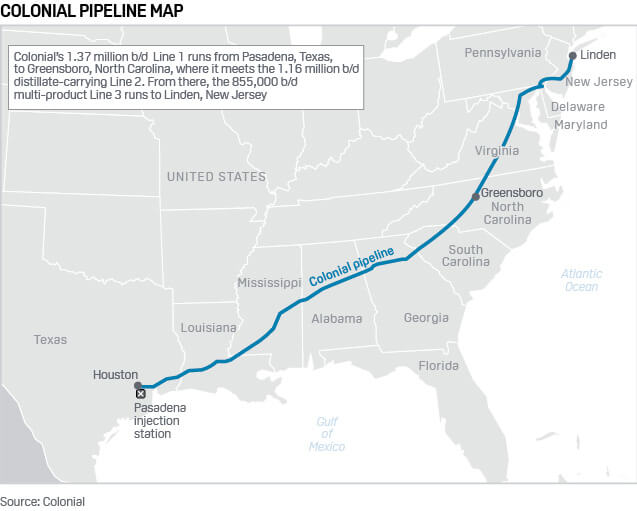
LYNCHBURG-At 5 p.m. Wednesday, Colonial Pipeline officials flipped the switch and restarted operations. That’s at least two days ahead of schedule. But what does that mean for Virginia’s gas supplies? When will we see regular shipments return?
Colonial officials said to expect a small improvement today and then things to get back to normal within a few days.
“It’ll take several days for the product delivery supply chain to return to normal,” they said in a statement. “ Some markets served by Colonial Pipeline may experience, or continue to experience, intermittent service interruptions during the start-up period.”
In Wednesday’s story, we detailed the changes on both the state and national level to get product shipped by truck, rail and on the water. In their statement, Colonial officials said they’ll use these methods to “move as much gasoline, diesel and jet fuel as is safely possible.”
Fewer Tankers on The Road
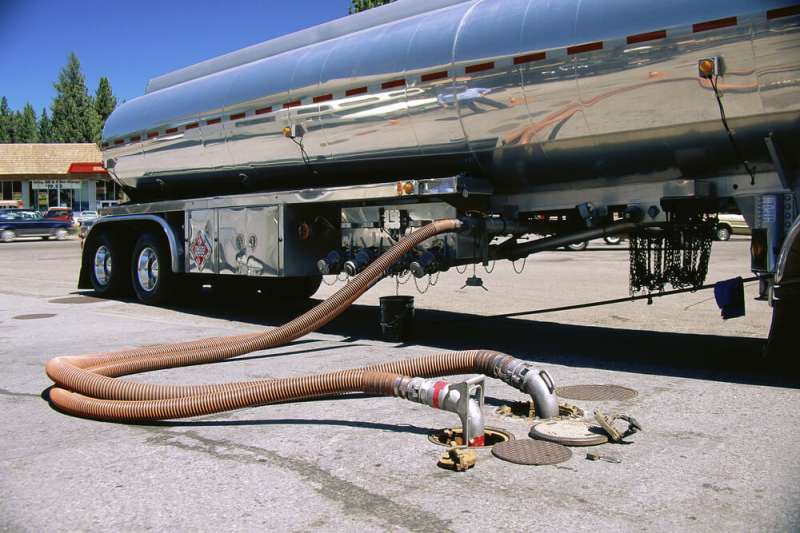
Virginia officials made another change Wednesday to further speed up delivery. The Virginia Department of Transportation waived its weight limits for fuel trucks. That’s needed because there are fewer trucks on the road, so they need to carry more right now.
To be clear, the problem isn’t an actual product shortage right now. It’s a delivery issue. And it’s one that popped up long before the cyberattack. There is actually a shortage right now of qualified truck drivers.
“Trucking’s driver shortage already exceeds 50,000 drivers,” said the National Tank Truck Carriers, in a report earlier this year.
Drivers, mechanics and safety specialists undergo strict training in accordance with “hazmat training” regulations. And the U.S. Environmental Protection Agency demands compliance with requirements that focus on vapor recovery, engine emissions, spill reporting and clean-up, as well as the control of pollutants from internal tank cleaning operations.
The American Trucking Association backed that up. Roughly 70% of tanker drivers quit the business over the last year, the group said in a first quarter 2021 report. You also can’t just snap your fingers and hire someone to replace them off the street. In addition to a commercial license, you need a specific certification to drive tankers. That’s because of the hazardous cargo, like oil or gasoline, they haul. So when a situation like the Colonial shutdown happens, there’s not enough manpower to instantly haul the product from state to state without a delay.
‘Sheetz Has Plenty of Gas’
When the panic started spreading Saturday, people flocked to the gas pumps at the Sheetz on Wards Rd in Lynchburg. The flow of traffic into the gas station remained constant as mid-week approached.
“It’s been very busy,” said Jeremy Jude, store manager. “Cars double parked at pumps.”
Jude noted that the store did not place any limits on the amount of gas consumers purchased.
Unfortunately, the location ran out of gas shortly after 1 p.m. on Wednesday. As of 1:30 p.m., there was no available estimate on when more gas might arrive at the store.
“Sheetz has plenty of gas,” Jude said. “With all of the shortages all around, we just don’t have enough trucks to keep everybody in business at this time. But yeah, we have plenty of gas – it’s just a matter of getting the trucks to us.”
Jude noted that those who came in searching for gas after the store ran out left disappointed. He sympathized with their plight.
“But I think that’s understandable with everything going on,” Jude said.
As of Wednesday night, 52% of Virginia gas stations were out of gasoline. Many, like the Lynchburg Sheetz, had stockpiles elsewhere. The challenge has been to find enough trucks and drivers to get from Point A to Point B.
A Plan in Place
For Brookneal-based Foster Fuels, the supply chain disruption affected not only their gasoline, but also things like heating fuel for homes.
However, this isn’t a new experience for Foster. The company turns 100 this year and has experience responding to natural disasters and other emergency situations. As a result, they planned ahead.
“We do have an emergency supply part of our business,” said Chelsea Harrison, the company’s vice president of marketing. “So we’re used to these kinds of disruptions, I guess, because we respond to natural disasters or power outages.”
A similar situation happened in February, when the ice storm damaged Brookneal and the surrounding area. Foster had fuel supplies ready to distribute. They also offered help in Texas when winter weather caused widespread power outages.
“Our Mission Critical Division, they responded to things like Hurricane Sandy in 2012,” Harrison said. “We responded to the Haiti earthquake and [got] fuel barged over to Haiti to help with the relief efforts there. It’s gotten to be where we’re responding to these things quite often now.”
Another Type of Challenge
The Colonial Pipeline situation raised another type of challenge.
“This just happens to be a different kind of disruption with the supply line breaking down,’ Harrison said. “So we’re having to source our fuel from not our conventional sources. But we do have a powerful network and supply chain that we’re able to still provide. We’re just working through that.”
While Harrison noted that while the Colonial Pipeline operation halt made an impact, Foster Fuels had preparations in place to manage the dilemma.
“This one is unique in, I think, the scale of the disruption,” Harrison said. “But we’ve also dealt with quite a few different unique situations.”
Brian Carlton is Dogwood’s managing editor. Amie Knowles is a staff reporter for Dogwood. You can reach them at info@new.vadogwood.com.