By Amie Knowles
I geek out a bit when it comes to history, and I became fascinated with antique photographs while in high school. They looked cool, weren’t difficult to find space for, and were usually pretty inexpensive—all good things for a teenager.
I didn’t go to parties every weekend for fun. I was the nerd digging through the local antique stores so often the owners knew me by name. The same went for any antique show or flea market within a two-hour radius of Danville.
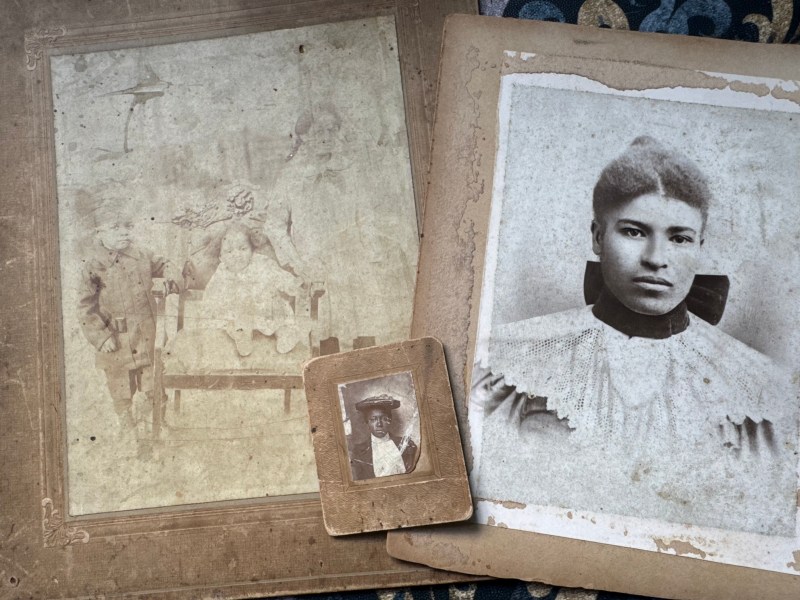
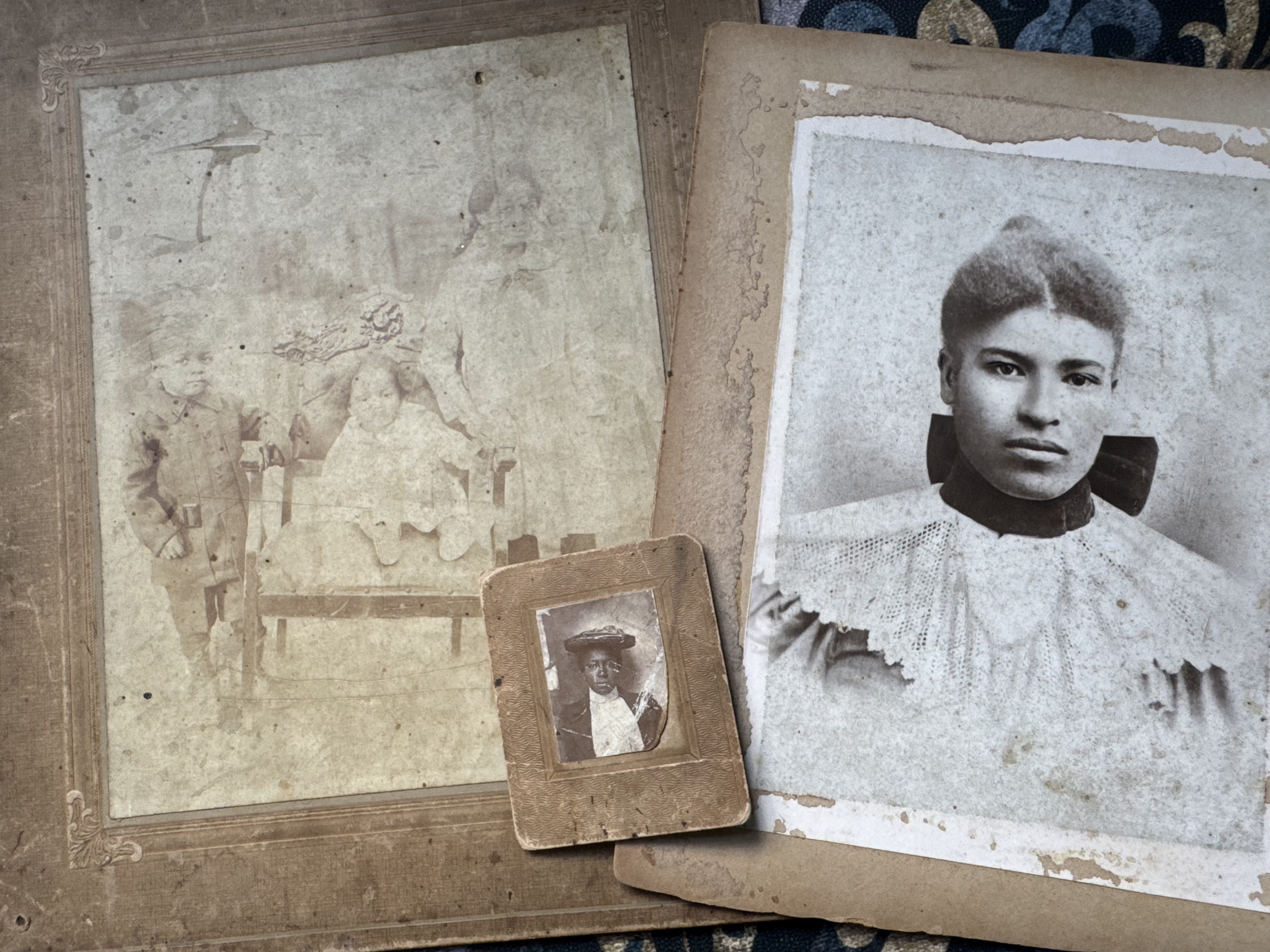
Out of all the different iterations of early photography, carte de visite (CDV) photographs quickly became my favorite. Emerging in the 1850s and gaining popularity in the 1860s, I liked their small size and durability—usually about 2.5” x 4” fully mounted on a thick piece of cardstock. They morphed into cabinet cards, which were far larger and made from about the mid-1860s to the early 1900s.
But as my collection grew, I started to notice a distinct lack of diversity. That’s a roundabout way of saying it was easy to find antique photos of white men, women, and children in Southern Virginia; it was far harder to come across antique pictures of Black men, women, and children in Southern Virginia. Imagine my joy when sorting through a pile of photos in an antique store one day when I came across Dialie (middle photo above). At least, that’s the best I can make out nearly 150 years after she donned her hat, had her photograph taken, and wrote in pencil what looks like “Mrs. Dialie Jeter, South Carolina,” on the back.
I don’t know the stories of many of the people whose pictures reside in albums in my home—besides, it’s taken years to bring them all together—but, boy, do I wish I knew hers. I’d ask what made her happy. I’d hold space for what made her sad. And I’d also let her know that her image is being safely preserved, while simultaneously being shared with nearly 20,000 of my closest friends on something called the internet. What do you think she’d say about that?