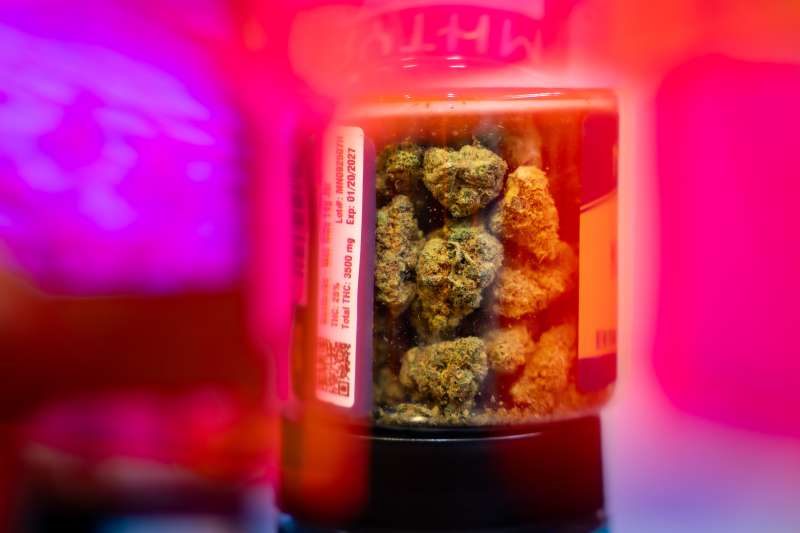
A cannabis advocate called the compromise progress but warned a fine increase could lead to racial disparities in enforcement.
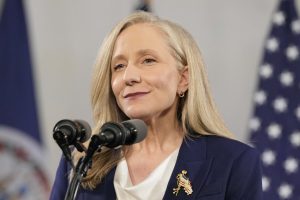
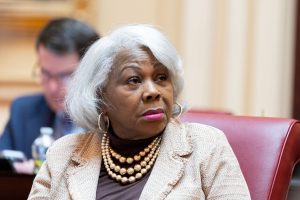
On Tuesday, Gov. Abigail Spanberger, State Sen. Lashrecse Aird (D-Petersburg), and State Del. Paul Krizek announced they had reached a compromise on creating a retail cannabis market in Virginia.
Their plan calls for establishing Virginia’s market as part of the state budget, which is still being negotiated. Retail sales would begin on July 1, 2027. The state’s Cannabis Control Authority would be allowed to issue up to 350 retail licenses and would begin accepting applications for those licenses on February 1, 2027.
The state would initially set a 6% tax rate on cannabis products that would rise to 8% in July 2029. Local governments would be allowed to set an additional tax from 1% to 3.5% on cannabis products.
A source familiar with the compromise language told Dogwood that labor peace agreements are still included in the compromise. Under these agreements, marijuana establishment license holders would be required to refrain from union-busting in exchange for the union agreeing not to strike, picket, or boycott the cannabis businesses.
The goal of labor peace agreements is to create a neutral environment where workers can be educated about their rights and decide whether they think organizing a union is right for them, said Kayla Mock, political and legislative director at United Food and Commercial Workers Local 400.
“It creates an environment where it’s not all of this chaos like you see around other organizing, looking at Starbucks, looking at Amazon, kind of the union busting stuff, and it just gets nasty,” Mock said in an interview.
Mock said labor peace agreements are important because agricultural workers are explicitly excluded from the labor rights afforded to most workers under the National Labor Relations Act. Cannabis growers and farmers either have to agree on their own to allow their workers to organize, which is rare, or state law has to require them to do so, Mock said.
“[Agricultural] workers don’t have rights unless the state provides them or changes the law, but labor peace would do that,” Mock said.
Progress but work remains
Chelsea Higgs Wise, co-founder and executive director of the nonprofit Marijuana Justice, told Dogwood the cannabis compromise is a sign of progress on an issue that’s taken years of work. Spanberger vetoed legislation in May sponsored by Aird and Krizek to establish the retail cannabis market.
“We are pleasantly surprised with how far the compromise has gotten and how close it came to being what we originally passed in the General Assembly,” Higgs Wise said. “We want to give credit where credit is due for the administration. We can tell that there was a lot of learning, a lot of listening to get on board.”
Higgs Wise said there is still more listening and learning to be done around fines for the public of consumption of cannabis. The compromise language calls for increasing the current $25 fine for consuming cannabis in public up to $250 on July 1, 2027. Higgs Wise said a fine of that size will reopen the door to racial disparities in marijuana enforcement.
“We’re going to have to go back to basics with this administration that has a focus on enforcement no matter who that impacts,” Higgs Wise said. “We’re going to have to bring every piece of data that we can when we talk about safety for vulnerable communities that maybe don’t involve excessive enforcement, and we really thought that we had gotten past these conversations.”
‘Extremely exciting’
Mark Tavares, a hemp grower in Doswell, told Dogwood he’s excited to apply for a microbusiness license once the market is established.
“For a small business and a small hemp grower like myself, I’m still very positive with what’s going through,” he said. “With the microbusiness licenses and the opportunity to apply for that—that’s exactly what we’re looking for.”
The establishment of a legal retail market would make life less stressful for Tavares, even if it means some hemp businesses designed to take advantage of a state loophole will have to close.
“The opportunity to actually get a license to legally produce a product […] is extremely exciting for me,” Tavares said. “I would love the opportunity to do that, and I would love the opportunity to do it correctly for our state.”