“Their mission is simple: to protect people on the job, to enforce Virginia law, and to hold bad actors accountable.”
Virginia Attorney General Jay Jones announced on Friday the creation of a new worker protection unit within his office.
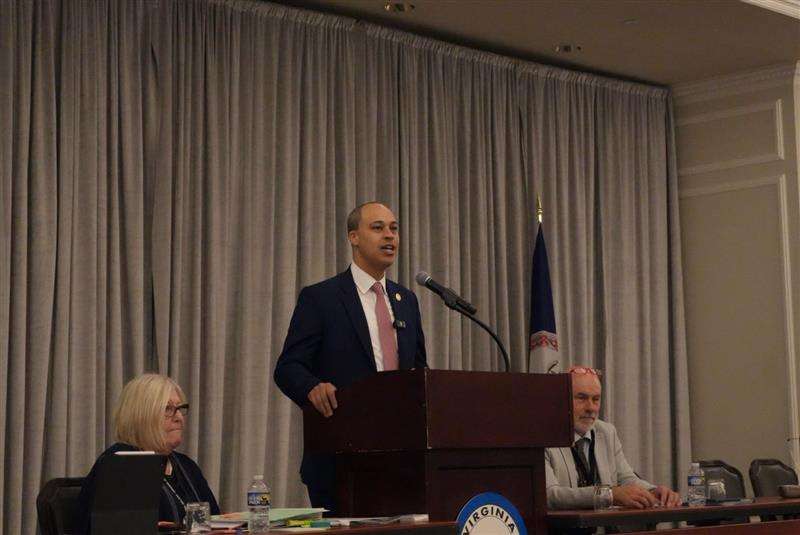
Speaking in Williamsburg at the Virginia AFL-CIO’s annual convention, Jones said this new civil enforcement team would hold employers accountable when they violate state labor laws.
“This is an enforcement operation that we are putting half a million dollars behind, hiring a unit manager, an assistant attorney general and an investigator,” Jones said. “And their mission is simple: to protect people on the job, to enforce Virginia law, and to hold bad actors accountable.”
Jones said the new unit would go after cases of wage theft, employee misclassification, and worker abuse. The unit will review records, interview witnesses, and conduct inspections. If it finds wrongdoing, the unit will seek back pay, civil penalties, and injunctions. Jones said his office plans to publish a report on the unit’s work next year.
Jones said the idea for a worker protection unit came from the labor community.
“You showed us how complaints could bounce from office to office to office while someone was still waiting for help,” Jones said. “You told us about companies counting on no one enforcing the fact that they were cheating their people.”
READ MORE: Va. workers get new protections on wage theft, workplace rights
Jason Parker, president of the Virginia State Building and Construction Trades Council, said the new worker protection unit was a huge deal because Virginia has had problems with wage theft and employee misclassification for years.
“If you let the bad actors survive, then the good actors get pushed out of the work,” Parker said in an interview. “And so construction jobs and other jobs, they become trash jobs. And so, what you’re doing is you’re raising the floor.”
Parker said employee misclassification happens when an employer wrongly categorizes one of its employees as an independent contractor. That’s a problem because employers don’t have to pay independent contractors a minimum wage or overtime, and independent contractors have fewer protections than employees.
“It does all kinds of damage,” Parker said.