Between inflation and the Iran war driving prices up, Virginians’ wallets seem to be getting lighter by the day.
In July, Virginians all over the commonwealth received letters from Dominion Energy saying their bills would go up by $8 to $11 per month, citing increased fuel costs to generate electricity. Some of these increased costs come from data center growth, including the need for utilities companies like Dominion to buy energy from out of state.
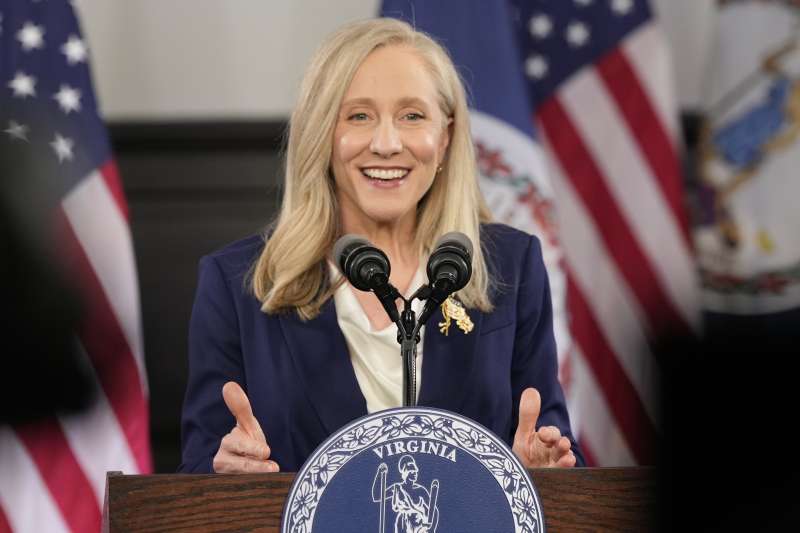
Thanks to energy legislation supported by Gov. Abigail Spanberger, Virginians will soon have more cost-cutting options available to them.
Group-purchasing solar plan could bring energy bill relief to Virginia
The biggest news of Spanberger’s work for affordable energy came on July 13, when she announced Virginia will be the first state in the nation to offer a statewide group-purchasing solar initiative. The program, Switch Together, will lower costs for households making the change to solar energy.
Switch Together is a partnership between Spanberger’s office and Solar United Neighbors (SUN), a nonprofit organization based in Washington, DC.
“It helps address her energy affordability messaging and plan by offering residents a way to reduce their energy bills by going solar but doing so below market rate at a much discounted price,” Brandon Praileau, SUN Virginia Program Director, said.
SUN offers free education and information about switching to solar, helps connect users and prospects to discuss the realities of switching, and they advocate for energy policy on local, state, and federal levels. SUN has worked with governments to produce group-buying solar initiatives in 14 states and territories, though their work with Virginia marks their first statewide project.
How does Switch Together work? Households interested in switching to solar register their interest on the Switch Together website. Then, a small group of vetted installers competes to offer the best prices possible.
“I like the idea of competition and not giving the full authority to just one company to rule over everything,” said Roanoke resident Stephen Grammer. “If there’s only one company, you have to pay whatever they say because there’s no other options.”
With programs like Switch Together, Grammer said, “We can look at each company and see how competitive they are and how much they cost.”
The Switch Together website says there are no sales calls, no obligations, and no sharing of personal data with third parties.
Healthy public-private partnerships overcome solar skepticism
Despite the benefits of green energy like solar, skepticism remains. Praileau, who is also a preacher in Norfolk, was hesitant when first approached by a local solar company as well—especially when they offered a no-cost installation to his church.
“As a young African-American preacher in a low-income community in a majority-Black city, I was very skeptical when two white women approached me saying they want to give my church free solar,” Praileau joked. “We’ve been down this path, we’ve seen the movie, got a t-shirt, a hat, and a cup, and we know how this story ends.”
Praileau brought plenty of questions to the local installers, and not only did they answer them to his satisfaction, the numbers the installers showed him spoke for themselves. His church already saves about 25% on their energy bill compared to their previous provider, and over the course of 30 years, he’s looking at saving about $130,000.
Bringing solar power to his church helped so much that Praileau soon began working with SUN while maintaining his work in the clergy. Before long, he found himself working with an old friend—Virginia Chief Energy Officer Josephus Allmond.
“After about two or three months of meeting with the Chief Energy Officer’s office and […] putting together something that the governor felt comfortable promoting and endorsing—which was no cost to the state—that’s where the July 13 announcement came,” he said.
Spanberger expands solar options for homeowners and renters
Switch Together isn’t the only green energy initiative Spanberger has helped enact—nor the only one SUN has guided. Since taking office as governor in January, she has approved several other bills addressing high energy costs. A press release Spanberger’s office published in May outlined several bipartisan bills she’d signed, including one that will streamline the permitting processes when homeowners switch to solar energy, saving them time and money.
Further legislation will ease restrictions on balcony-mounted solar equipment so renters and condo owners can at least supplement their energy use with solar if not switch over entirely. Until now, solar panels were largely limited to homeowners. Balcony solar could be a boon for Grammer, who lives in a planned community and technically doesn’t own his home.
“I really like the idea of renters being able to switch over and have the option to do so,” Grammer said. “And if it would save fossil fuels, that would help a lot too.”
Grammer has a point. A December 2025 report from World Resources Institute showed that global investment in clean energy is outpacing fossil fuels and clean energy is creating more jobs while fossil fuels are creating fewer.
Another bill Spanberger recently signed will “facilitate the adoption of portable small solar systems to lower energy costs,” the press release said. The bill also prohibits landlords from refusing to let tenants install and use said portable systems.
Energy options arrive when needed most
The US Treasury website says households who switch to solar are estimated to save $2,230 annually, while the governor’s office website adds that households in the Switch Together program will save an average of 23% on installation costs.
Spanberger’s green energy legislation and group-buying solar initiative couldn’t come at a better time.
“Have you opened your power bill lately?” Praileau asked. “We’re seeing energy costs rise at a precipitous clip and we know that energy costs will only continue to rise.”
The Iran war has been directly linked to rising electricity costs, while energy experts point to dependence on fossil fuels as sharing the blame. On Dominion’s website, the utilities company also blamed “greater reliance on air conditioning and electric heating” and increased artificial intelligence use for rate and demand increases across the grid. For Praileau and SUN, this is more evidence supporting Spanberger’s green energy legislation.
“Solar helps the grid,” Praileau said. “It’s like having mini power-producing plants on hundreds of thousands of roofs. It creates more grid reliability because the strain on the grid goes down—because those homes are utilizing energy that’s produced from solar first before they’re drawn from the grid—then any excess gets sent back to the grid where the utility is able to use it where they need it most.”
Virginia’s energy problems may not be solved overnight, but Spanberger’s energy legislation, developed in partnership with SUN and people like Praileau, could provide valuable budget relief for Virginians like Grammer who are feeling the pinch from utilities companies and other rising costs.
Read more: Virginia explained: How clean energy works, and how it could lower utility bills