On May 18, Florida-based NextEra Energy announced its agreement to buy Dominion Energy, a move designed to accommodate increasing electricity demand thanks to the presence of 600 data centers in Virginia and burgeoning use of artificial intelligence. NextEra offered to buy Dominion for $67 billion. If allowed to proceed, the merger will create the largest regulated electricity utility in the country, serving more than 10 million customers along the East Coast from Virginia to Florida.
Dogwood has covered the merger and the questions it raises since Dominion petitioned Virginia’s State Corporation Commission (SCC) for approval to proceed in mid-July. Here’s what’s happened since our last update.
Well-known Virginia legislators involved in merger
In August, Dogwood reported on a potential conflict of interest involving SCC Chair Kelsey Bagot, one of three judges who will decide whether the Dominion-NextEra merger can proceed. NextEra is also Bagot’s previous employer. Her involvement in the proceedings has raised questions of partiality, even leading a Dominion customer to file a petition in July calling for Bagot’s removal from the case. Bagot has declined to recuse herself.
She’s not the only official involved in the proceedings.
In early August, Gov. Abigail Spanberger (D) announced in an editorial for The Washington Post that she would “intervene” in the merger, or “formally request[ing] to be a party to the case.”
“As a Virginian, I am deeply skeptical about whether selling our primary state-regulated utility to an out-of-state company is good for the commonwealth,” Spanberger wrote. “I have serious questions about what this deal would mean for us. And as governor, I intend to get answers and be a voice for Virginians in the process.”
Despite this, on August 31, 14 state Democrats wrote a letter to Spanberger requesting more time and a special session of the General Assembly to review the merger, arguing that the six-month review time allotted by state law wasn’t enough to properly examine a merger of its size.
On Thursday, Spanberger sent a letter to the General Assembly refusing their request for an extension, saying that her intervention in the merger would be enough. The following day, in an interview with the Richmond Times-Dispatch, House Speaker Don Scott (D-Portsmouth) echoed that sentiment, saying that he trusted the SCC to do its job.
US Rep. Rob Wittman stands alone with NextEra stock ownership
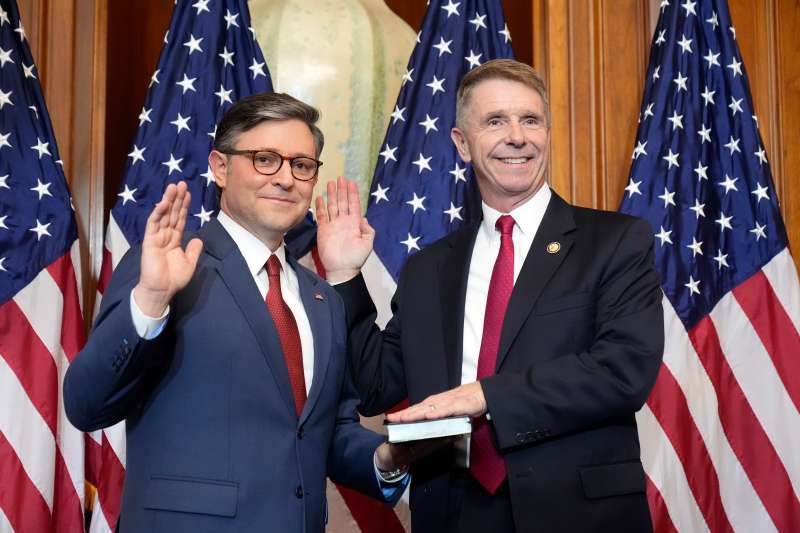
Bagot isn’t the only Virginia official with questionable ties to the Dominion-NextEra merger. Last month, Dogwood also reported that US Rep. Rob Wittman (R-Westmoreland) owns as much as $15,000 in NextEra shares. He is the only prominent Virginia politician with stock investments in the company.
Wittman voted for the One Big Beautiful Bill Act in 2025, which made large-scale power investment much more attractive for utilities companies. It did this by offering “100% bonus depreciation,” meaning data center owners and utilities could immediately write certain investments off their taxes. These tax incentives improve companies’ cash flow, while reduced construction costs encourage building more data centers. As the number of data centers increases, electricity demand climbs, resulting in more electricity generation, transmission, and distribution—and further related investments.
While the benefits may be indirect, the Big Beautiful Bill encourages the kinds of investments by companies like NextEra that will make their stock prices—and Wittman’s portfolio—bulge.
Wittman’s ownership of NextEra stock isn’t the only thing straining the public’s trust in him. On June 24, 2025, Wittman signed a letter vowing to protect Medicaid—but his vote for the Big Beautiful Bill the following month enabled more than $1 trillion in cuts to federal healthcare spending.
His voting record against federal healthcare spending extends beyond the Big Beautiful Bill. Wittman voted 60 times to repeal the Affordable Care Act (ACA) and its subsidies. The ACA kept more than 19 million Americans enrolled in affordable insurance plans.
Wittman has even more history voting against the public’s wishes. He remains a staunch supporter of the deeply unpopular Iran war. In June, he voted against the Iran War Powers Resolution, which instructed President Trump to withdraw all US forces from Iran or win congressional approval to continue operations.
In a recent interview with Ryan Nobles on NBC’s Meet the Press NOW, Wittman struggled to state agreement or disagreement with Vice President JD Vance, who recently said the Iran war is not actually a war.
“If you win reelection, you could become the top Republican on the House Armed Services Committee,” Nobles said. “Do you agree with what Vice President Vance has said today, that what’s happening in Iran right now is not a war?”
Wittman hesitated before saying, “What is happening now is a response to Iran’s unprovoked attacks on US interests and US allies in the region, and I think the US does have a responsibility to make sure that we stand up for our interests in that region.”
Nobles again pressed him, asking if he would not define it as a war. “The United States fired twice on Iran this week; isn’t that the definition of a war?”
“Those actions were a response to unprovoked attacks by Iran on the United States and United States interests in the area and they fired on places where United States troops were located where they could’ve harmed United States troops,” Wittman said, again refusing to call the current conflict a war.
The Dominion-NextEra merger continues to evoke questions from the public regarding conflicts of interest, a utilities monopoly, and politicians who have received contributions from the interested parties. Meanwhile, Wittman’s voting record on healthcare, utilities regulations, and the costly Iran war—while refusing to call it a war—doesn’t seem to align with his constituents’ best interests.
Read more: Questions loom over Dominion-NextEra deal