Amid another Virginia hurricane season, the Commonwealth faces an unprecedented test: weathering severe storms without the full strength of the federal safety net.
That absence of protection is not an accident—it is a politically driven, man-made crisis that has left thousands of Virginians and their communities physically at risk. With the government shutdown reducing Federal Emergency Management Agency (FEMA) operations, and the Republican budget slashing funds to FEMA and the National Oceanic and Atmospheric Administration (NOAA), Virginia’s ability to prepare for and recover from disasters has been profoundly weakened.
The Trump administration’s 2025 budget eliminated the Building Resilient Infrastructure and Communities (BRIC) program, which provided billions in grants for risk-reduction projects such as flood-control systems and coastal resilience. In response, a coalition of Democratic Attorneys General filed suit to block the administration from diverting FEMA’s pre-disaster mitigation funds—Virginia AG Jason Miyares did not join the suit—arguing that the move would leave states more vulnerable to climate-driven disasters. Combined with furloughed federal employees, frozen contracts, suspended flood-insurance activities, and the pause of key safety-net programs, these cuts leave Virginia with fewer resources and a diminished capacity to respond before and after a major storm.
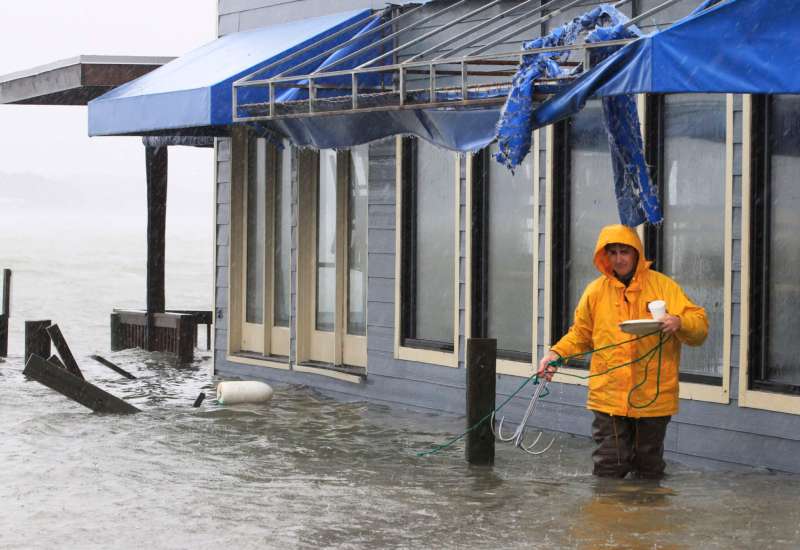
This week, Hurricane Melissa, a Category 5 storm that has already dumped 14 to 19 inches of rain across parts of Florida, may not make landfall in the continental U.S., but the system is expected to bring tide surges, torrential rainfall, and flash flooding to Virginia.
We have seen what that can mean. When Hurricane Helene slammed into Virginia last year, it did not hit Virginia directly, and yet the resulting heavy rainfall and flooding killed two people, left over 300,000 Virginians without power, damaged nearly 3,700 farms, closed almost 500 roads, required more than 100 water rescues, and damaged hundreds of homes, according to the Governor of Virginia website, Virginia’s Gov. Glenn Youngkin requested $4.4 billion in Federal assistance to help cover direct and indirect Hurricane Helene damages.
And yet, Youngkin has backed the Trump Administration’s FEMA reductions. As one of only two governors on the Administration’s FEMA Review Council, he expressed confidence that states can assume greater responsibility for disaster response, saying in May 2025, “The states are ready. We’re ready. We should be ready, because at the end of the day, we’re responsible.”
But is Virginia truly prepared to shoulder that responsibility on the eve of a major storm, and in the wake of Republican budget cuts and a Republican-induced shutdown?
Virginia has a strong foundation for emergency preparedness, but without the typical range of federal resources, the Commonwealth is being forced to shoulder a far greater financial and logistical burden before and after storms. For the past decade, Virginia has depended on tens of millions in federal disaster recovery assistance funds annually to repair infrastructure and sustain emergency operations—FEMA support resources that no state could readily substitute, particularly amid the growing regularity of severe storms. Now, with deep cuts to FEMA and to NOAA, which provides critical flood mapping, storm tracking, and emergency broadcasting, this essential support is either in jeopardy or on hold amid the ongoing federal shutdown.
These challenges are intensified by broader federal budget cuts that are straining Virginia communities—causing job losses, rising prices, reductions in healthcare funding, and the impending cutoff of SNAP Benefits on Nov. 1, which removes vital food assistance for vulnerable families during evacuations or recovery periods. Together, these compounding effects threaten not just the state’s disaster readiness, but the safety and wellbeing of thousands of Virginians.
The combined impact will:
- Delay federal aid for power restoration and infrastructure
- Leave more communities exposed to greater risk and loss of life
- Slow outage recovery, emergency logistics, and debris removal
- Reduce pre-positioned supplies and shift higher costs to local governments
- Stall National Flood Insurance Program (NFIP) coverage and claims
- Cut vital food assistance
- Increase insurance costs as the focus moves from preventing disaster damage to paying for it afterward
Coastal areas are at the highest risk, but inland Virginia is not immune. Hurricane Melissa is projected to bring significant rain, flooding, high winds, and extended outages well beyond the coast.
While FEMA needs reform, cutting programs that protect communities is neither efficient nor effective. True preparedness relies on complementary capabilities, not abandonment.
Despite Governor Youngkin’s claim that “the states are ready,” the truth is that no state—Virginia included—can fully replace the technical expertise, resources, and rapid response capacities of FEMA and NOAA. With a Category 5 storm offshore and the federal government shuttered, Virginians deserve a government that strengthens preparedness, not one that strips it away.